
The Mysterious Phenomenon of Black Holes
black hole

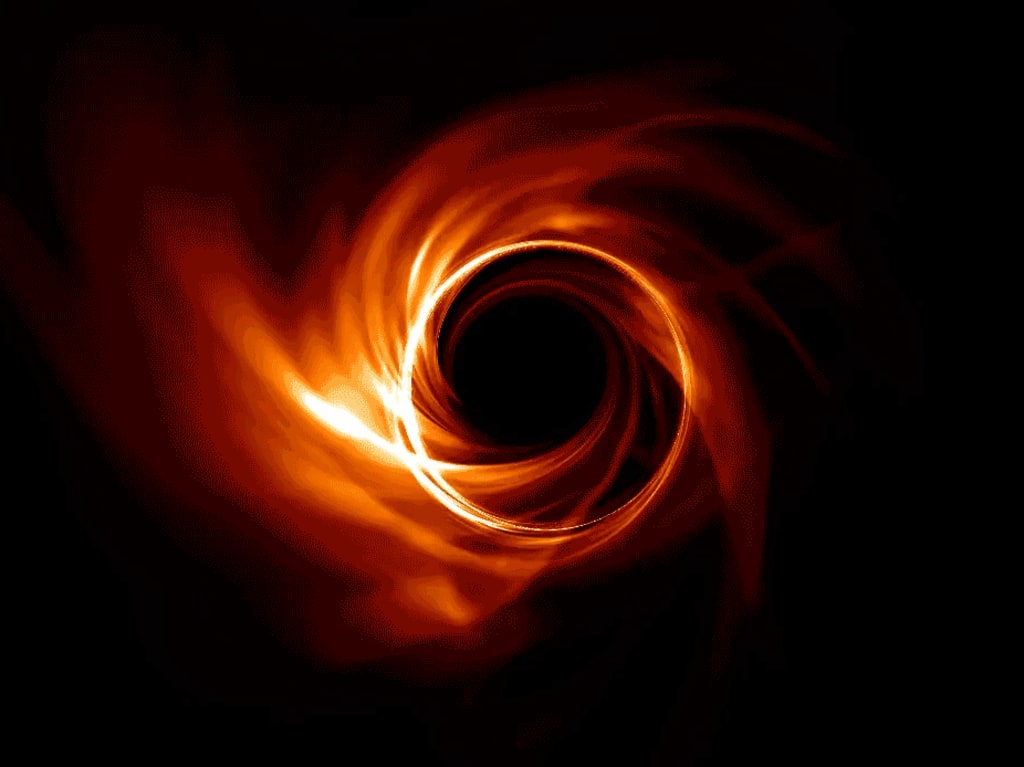
Black holes, one of the most fascinating and enigmatic phenomena in the universe, have captivated scientists and astronomers for decades. These cosmic entities, defined by their immense gravitational pull, are so strong that nothing, not even light, can escape their grasp. This leads to their name, as they appear completely black against the backdrop of space. Though once a theoretical concept, black holes have since become a pivotal subject of astrophysical research, leading to groundbreaking discoveries that shape our understanding of the cosmos.
### Formation of Black Holes
Black holes form when massive stars exhaust their nuclear fuel and undergo a catastrophic collapse. At the end of their life cycle, stars like the Sun expand into red giants, shedding their outer layers and leaving behind a dense core. For stars significantly larger than the Sun, however, the collapse is much more dramatic. When the inward pull of gravity overwhelms the outward force generated by nuclear fusion, the star's core compresses to an infinitely dense point called a singularity. Surrounding this singularity is the event horizon, the boundary beyond which nothing can escape the black hole's gravitational influence.
The size and mass of a black hole can vary depending on its formation process. Stellar-mass black holes, formed from collapsing stars, typically range from a few to tens of solar masses. Supermassive black holes, on the other hand, can contain millions to billions of times the mass of the Sun and are found at the centers of most galaxies, including our own Milky Way.
### The Event Horizon and Singularity
The event horizon is one of the most significant aspects of a black hole. It marks the point of no return for anything that ventures too close, including light. Beyond this boundary, the gravitational pull is so intense that not even photons, the particles that make up light, can escape. This renders black holes invisible to the naked eye, detectable only by the effects they have on their surroundings.
At the core of a black hole lies the singularity, a point of infinite density where the laws of physics, as we currently understand them, break down. The singularity's extreme gravitational forces cause spacetime itself to become infinitely curved. The exact nature of the singularity remains one of the greatest unsolved mysteries in modern physics, as current theories like general relativity fail to describe conditions at this point.
### Detection of Black Holes
Despite their invisibility, black holes can be detected through their interactions with nearby matter. One of the primary ways scientists detect black holes is by observing the behavior of stars and gas clouds near them. When a star orbits close to a black hole, it can be drawn in by the immense gravity. As the matter spirals toward the event horizon, it heats up to extremely high temperatures, emitting X-rays that can be observed with space-based telescopes. These high-energy emissions provide critical clues about the presence and characteristics of black holes.
In 2019, astronomers made history by capturing the first-ever image of a black hole's event horizon, located in the center of the galaxy M87. This achievement, made possible by the Event Horizon Telescope, marked a major milestone in our understanding of black holes and provided visual confirmation of their existence.
### Role in the Universe
Black holes play a crucial role in the evolution and dynamics of galaxies. Supermassive black holes, in particular, are thought to be central to the formation of galaxies, influencing star formation and regulating the movement of matter. The discovery of black holes has also had profound implications for our understanding of gravity, time, and space. They challenge our current models of the universe and offer insight into the limits of physical laws.
### Conclusion
Black holes remain one of the most intriguing and least understood phenomena in the universe. Their formation, extreme nature, and impact on their surroundings make them critical to the study of cosmology and astrophysics. As technology advances and new methods of detection are developed, scientists hope to unlock even more secrets of these cosmic enigmas, bringing us closer to understanding the fundamental workings of the universe.
About the Creator
Keep reading
More stories from Parth Iataliya and writers in Earth and other communities.
The Birth of the Universe: From the Big Bang to the Present
The birth of the universe is one of the greatest mysteries humanity has tried to understand, and modern cosmology points to a profound origin event: the Big Bang. This theory, first proposed in the early 20th century, explains how the universe began and has evolved to its present state over the last 13.8 billion years.
By Parth Iataliyaabout a year ago in Earth
Data as a Superpower: How Integrated Data Delivery Transforms Clinical Trial Timelines
In today’s rapidly evolving pharmaceutical landscape, data has emerged as one of the most powerful tools in clinical research. With drug development timelines often stretching over a decade, companies are under immense pressure to streamline processes, reduce costs, and deliver therapies to patients faster. Integrated Data Delivery (IDD) is increasingly recognized as a game-changing approach that transforms the way clinical trials are planned, executed, and analyzed.
By Aarif Lashari4 days ago in Earth
A Letter to the Firestarter
Dear Firestarter, We can all see you, we've been watching you since you began. In case you didn't know we were here before you and we will be here after. We witnessed your rise, your setbacks, your guilt and your lies. We witnessed you start the fire.
By Donny Foley4 days ago in Poets


Comments
There are no comments for this story
Be the first to respond and start the conversation.