
The Mysterious Night Parrot: From Extinction’s Shadow to Rediscovery
The rediscovery of Australia’s elusive night parrot proves that even in the harshest landscapes, nature can still surprise us.

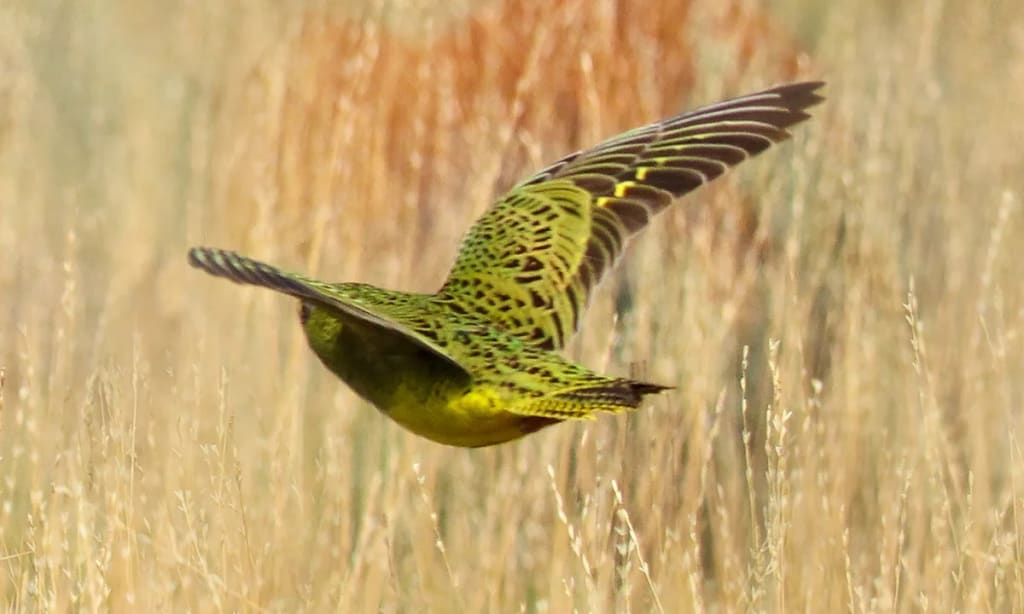
In the vast and often unforgiving landscapes of Australia, there lives a bird so elusive that for over a century it was believed extinct. The night parrot (Pezoporus occidentalis) is one of the world’s rarest and most mysterious birds, cloaked in secrecy and survival. Long hidden in the arid interior, its ghostly reputation made it a legend among ornithologists and bird enthusiasts alike.
For decades, no confirmed sightings existed, and many assumed the species had quietly vanished. Then, against all odds, the night parrot re-emerged—caught on camera and proving once again that nature still holds surprises.
A Bird Wrapped in Mystery
The night parrot is a small, ground-dwelling bird, mottled green and yellow, perfectly camouflaged against the dry grasses and spinifex habitats it calls home. Unlike many parrots, it avoids open skies and daylight, living a secretive nocturnal life.
First described in 1861, the night parrot quickly gained a reputation for being almost impossible to study. For much of the 20th century, no verified sightings were reported. Skepticism grew, and many scientists concluded the bird was extinct—another casualty of habitat destruction, feral predators, and a changing climate.
The Rediscovery
Everything changed in the 1990s when a series of tantalizing clues surfaced. A roadkill specimen found in Queensland in 1990 proved the species was still alive, though just barely. That discovery ignited hope and renewed efforts to locate the bird.
The breakthrough came in 2013, when naturalist John Young succeeded in photographing and filming a living night parrot in western Queensland. These images—the first ever of a living bird—were hailed as a triumph of persistence and a symbol of hope for conservation. Since then, additional detections, including recordings of the bird’s distinctive calls and camera-trap footage, have confirmed that small populations persist across remote areas of Australia.
Why Was the Night Parrot So Hard to Find?
Several factors contributed to the night parrot’s reputation as a phantom:
- Nocturnal behavior – It is active only at night, flying low and silently between feeding grounds.
- Secretive lifestyle – During the day, the bird hides deep within dense spinifex clumps, rarely emerging
- Sparse population – With numbers severely diminished, encounters are exceedingly rare even in its remaining habitats.
- Harsh environment – The bird’s arid, remote habitat makes it difficult for researchers to access and study.
Combined, these traits explain why even dedicated ornithologists struggled to locate the species for more than a century.
Conservation Challenges
The rediscovery of the night parrot was cause for celebration, but it also highlighted urgent conservation needs. With only a few known populations and habitats scattered across remote areas, the species remains highly vulnerable. Key threats include:
- Predation by feral cats and foxes
- Habitat destruction from grazing, fires, and invasive weeds
- Climate change altering arid ecosystems
To address these challenges, conservation groups and governments have established special reserves to protect known night parrot habitats. Camera traps, acoustic recorders, and strict access controls help minimize disturbance while allowing scientists to gather critical data on the bird’s behavior, diet, and breeding.
A Symbol of Hope
The story of the night parrot is more than a tale of a rare bird—it’s a reminder of the resilience of nature. Even in an age when many species are disappearing, the night parrot demonstrates that life can persist in the harshest conditions, hidden in the margins where few dare to look.
Its rediscovery has inspired broader conversations about biodiversity and conservation in Australia. If a species thought extinct for over a century can be found alive, what else might still be hiding in overlooked corners of the world?
Looking Forward
Today, the night parrot remains one of the world’s most enigmatic birds. Its populations are fragile, but thanks to careful conservation and technological advances, researchers are slowly piecing together its story. Each new sighting, each call recorded in the night, adds a piece to the puzzle and strengthens the resolve to protect this remarkable survivor.
The night parrot teaches us patience, humility, and hope. Extinction may sometimes be closer than we think—but so too can survival.
About the Creator
Keep reading
More stories from Briar Rose and writers in Earth and other communities.
Wildfire Mitigation in Utilities
Wildfires have become one of the most pressing environmental and safety challenges of our time. Rising global temperatures, prolonged droughts, and extreme weather patterns are driving an increase in the frequency and intensity of wildfires. For utilities—companies responsible for delivering electricity, gas, and water—these fires present not only an operational hazard but also a major public safety issue. As utilities are often cited as a source of ignition in some of the most destructive wildfires, the industry is under mounting pressure to strengthen its wildfire mitigation strategies.
By Briar Rose4 months ago in Earth
A building's lifetime climate impact is mostly determined by its daily energy use.
The majority of a building's climate impact is not caused by its construction. As the heating, lighting, and ventilation systems continue to function year after year, it gradually accumulates.
By Francis Damiabout 19 hours ago in Earth
Workers Recover 15,000 Crabs After Lorry Crashes Into Field
An extraordinary scene unfolded when a lorry carrying an estimated 15,000 live crabs crashed into a field, spilling its cargo across farmland and prompting a large-scale recovery effort. The unusual accident quickly drew attention from local residents, emergency services, and animal welfare groups, as workers scrambled to rescue as many crabs as possible before they succumbed to exposure.
By Aarif Lashari2 days ago in Earth
Ludacris and Nelly draw backlash over bookings at MAGA-coded music festival
Ludacris and Nelly headlining a mostly right-wing event is good for them. It’s also great for the genre of hip hop. The two rap veterans have showcased their talents on other stages. Why can’t they perform for mostly MAGA folks and grab that bag?
By Skyler Saundersabout 20 hours ago in Beat




Comments
There are no comments for this story
Be the first to respond and start the conversation.