
The most dangereous places on the Earth
Let's explore some of the most dangerous places on the planet.

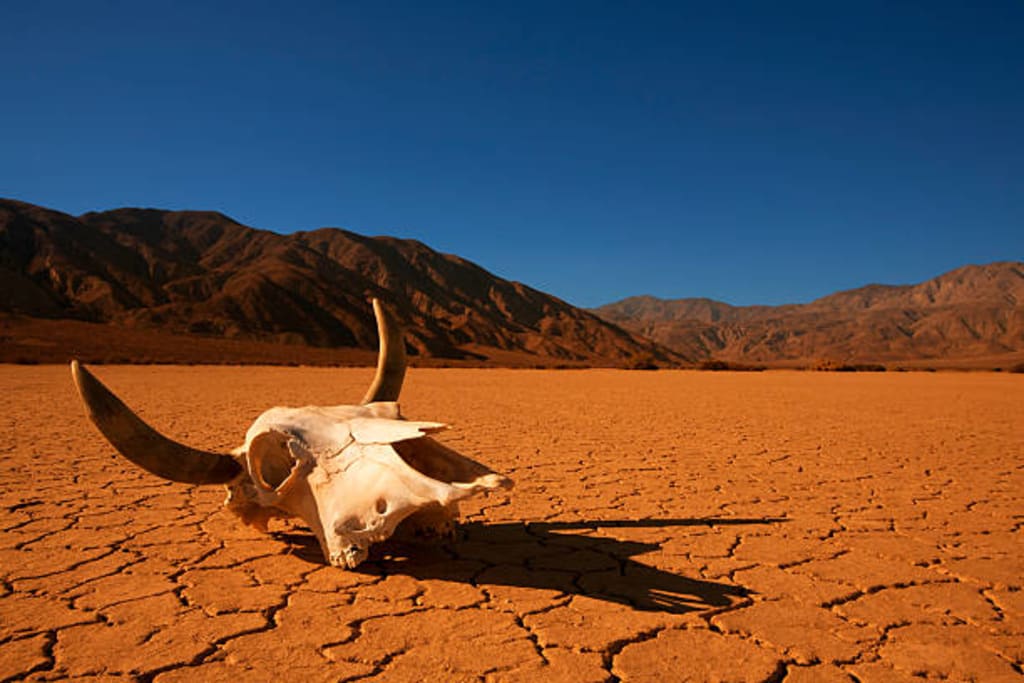
Were you aware that 93% of the total count of human beings who have existed in history are now deceased? In relation to each individual currently living, there exists a ratio of 15 individuals who have passed away. While our planet, Earth, presents inherent hazards, have you ever pondered the specific location that holds the title for being the most perilous? Setting aside rare anomalies, could you identify the consistently most hazardous place on the Earth's surface?
Let's commence by examining temperature extremes. Both extreme heat and extreme cold have the potential to induce fatality within a matter of hours, or in some cases, even minutes. In frigid environments, in the absence of protective clothing, the human body struggles to adequately sustain a sufficiently high internal temperature for survival. This is due to the substantial effort it demands. Surprisingly, even when you find yourself in a state of comfort and warmth, close to fifty percent of your daily caloric intake is allocated solely to the task of maintaining your body's core temperature within the appropriate range. If one were to disrobe an individual and place them in an environment where the temperature hovers around 0 degrees Celsius, their internal temperature would plummet to fatally cold levels within a timeframe of approximately 20 minutes. This underscores our essential reliance on warmth for survival.
However, there's a more immediate necessity we require than even temperature regulation, and that's oxygen. This brings us to the pinnacle of Mount Everest. Positioned on the Earth's surface, this location boasts an astonishingly sparse atmosphere. At the summit of Mount Everest, the breathable oxygen content is merely one-third of what is available at sea level. Climbers can endure these challenging conditions for brief durations after undergoing months of acclimatization. However, if you were to instantaneously teleport from your present location to the Everest summit, the likelihood is high that you would succumb within a mere 2-3 minutes due to the insufficient oxygen supply.
Death would arrive even more swiftly if you found yourself at the depths of the Mariana Trench. In this abyss, you would be submerged beneath approximately 7 miles of water, equivalent to around 11 kilometers. This colossal depth would subject your body to a crushing pressure exceeding 15,000 pounds per square inch. While at typical swimming depths you can hold your breath, descending to such depths under such immense pressure would immediately collapse your lungs. The absence of oxygen would swiftly render your brain unconscious in a mere 15 seconds, ultimately leading to your demise within less than 90 seconds. This demise would occur nearly as rapidly as someone entering the vacuum of outer space without a proper suit.
Meeting one's end by falling into a molten lake of lava is arguably among the most visually striking fates. In contrast to the portrayal often depicted in movies, the reality diverges significantly. The outcome wouldn't entail a mere mild singeing followed by a gradual submergence akin to quicksand. Instead, it would unfold with a remarkable display resembling a vivid fireworks show. Molten lava, searingly hot and resembling liquid rock, maintains a temperature four times exceeding the peak capacity of a typical oven. Meanwhile, the human body, composed predominantly of water, when subjected to such extreme heat, undergoes an abrupt conversion into steam, leading to an explosive reaction.
However, if our metric for measuring danger shifts from the speed of demise to the cumulative toll of fatalities caused, our investigation must shift to the microscopic realm. In 1918, the influenza outbreak claimed the lives of nearly 100 million individuals, equivalent to 3% of the global population at that time. Yet, even more chilling are the instances and epochs in which the plague surged with harrowing swiftness. Between 1347 and 1353, an astonishing one-third of Europe's populace fell victim to the bubonic plague, a grave infection driven by Yersinia Pestis. Despite the temptation to relegate the plague to bygone eras, its presence endures. While antibiotics have become our shields in many cases, it remains astonishing that the United States alone still sees 5 to 15 cases of plague contracted each year. However, in the grand calculus of total fatalities, the menace posed by the plague and influenza dims in comparison to the peril brought forth by an inconspicuous entity: plasmodium. This microorganism infiltrates our bloodstream through mosquito bites, giving birth to Malaria. Across the annals of human history, the death toll attributed to Malaria is staggering. Renowned scholars like Nobel laureate Baruch Blumberg have meticulously traced the contours of human genetics and migration. Their findings posit that among all those who have trod the Earth, an estimated half have met their end due to malaria. Consequently, when the panorama of fatalities spanning the entirety of human existence is contemplated, a setting where plasmodium could invade the bloodstream via a mosquito bite emerges as the statistically deserving bearer of the Earth's most treacherous designation.
Let's momentarily shift our focus to places characterized by danger that stems not from the Earth itself or its creatures, but rather from one particular species: us. Take, for instance, La Oroya, a mining town nestled in Peru. While its homicide rate remains relatively low, its pollution levels stand alarmingly high. The town's smelting operations discharge pollutants into the atmosphere, and atmospheric temperature inversions trap these gases, resulting in a staggering presence of arsenic in the air – a striking 85 times beyond safe thresholds. Yet, these concerns pale in comparison to the ominous reputation of Lake Karachay in Russia. This body of water has earned the dubious distinction of being labeled the most contaminated spot on the planet by the World Watch Institute on Nuclear Waste. The lake harbors such an abundance of radioactive pollutants that a mere hour of standing near certain sections of the lake could expose an individual to a lethal dose of radiation.
The Global Peace Index serves to rank countries based on their level of safety. This assessment encompasses various factors, including crime rates and political corruption. Notably, Iceland is hailed as the safest country, while Somalia claims the unfortunate title of being the least secure. However, if we delve into the category of the highest murder rates, the spotlight shifts to Juarez, Mexico, where a startling statistic emerges: out of every 1 million inhabitants, a staggering 1,477 individuals fall victim to murder annually. Interestingly, the depiction of Miami in the TV show "Dexter" showcases a remarkable number of serial killers, yet due to its large population, its fictional murder rate isn't the highest among television locales. This distinction is claimed by Cabot Cove, the setting for "Murder She Wrote." A comprehensive analysis of episodes from the show revealed a total of 274 murders in Cabot Cove, which, considering its modest population of 3,500, equates to an astonishing murder rate of 1,490 per million inhabitants. Until recently, this fictional statistic remained unmatched by reality. However, last year, San Pedro Sula in Honduras reported a jarring murder rate of 1,588 per million inhabitants, shattering the illusion that such figures could only be confined to fiction.
Let's conclude our discussion by delving into the realm of pollution, focusing on the Chernobyl disaster, which presents an intriguing paradoxical danger. Over the span of ten days in 1986, radioactive isotopes were released from a blazing reactor core, necessitating massive evacuations. Fast-forward more than 25 years, and numerous sectors within the exclusion zone remain profoundly hazardous. Curiously, in the absence of human presence, various portions of this exclusion zone have become sanctuaries for flourishing wildlife. Endangered species, in particular, have seized the opportunity to inhabit the exclusion zone, establishing homes, breeding, and living safely—safe, at least, from us.
It's a remarkable turn of events. Our actions led us to the point where a place became perilous enough to threaten human lives, compelling us to retreat. Paradoxically, as we departed, we unintentionally left segments of this area relatively safer for other life forms. This narrative underscores our ability to inadvertently harm environments to such a degree that they become untenable for us, while simultaneously fostering an environment where other creatures can thrive without our destructive influence.
About the Creator
Keep reading
More stories from Mario Rossi and writers in Earth and other communities.
The Decline of Reading Books:
Introduction: The Digital Age's Influence on Reading Habits In an era dominated by digital technologies and instant gratification, a troubling trend has emerged: a substantial reduction in the number of individuals who participate in reading books. The allure of screens, social media, and bite-sized content has fundamentally transformed the reading landscape, prompting an examination of the factors contributing to this cultural transition. From the screens of smartphones to the pages of e-readers, the very nature of reading is evolving within the digital age.
By Mario Rossi2 years ago in BookClub
The Reality of the Illusion of Time
Recently, as I strolled along the short stretch to my strength training session, I aimlessly took in the row of tatty shops and shabby buildings along the route and passed an off-street, in which one of my sisters used to live, around thirteen years ago.
By Chantal Christie Weiss3 days ago in Earth
Why Putin Went Quiet When Challenged by Trump Over Venezuela
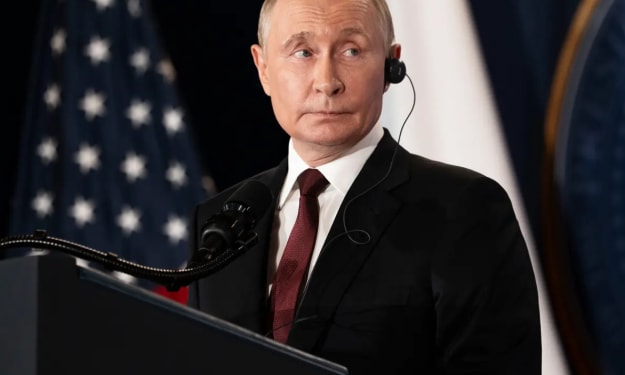
When U.S. forces captured Venezuelan President Nicolás Maduro in early January 2026, the world was stunned. Venezuela has long been a Russian ally, yet Russian President Vladimir Putin remained almost completely silent when challenged directly by U.S. President Donald Trump. Why would a leader so often outspoken on the world stage hold back in such a dramatic moment? Let’s unpack the story and explore what it means for global politics. A Bold Move That Shocked the World On January 3, U.S. forces executed a daring operation in Venezuela, taking Maduro into custody in New York to face charges including drug trafficking and narco‑terrorism. The operation was framed by the U.S. as a step to enforce justice, but critics saw it as an extraordinary overreach of power. Venezuela is no ordinary country for Russia. Since the days of Hugo Chávez, Moscow has cultivated close ties with Caracas, offering military support, energy deals, and diplomatic backing on the global stage. Past actions included Russian bombers visiting Venezuela and high-profile defense agreements. Given this history, many expected a fiery response from Putin. Yet, the Kremlin remained calm, issuing measured statements rather than sharp threats. Why Silence Was Strategic Experts suggest there are several reasons for Putin’s muted reaction, each revealing the careful calculation behind the Kremlin’s foreign policy. 1. Focus on the War in Ukraine Russia’s primary priority remains Ukraine. Engaged in a high-stakes military and diplomatic battle, Putin cannot afford distractions or new confrontations far from home. Escalating tensions with the United States over Venezuela could jeopardize Moscow’s position in Europe. A New York Times report highlighted that Russia is “subordinating all other interests to the war in Ukraine,” suggesting that even a high-profile ally like Venezuela takes a back seat to Moscow’s strategic goals. 2. Limited Military Options While Russia’s alliance with Venezuela is longstanding, much of the support has been symbolic rather than operational. Defense systems and military cooperation exist on paper, but Russia lacks the immediate ability to counter a U.S. operation thousands of miles away. Putin may have recognized that responding aggressively would be both ineffective and costly, potentially risking military and economic consequences that Moscow cannot afford. 3. Maintaining Diplomatic Channels with Washington With Donald Trump back in the White House since 2025, there has been cautious optimism in Moscow about recalibrating U.S.–Russia relations. Avoiding a dramatic confrontation over Venezuela keeps diplomatic channels open, allowing Russia to negotiate on other high-priority issues like Ukraine and sanctions relief. In other words, silence can be a calculated strategy, signaling restraint rather than weakness. 4. Russia’s Global Influence Is Waning The Maduro episode also highlights a broader geopolitical reality: Russia’s global reach has limits. Since the 2022 invasion of Ukraine, Moscow’s influence in regions like the Middle East and parts of the former Soviet Union has weakened. Venezuela remains one of its few high-profile allies outside Europe, but even there, Russia’s power is largely symbolic. By not escalating, Putin is acknowledging a practical truth: Russia cannot be everywhere at once, and some battles are not worth fighting. 5. Choosing Battles Wisely Some analysts emphasize that Putin’s quiet response is more about strategic prioritization than capitulation. In a world dominated by nuclear powers and volatile global politics, direct confrontation with the United States over Venezuela could spiral into a far larger crisis. By staying silent, the Kremlin may be signaling that it picks its battles carefully, focusing resources on Ukraine, where the stakes are highest. What This Means for the World Putin’s silence sends several messages: Russia is currently stretched, economically and militarily. Moscow is prioritizing Ukraine over symbolic allies. Strategic restraint is sometimes more powerful than public confrontation. The limits of Russian influence are becoming more visible to the world. This episode reflects a new reality in geopolitics: power is as much about choosing when not to act as when to assert force. The Bigger Picture The capture of Maduro is a defining moment not just for Venezuela, but for global politics. It shows the United States asserting power in a way not seen for decades, while Russia’s quiet reaction underscores its current limits and priorities. For observers, Putin’s silence is a lesson in modern geopolitics: even the most assertive leaders exercise restraint when stakes are high and risks are global. In the end, the Maduro affair reminds us that in today’s world, the loudest response is not always the most effective one — sometimes, quiet calculation speaks volumes. Sources and Further Reading The US capture of Maduro reveals Russia’s weakness – Atlantic Council ‘It sends a horrible signal’: US politicians react to capture of Nicolás Maduro – The Guardian Russia slams 'neocolonial threats' against Venezuela – Reuters
By Muhammad Hassan6 days ago in Earth


Comments
There are no comments for this story
Be the first to respond and start the conversation.