
The Loudest Animals on Earth (And They’re Not Who You Think)
Forget lions and tigers — these creatures break the silence with record-shattering sound.

Sperm Whale Clicks — The Loudest Sound in the Animal Kingdom
When it comes to sound, the sperm whale is unmatched. These deep-sea giants produce clicks that can reach up to 233 decibels — louder than a jet engine at takeoff. These clicks are part of their echolocation system, used for navigating and hunting in the dark ocean depths.
Sperm whales emit these sounds in short bursts to locate prey, communicate with others, and map the underwater world. Despite their power, these sounds are highly directional, focusing the energy like an acoustic laser. If you were near one of these clicks underwater without protection, it could seriously damage your hearing or even injure tissue. They may not roar, but sperm whales are sonic titans of the sea.
Pistol Shrimp — The Underwater Sniper
This tiny creature — only about 5 cm long — holds a world record for the loudest noise per body size. The pistol shrimp creates an explosive snap with its specialized claw, generating bubbles that collapse at speeds of over 60 mph. This produces a shockwave reaching 210 decibels — enough to stun or kill nearby prey.
What’s more fascinating is that the collapse of the bubble produces a flash of heat close to the temperature of the sun’s surface, though it only lasts microseconds. This is one of the few times where sound becomes a weapon, making this shrimp one of the most dangerous animals at its size.
Howler Monkeys — The Loudest Land Mammals
High in the canopies of Central and South America, howler monkeys earn their name with roars that can travel up to 5 kilometers through dense jungle. At around 140 decibels, their calls are used to claim territory and warn rival groups to stay away.
Male howlers have an enlarged hyoid bone in their throats that acts like a resonating chamber, amplifying their calls. These vocalizations are so deep and powerful that they often shake the forest with sound, a phenomenon rarely found in non-human mammals. Despite their noise, howler monkeys are generally peaceful — it’s mostly sound bluffing to avoid fights.
Blue Whales — The Deep Singers
Blue whales are known for their deep, rumbling songs — low-frequency sounds that can travel across entire ocean basins. Their calls typically reach 188 decibels, although they sound quieter to human ears because of the low pitch.
These vocalizations help them locate mates, navigate long distances, and maintain contact across vast areas of open water. In ideal ocean conditions, a blue whale’s call can be heard by other whales up to 1,600 kilometers away. Their sound isn’t sudden or sharp like the sperm whale’s click, but in terms of endurance and distance, their voices dominate the sea.
Cicadas — The Noisy Insects of Summer
Cicadas are insects famous for their shrill, continuous calls during hot summer days. Some species, like the African cicada (Brevisana brevis), can produce sounds up to 106 decibels — equivalent to a chainsaw. What’s remarkable is that they do this using no lungs at all.
Male cicadas have structures called tymbals on their abdomens, which they vibrate rapidly to produce sound. Their hollow bodies act as amplifiers. These calls are meant to attract females, and some species sing in synchronized choruses, creating a wall of sound so intense it can overwhelm the ears of predators.
Northern Elephant Seals — The Roaring Beasts of the Beach
On coastal beaches during mating season, male elephant seals engage in loud vocal battles to compete for harems. Their booming grunts and roars, which reach up to 126 decibels, are broadcast through inflated nasal cavities that serve as natural echo chambers.
These sounds serve as both threats to rivals and signals to females, asserting dominance without needing constant physical fights. The noise often echoes across entire colonies, and the largest males with the deepest, loudest calls usually win breeding rights — proving that in the animal world, volume can mean power.
Bullfrogs — The Amphibian Amplifiers
Don’t let their size fool you — American bullfrogs can produce croaks up to 119 decibels. That’s louder than a typical rock concert. Their calls, mostly heard during mating season, are so powerful because of their resonating vocal sacs, which expand like balloons to broadcast their calls across ponds and wetlands.
Bullfrogs also use these sounds to establish territory and ward off rivals. Despite their peaceful appearance, bullfrogs are aggressive both vocally and physically, and their sound is a survival tool as much as a love song.
Community
In the animal kingdom, sound isn’t just noise — it’s a survival strategy. From the deafening clicks of sperm whales to the explosive snaps of pistol shrimp, nature has evolved creatures that use sound to hunt, communicate, and compete. Often, it’s the smallest or least expected animals that are the loudest.
These record-holding vocalists remind us that power doesn’t always roar — sometimes it clicks, grunts, snaps, or hums across oceans and forests. And just like us, animals use their voices to be heard, understood, and remembered.
If this article made you rethink which animals rule the wild with sound, share it with someone who still thinks lions are the loudest. Because the real noise-makers are out there — and they’re louder than you’d ever guess.
About the Creator
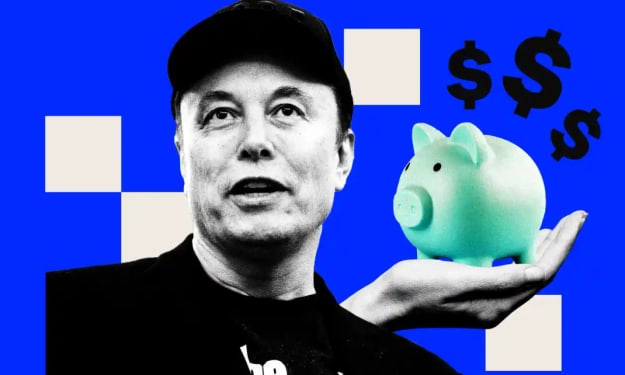
Elon Musk Says Retirement Savings “Won’t Matter” in 20 Years—Here’s What Experts Think
Recently, Elon Musk sparked a heated debate on social media with a bold claim: in 20 years, traditional retirement savings “won’t matter.” The Tesla and SpaceX CEO suggested that the way people think about money and retirement today might be completely obsolete in a couple of decades. As usual, Musk’s statements are equal parts provocative and visionary, leaving many wondering whether they should rethink their financial plans entirely. To get clarity, we reached out to seven personal finance and AI experts to hear their thoughts on Musk’s prediction. Their insights provide a mix of caution, optimism, and futuristic thinking. 1. The Case for Obsolescence: AI and Automation AI strategist Dr. Karen Liu believes Musk isn’t exaggerating when he talks about the diminishing importance of retirement savings. “If AI and automation continue at the current pace, many traditional jobs could disappear,” she explains. “By 2046, people might earn income from AI-driven ventures, digital assets, or royalties rather than a 9-to-5 paycheck. In that case, the way we save for retirement could indeed look very different.” She emphasizes that new financial models might emerge, such as universal basic income (UBI) or AI-managed wealth portfolios, making conventional retirement accounts less critical. “People might no longer need 401(k)s or IRAs in the same way we do now,” she adds. 2. The Human Factor: Some Things Don’t Change Personal finance advisor Marcus Bell takes a more conservative view. “Even if the economy changes drastically, money management skills won’t be irrelevant,” he says. “Musk may be right that retirement savings as we know them may evolve, but having a financial cushion will always matter. Emergencies, healthcare costs, and life changes won’t disappear.” Bell suggests a hybrid approach: continue contributing to traditional retirement accounts while exploring alternative investments like digital currencies, AI-managed funds, or entrepreneurial ventures. 3. Cryptocurrency and the Digital Asset Revolution Crypto expert Priya Desai sees Musk’s comment as a nod toward the rise of digital assets. “By 2046, much of personal wealth may reside in cryptocurrencies, tokenized real estate, and NFTs rather than bank accounts or pensions,” she says. Desai believes that blockchain technology could redefine ownership and wealth accumulation, making traditional retirement savings less central. However, she cautions: “Digital assets are highly volatile. While they may replace some retirement vehicles, they aren’t a guaranteed substitute. Diversification will remain crucial.” 4. AI-Powered Wealth Management AI entrepreneur Rohan Kapoor points out that AI itself could make traditional retirement planning almost obsolete. “Imagine AI systems that continuously optimize your investments, taxes, and spending in real-time,” he says. “If AI handles wealth accumulation more efficiently than humans, you may not need to manually save and plan decades in advance.” Kapoor predicts that by 2046, AI advisors could create personalized financial lifelines that automatically adjust for inflation, market changes, and lifestyle goals. In this scenario, traditional 401(k)s might feel outdated. 5. The Social Safety Net Factor Economist Dr. Elise Morgan reminds us that social and political structures will also play a role. “Even if technology changes how wealth is accumulated, government programs like Social Security, healthcare, or UBI will shape retirement,” she explains. “Musk’s statement assumes a high-tech, highly automated economy, which is just one possible scenario.” Morgan urges caution: relying solely on futuristic predictions could be risky. Traditional savings may still act as a fallback if economic or technological disruptions fail to deliver as Musk anticipates. 6. Mindset and Wealth Beyond Money Financial psychologist Sandra Liu emphasizes that wealth isn’t only monetary. “Even if retirement accounts lose their traditional meaning, financial literacy, resourcefulness, and the ability to leverage technology will remain critical skills,” she says. “Musk’s prediction is more about mindset than accounts. People who can adapt, innovate, and use technology to generate income will thrive regardless of conventional savings.” 7. Preparing for the Future, Not Panicking Finally, futurist Jared Thompson encourages a pragmatic approach: “Don’t panic or abandon your retirement plan just because Elon Musk said so. Think of it as a signal to diversify—invest in tech, learn AI skills, and explore new income streams.” Thompson suggests a “layered strategy”: keep some traditional retirement savings while experimenting with AI-driven investment platforms, cryptocurrencies, and entrepreneurial projects. What Does This Mean for You? Musk’s prediction may sound extreme, but the expert opinions reveal a spectrum of possibilities. Here’s a practical takeaway: Keep saving, but diversify: Don’t abandon retirement accounts, but explore AI-driven investments, crypto, or digital assets. Invest in skills: AI, coding, and tech literacy may be as valuable as cash reserves in 20 years. Embrace flexibility: Financial plans should be adaptable to rapid technological and societal changes. Mind the basics: Emergency funds, debt management, and smart spending remain essential regardless of tech trends. In short, Musk’s warning isn’t necessarily a call to abandon traditional retirement planning—it’s a reminder that the future of money is changing rapidly. Those who combine conventional strategies with an eye on emerging technologies may be the ones who truly thrive in 2046. Conclusion: Elon Musk’s claim that retirement savings “won’t matter” in 20 years is provocative, but it opens an important conversation about the intersection of finance, technology, and the future of work. While some experts see it as a harbinger of radical change, others stress prudence and flexibility. Either way, the message is clear: the next two decades will demand both financial savvy and tech literacy. The question isn’t whether retirement savings will disappear—it’s whether you’ll adapt to the evolving financial landscape.
By Muhammad Hassan5 days ago in Earth
Things you don't know about Africa
Africa: What You Probably Didn’t Know Article No. 1671 Tuesday, 25 February 2020 By Wardah Baloch In terms of land area, Africa is the second-largest continent in the world. It covers nearly 22 percent of the world’s total landmass and about 6 percent of the Earth’s total surface area. Only Asia is larger than Africa in size.
By Sudais Zakwan5 days ago in Earth



Comments
There are no comments for this story
Be the first to respond and start the conversation.