
The Lost Giants of Our Earth
Discover how dinosaurs, mammoths, and other prehistoric creatures once ruled the planet—and how science uncovered their forgotten world.

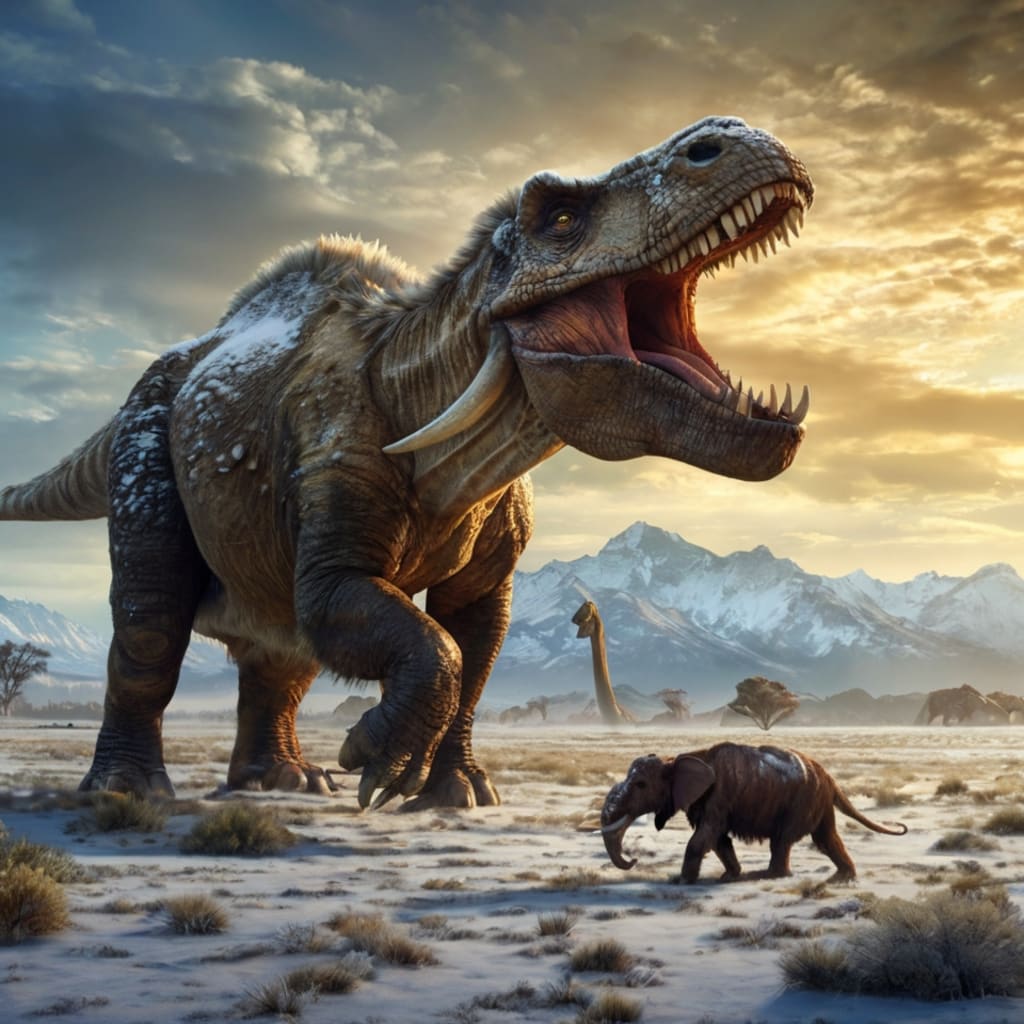
The Lost Giants of Our Earth
BY: Ubaid
Millions of years ago, long before humans walked the Earth, our planet was home to strange and extraordinary creatures. Some of them were so enormous that even today’s mighty elephants would have looked like dwarfs standing beside them. These fascinating animals belonged to an age that scientists call prehistoric times, a period far earlier than the beginning of recorded history.
Among these giants were the dinosaurs, creatures whose bones and fossils still spark awe and curiosity in us. But dinosaurs were not the only wonders of that forgotten world. Alongside them lived terrifyingly large birds, hairy elephants with tusks that touched the ground, and many other mysterious animals that no longer exist.
---
A World of Giants
The dinosaurs are perhaps the most famous of these creatures. Some were massive plant-eaters, stretching as tall as buildings, while others were fierce hunters with teeth like knives. They dominated the Earth for millions of years, ruling the land, the seas, and even the skies.
But the skies themselves were once filled with creatures even more unusual—giant flying reptiles. Unlike modern birds, their wings were not made of feathers. Instead, they were formed of thin, leathery skin stretched across long finger bones. These winged beasts soared through the air, hunting fish and smaller animals, casting enormous shadows across the prehistoric landscapes.
On the ground, another remarkable creature roamed: the woolly mammoth. Imagine a giant elephant, but covered from head to toe in long, shaggy hair. Its curved tusks stretched so far that they almost scraped the ground. With their imposing size and thick coats, mammoths were perfectly adapted to survive the freezing climates of the Ice Age. Yet despite their strength and appearance, they too eventually vanished.
---
The Mystery of Extinction
This leads us to an important question: How do we even know these creatures ever existed? None of us have ever seen a living dinosaur or mammoth. So where does our knowledge come from?
The answer lies hidden beneath layers of earth and ice. Many prehistoric animals left behind fossils—the preserved remains of bones, teeth, and sometimes even skin or fur. Over thousands and millions of years, these remains became buried under mud, sand, and snow. The softer parts of their bodies decayed, but the bones survived. As time passed, the soil and sand hardened into rock, sealing the skeletons inside like nature’s time capsules.
Some discoveries were particularly dramatic. In places like Siberia (Russia) and Alaska (United States), entire mammoth carcasses have been found frozen in solid ice. Their fur, tusks, and even stomach contents remained almost perfectly preserved. These frozen remains gave scientists an extraordinary opportunity to study what the mammoths looked like and even what they ate in their final days. Research shows that mammoths lived about 10,000 years ago, until sudden and violent snowstorms buried them beneath glaciers of ice.
Dinosaurs, on the other hand, lived much earlier—around 140 million years ago. In regions such as California, USA, scientists discovered dinosaur skeletons trapped in tar pits, a kind of sticky natural asphalt that preserved their bones for millions of years. All over the world, similar discoveries have helped piece together the puzzle of prehistoric life.
---
The Work of Science
Every fossil tells a story. From a single tooth or claw, scientists can guess the size of an animal, its diet, and even how it might have behaved. A large, sharp tooth suggests a hunter; a flat grinding tooth points to a plant-eater. Wing bones reveal how far a flying reptile could soar. Curved tusks tell us how mammoths defended themselves and dug through snow to find food.
Through patient study, paleontologists—scientists who specialize in fossils—have reconstructed the appearance of these long-lost animals. They use comparisons with modern animals, advanced technology, and detailed research to create life-like models and illustrations. Museums across the world display giant skeletons of dinosaurs and mammoths, giving us a glimpse into a world that no human ever saw alive.
---
Lessons from the Past
The story of these vanished creatures is not just about wonder and curiosity—it is also a reminder of how fragile life can be. The dinosaurs ruled the Earth for millions of years, yet a sudden catastrophe, perhaps a giant asteroid strike or massive volcanic eruptions, wiped them out. The mammoths, once perfectly adapted to cold, could not survive when the climate suddenly warmed and humans began hunting them.
These extinctions show us how much the survival of species depends on their environment. They remind us that no matter how powerful a creature may seem, nature always holds the final decision.
---
A World Preserved in Stone and Ice
Today, when children visit museums and stand beneath the towering skeleton of a dinosaur or touch the curved tusk of a woolly mammoth, they are standing face-to-face with history itself. These discoveries connect us to a time so distant that it is hard to imagine.
The Earth has been home to countless forms of life, most of which disappeared long before humans existed. Yet thanks to the rocks, fossils, and frozen remains left behind, their stories are not lost forever. Instead, they live on in our imaginations, in science, and in the silent bones that whisper tales from a forgotten world.
---
Conclusion
The dinosaurs, the flying reptiles, the mammoths, and many other strange beasts are gone now, but their presence still shapes our curiosity. They make us wonder about the mysteries of life, change, and survival. They remind us that our planet is ancient, ever-changing, and filled with secrets waiting to be uncovered.
Through fossils, ice, and stone, the giants of prehistory still speak to us, urging us to look back—not just with fascination, but also with respect for the delicate balance of life on Earth.
About the Creator
Nuclear Transmutation: The Accidental Dream of Making Gold
Picture a laboratory humming with quiet intensity, banks of instruments blinking in the low light, and somewhere inside a shielded reactor chamber, something almost magical is happening. An element is changing. One thing is becoming another. What was mercury is now, atom by atom, becoming gold.
By CurlsAndCommas3 days ago in Earth



Comments
There are no comments for this story
Be the first to respond and start the conversation.