

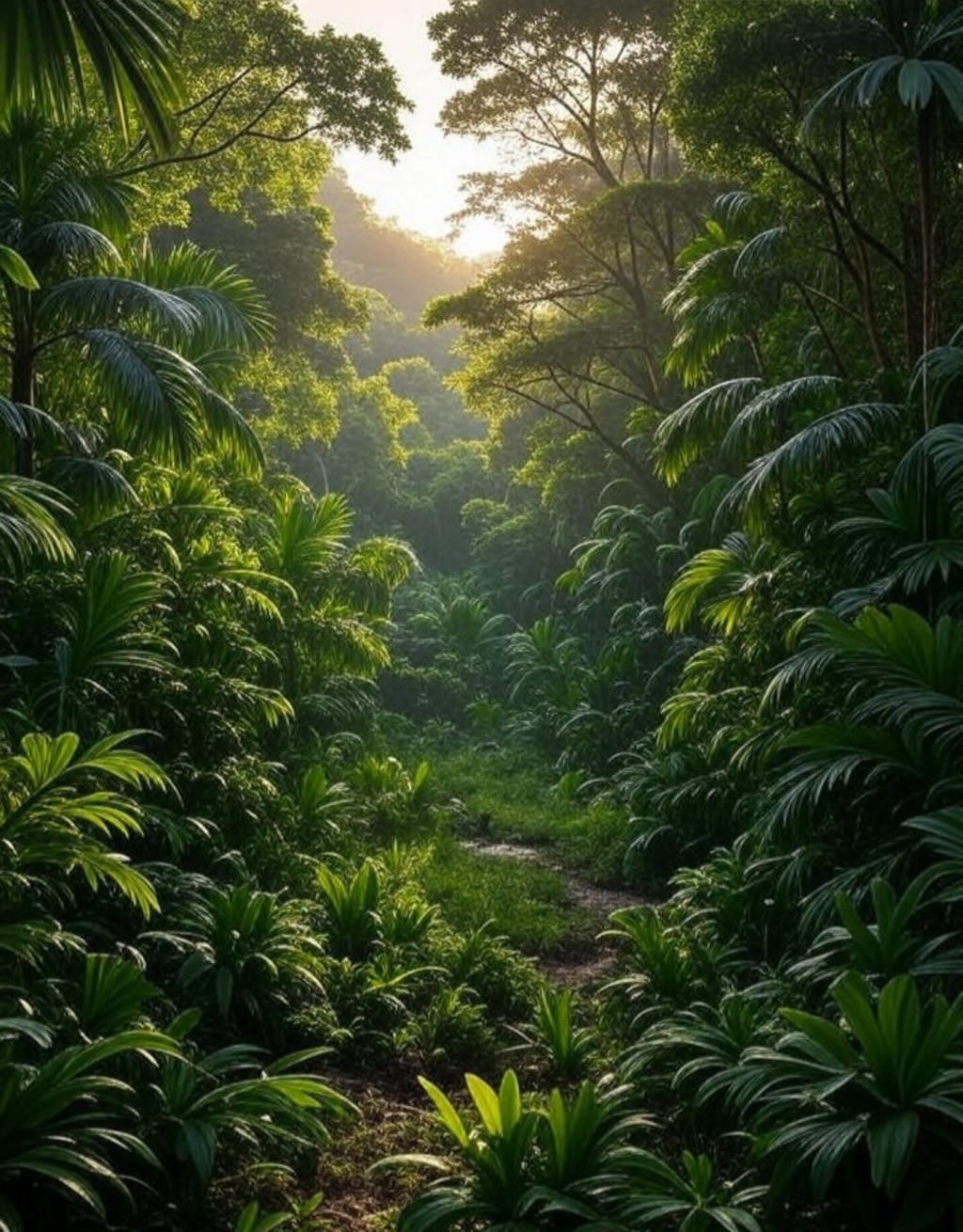
Before cities rose and roads crisscrossed the Earth, there were only the wild lands—untouched, untamed, and unknown. And within these wilds, where sunlight barely touched the ground and every sound told a story, the jungle was born.
The making of the jungle didn’t happen all at once. It began with the rains—endless, powerful, and nourishing. The skies above certain lands opened often, showering the earth with warm water. This rain, combined with heat and sunlight, created perfect conditions for life to grow—fast and wildly.
At first, there were only small plants. Mosses crept across rocks. Ferns unfurled beside streams. Then came the trees—tall, strong, and determined. One tree became two, two became twenty, and soon, a thick green ceiling covered the land. The forest floor, shaded and moist, became home to vines, mushrooms, and insects.
With plants came animals. The smallest ones—ants, beetles, and butterflies—made their homes in the leaves and bark. Frogs sang near puddles, while snakes slid silently through the underbrush. Birds with bright feathers soared between the branches, and monkeys leaped from tree to tree, laughing in the morning light.
The jungle was not just one place—it was a world of many layers. The top was the canopy, where the tallest trees reached for the sun. Below it was a world of branches and vines, buzzing with life. And beneath all that, in the dim light near the forest floor, grew plants that never saw direct sunlight but thrived just the same.
Every creature in the jungle had a role. The jaguar stalked quietly, hunting in the shadows. The parrot called out warnings from high above. Bees pollinated flowers, while fungi broke down dead trees to feed the soil. Nothing was wasted. Everything had its place. The jungle lived, breathed, and pulsed with an invisible rhythm.
Humans came much later. The first people who entered the jungle came with awe in their hearts. They saw the jungle as sacred—a giver of food, shelter, and wisdom. They learned which plants could heal wounds and which berries to avoid. They watched the animals and listened to the sounds of the forest. Their stories, passed down for generations, told of jungle spirits, ancient trees, and hidden rivers of gold.
But as time passed, more and more people arrived—not all with respect. Trees were cut down. Roads were carved. Animals lost their homes. Some jungles vanished, leaving behind silence and dry soil. The living maze began to shrink.
Yet, the jungle is resilient. Even today, in the heart of untouched lands, jungles thrive. They still shelter countless species—many of which we have not even discovered. They still produce the air we breathe and the medicines we use. They still hold mysteries no human has solved.
Scientists now say that jungles—especially rainforests—are the lungs of our planet. Without them, the Earth would lose its balance. That’s why people around the world are fighting to protect them. Replanting trees. Protecting animals. Teaching children the importance of these green worlds.
Because a jungle is not just a place—it’s a miracle. A reminder of how life, given time, can grow wild and beautiful. A whisper from the past, telling us to walk gently, listen carefully, and protect what we do not fully understand.
So, the next time you see a jungle—in a book, a film, or maybe even with your own eyes—remember this: it was not made in a day. It was not made by man. It was made by rain, sun, soil, and time. It was made by life itself, growing in perfect chaos.
And as long as we care, the jungle will continue to grow, sing, and live—deep, green, and eternal.
About the Creator
Raza Ullah
Raza Ullah writes heartfelt stories about family, education, history, and human values. His work reflects real-life struggles, love, and culture—aiming to inspire, teach, and connect people through meaningful storytelling.
Keep reading
More stories from Raza Ullah and writers in Earth and other communities.
Mirror of the Mountains
Long ago, before humans walked the Earth and cities dotted the landscapes, the world was a wild, untouched canvas. Mountains stood tall, forests stretched endlessly, and rivers wound their way like silver threads. But hidden among valleys and deep in the folds of the earth, something magical was being created—lakes.
By Raza Ullah7 months ago in Earth
Pictured: British Mother Stabbed to Death in Spain
The tragic death of a British mother who was stabbed to death in Spain has sent shockwaves through both the local community where the incident occurred and her hometown in the United Kingdom. Spanish authorities have confirmed that the woman died after sustaining fatal stab wounds, and an active investigation is underway to determine the circumstances surrounding her death.
By Aarif Lashari4 days ago in Earth



Comments (1)
Jungle.