
The legacy of Pulitzer-winning
Novelist Cormac McCarthy
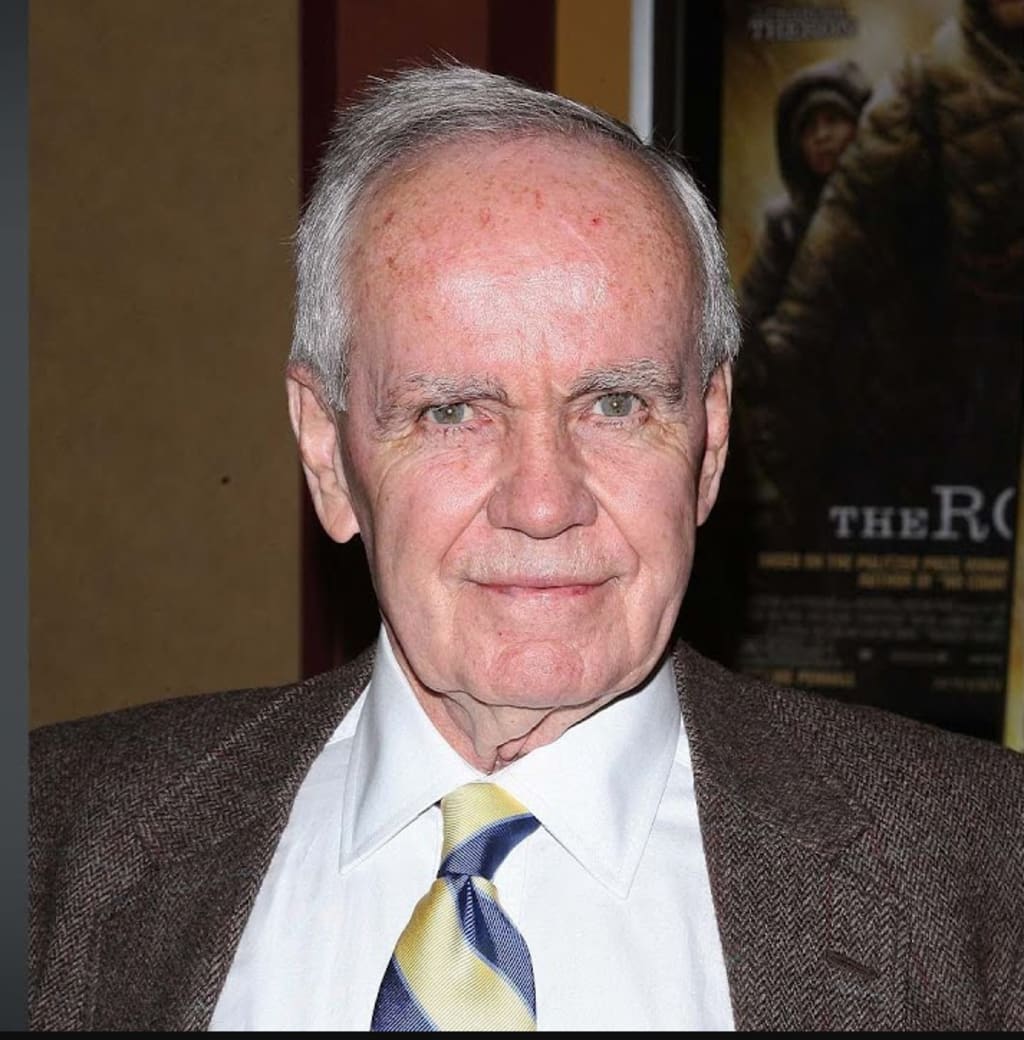
Cormac Mccarthy died today at his home instead of a New Mexico. His books often focused on loss and bloodshed set everywhere from the American west to a post-apocalyptic world. They were often with moral ambiguity which included some of his best-known works such as "No country for old men" and"the road." Critics likened him to Faulkner, Hemingway and Melville. Joining us as the author of many novels and a literary critic himself. Thank you for joining us. Cormac Mccarthy was one of our greatest writers, known for his violent and bleak depictions, the dark view of the human condition, but you never really wrote an uninteresting sentence. What informed his approach to writing? >> Well, cormac Mccarthy was kind of a hybrid of the great American novelist of the last 150 years. For some reason, he channeled in an authentic way, not that he was copying others, everybody from Melville on. He was a very masculine novelist. That needs to be noted. His last novel was narrated by a female character, something he had been preparing for for 50 years. He was very settled in his tradition. He absorbed all the great writing and somehow he managed to channel it in a new way as though it came from his deepest self. It was as though he was a river that all the other rivers flowed into. Geoff: He was relatively obscure for most of his career and when fame and acclaim eventually found him, he really a board talking about -- abhorred talk about his books. Is it fair to say he was the most celebrated reclusive writer since J.D. Salinger? Walter: We have a few celebrated reclusive writers in this country, but Mccarthy, who did get around. He just lived a very private life. It was not as though he was completely hiding out and didn't want his photograph taken. But, he was hard to meet. You have to go to Santa fe. You had to seek him out. He was not pushing America away. He just wanted to do his business and his business was the page, and that was where he focused himself. Geoff: You reviewed all of his books. What lines or passages stuck with you, resonated with you? Walter: I cannot claim to have reviewed all of them. I have reviewed quite a few of them. Mccarthy wrote every genre. He wrote a great suspense novel, "No country for old men." A great historical, almost horror novel in "Blood meridian." And a dystopian science fiction novel in "The road." That is what I think of most of these days because it dealt with war and an uncertain future, and perhaps an apocalypse on the horizon for a country much like the U.S. It is a very haunting book. At the very end of it where he looks back at the American landscape through a clear stream back into the primeval, pre-civilization of this continent really sticks with me now. Geoff: How do you think Mccarthy and his body of work, how will it be remembered? Walter: It is going to be remembered with extreme fondness, respect, and I think affection. He was a popular novelist. Once he got going with all the pretty horses in the early 1990's, he became a best-selling American novelist whose books were made into movies and whose work became familiar. When he died today, it was not just literary people who started texting me and saying can you believe it? It was people of all kinds. The general reader. We don't think the general reader exists in the united States anymore, but she does, he does and they do,. Cormac wrote for all of them. Geoff: How does his influence show up in contemporary writing? Walter: Well, in some ways, he was a writer of ancient prose. He sounded at times like the bible, at times like ancient philosophical texts. He really combined knowledge of the past and present in a way few do here. I think he will be remembered as a kind of gold standard for a very strong, minimalist American prose. His early books were anything but minimalist. If you look at "Blood meridian," it was a book that might have been written by a mad prophet of the desert in the year 0. Geoff: Walter kirn, thank you for joining us as we acknowledge and pay tribute to the many contributions of cormac
About the Creator
A building's lifetime climate impact is mostly determined by its daily energy use.
The majority of a building's climate impact is not caused by its construction. As the heating, lighting, and ventilation systems continue to function year after year, it gradually accumulates.
By Francis Damia day ago in Earth
Workers Recover 15,000 Crabs After Lorry Crashes Into Field
An extraordinary scene unfolded when a lorry carrying an estimated 15,000 live crabs crashed into a field, spilling its cargo across farmland and prompting a large-scale recovery effort. The unusual accident quickly drew attention from local residents, emergency services, and animal welfare groups, as workers scrambled to rescue as many crabs as possible before they succumbed to exposure.
By Aarif Lashari3 days ago in Earth
"Hear Me Out"
"Hear me out, what if we ran away together?" "Where do you want to go?" "Anywhere but here. We could move to a new city or to Canada, or we could disappear from society to live in the middle of the woods. Maybe a combination of two of those things would be good. What do you say?"
By Kay Husnick8 days ago in Fiction




Comments
There are no comments for this story
Be the first to respond and start the conversation.