
The Human Super Computer
Why humans are making machines in their own image. It may be our only hope.

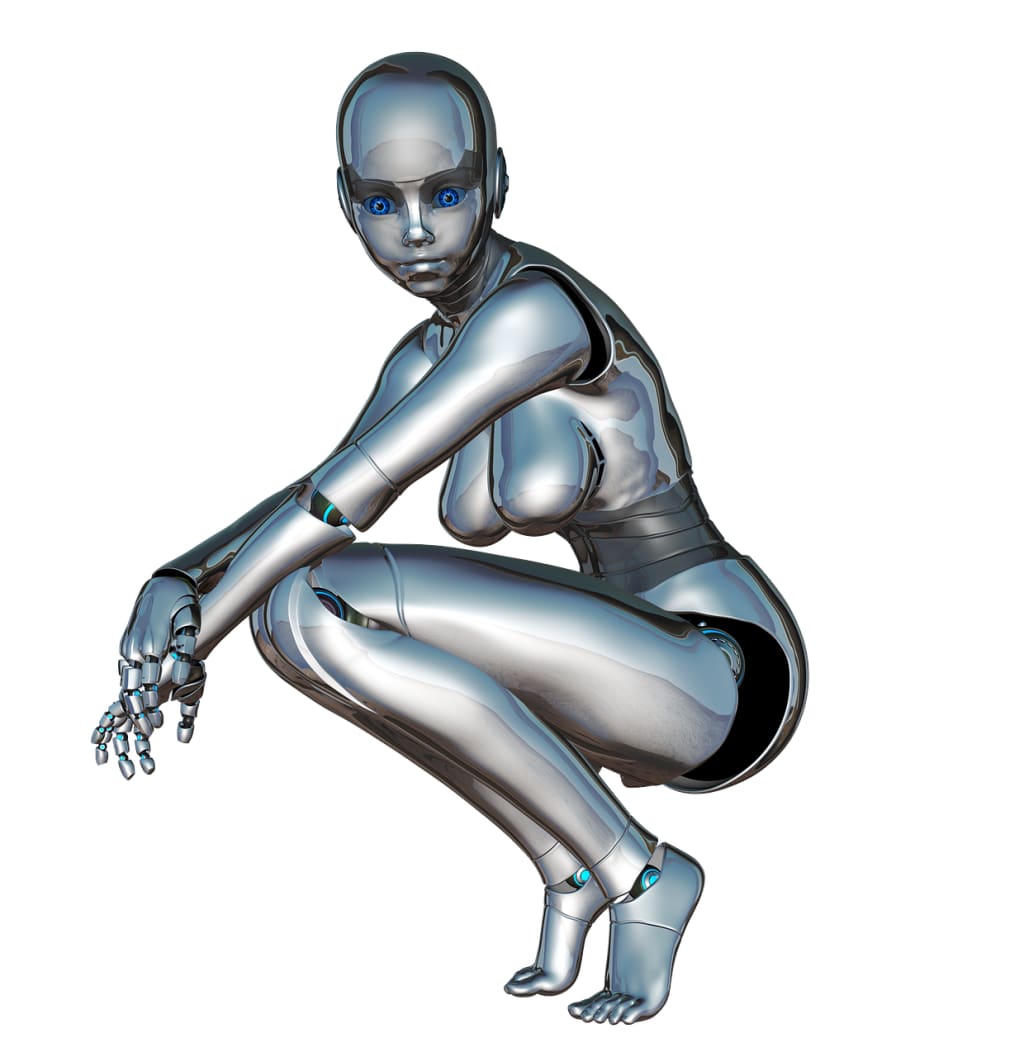
Humans and computers are more alike than most of us know, and for a good reason. They are created like humans because we humans, created them. In our own likeness. We took on the role of a God, Creator and Destroyer, Ruler and Champion, and became all of the above, one and the same.
In the beginning, there was nothing more than human beings and rocks. Okay, maybe there was some vegetation and some other animals, but let's get real for a moment. As soon as we could, we made things. A sharp rock to cut, a round one to bash stuff with, a smooth one to beat stuff against and then we found out what fun jabbing something with a sharpened stick could be, and we combined them. It wasn't long before we were clubbing seals to death and spearing fish, shaping clay and smelting iron in a fire. I'm speaking in relative terms, relative to a god that has lived a hundred thousand years, not we puny human gods.
Before long, we realized that there was such a thing as Ecle-trick-city, as Mr. Weasley likes to call it. A key and a kite and a thunderstorm, and there ya have it. Electricity. Well, it gets a bit more complicated as time goes on, but eventually we decided it would be "cool" to harness this electrical charge, rather than just going around town and zapping everyone with a lightning charged key made of bronze. Yes, I'm being facetious. I know.
600 BC, a Greek Philosopher Thales of Miletus describes Static Electricity. 1752 Benjamin Franklin does his key and kite dance, and in 1800 Alessandro Volta (sounds like the word "volt", doesn't it?) realizes he can create a current of electricity using bowls of salt water connected with metal strips. The first battery. Also known as a capacitor. The most basic components of all technology are all inherently simple. You need a charge, somewhere to hold or contain it, a way to conduct it, and a way for it to exert influence. Electricity, a battery, a conductor or circuit, and, well, a way to exert influence can be nothing more than a coil of wire, or the most amazing and complex of mechanisms.
As soon as we discovered what electricity was, we were eager to utilize it for our benefit. Then we wanted to control it. Direct it. Use it for anything we could. The telegraph was one such way, allowing communication over vast distances long before the lightbulb was ever invented. We had no idea the number of things we could do with this marvelous invention, but we were bound and determined to try.
With reference to computers and computerized circuitry, as soon as we related the ability to hold a charge, to that of the human mind to remember something, we were hooked. We then built upon that, creating counters, and rudimentary adding machines, and then calculators. We gave our creations the best brains we could, and then nervous systems, more memory and eventually, the ability to move. Now our computerized children provide so much for us in the way of luxury, technology, communication, constant attention, and more, that we can barely imagine a world without their vigilant toiling for our benefit.
A world without computers, even the simplest capacitor with the ability to hold a single charge, would be what scientists call, and extinction level event. No, we wouldn't all go extinct. Just most of us. Like... 99.999% of us. How many people do you know that can start a fire without a lighter? Lighters are just a fancy way of using a flammable gas and a flint to make a flame, so maybe lighters aren't so technologically advanced as I like to think. What about farming your own food? Or hunting? Do you know how to hunt? How to skin an animal and cook it and eat it? Do you know what plants in your backyard are poisonous and which ones can safely be eaten?
Now ask yourself, how many people can live without computers? Specifically, anything that is a computer, or uses a computer chip. Your phone, home computer or laptop, vehicle, home furnace or air conditioning, home electricity, and well, computers control the pumps that provide water pressure so, we can eliminate that too. Simply put, eliminating all these little marvels we call computers, would throw our entire world back a moment just past the iron age. A world with a lot of sick people, a lot of death, and... a lot less people.
Now, this isn't meant as one of those doomsday kind of reads, so please bear with me. My intention is not to warn of some kind of "coming soon" apocalypse. No. I'm here to tell you that the apocalypse is here, and we created it ourselves. We, gods among men, created our computerized children in our likeness, and we are evolving them at a fantastic pace. Frighteningly fast in fact, and that's a good thing.
We already have computers who can "mimic" responses and read facial expressions in order to relay information that the "Artificial Intelligence" thinks we want to hear. Thinks... there, I said it. My point is, instead of trying to fight it, we should be embracing it. We should be working hard toward our new world order as fast as we possibly can because, at this point, only a fully functional and fully capable thinking machine, can save our human race from complete self-annihilation.
We are already experimenting with biological/computerized interfaces. While this is promising, we simply haven't gotten the mechanics of it down to a "science" as it were. You can't just stuff a battery up your ass and say you're the latest model android, afterall. But, in the coming years, you will be able to become more than human. You'll be able to implant lenses into your eyes that will interface with goggles you wear to display images and information about your surroundings, in real time. Add hydraulic pistons and lifters to pick up and transport insanely heavy loads. Add a jetpack and give yourself the ability to fly. Oh, wait... those are all things we can do, TODAY.
Imagine all those videos you see online, magnified by ten thousand, a hundred thousand, or a million. Now imagine a recording of everything you see, downloaded to your own personal recording device, available for replay at the push of a button, tap of the screen, or simply by blinking in a specific sequence. Imagine standing by, watching an event unfold, and recording the entire thing in real time. You can stream it to the web with a snap of your fingers. Record anyone, anytime, with or without their knowledge or consent, because YOU will now be the recording device.
Everything you see, hear, feel, taste, touch or smell, will be recorded for posterity. Nobody will be able to tell you to look away, stop thinking, stop remembering what you saw. No. It will become a new age of enhanced computerized human rights, an age where your freedom is no longer curbed or restricted for the benefit, real or imagined, of others. The age of real freedom.
It may not sound like freedom, but it is. It is in the purest sense. Imagine every moment of every day, recorded for all eternity, in high fidelity. Your most personal and intimate moments will be available for instant replay, but only for yourself. As the recording device, it will be YOU who chooses when and how you share your information. Nobody will be able to "take" or "force" the information from your memory... or will they? A requirement that an impartial judge review the things you see and hear would become the new way of evidence gathering.
Crime will largely be eliminated because the technology that allows all of this to happen, will completely transform the world as we know it. Completely. If you don't want your criminal acts recorded and published world-wide for everyone to see and take note of... well, as they say now, "don't do the crime if you can't do the time." With an entire world of observers sharing every moment you;re in public, it will be hard to hide criminal conduct. Harder still, to lie about it.
Say you get accused of a crime... You, the alleged perpetrator, would simply be able to submit a recent record of your actions as undeniable proof that they are innocent of any wrongdoing. Oh sure, take the high and might moral road of not wanting to sacrifice your "privacy" for the sake of privacy itself. Fine. Go to jail then. The way the legal system is right now, largely lay in whether a jury believes the lies or truths you tell. When you no longer need to "testify" and have a recording of everything you've done, it pretty much eliminates the need for your interpretation or selective memory and retelling of the events.
Aside from eliminating crime, the advancement of human/cyborg enhancements will also change the way we view work, home life, relationships, and almost everything else we do. It will eliminate the need to eat, sleep, drink, go to the bathroom, or even relax. Saving up for that amazing cruise to the Balkan Islands will no longer be required. A quick upload of someone else's memories will allow you to remember the entire thing as if you'd taken that vacation yourself. Sexual reproduction will be eliminated. Sexual gratification will become synthesized more than it is already. Communal companionship will replace the single couple living arrangement / home. Experiences and entertainment, art and creativity, will become the goal of every human being. From the moment you activate your implants, until the day you die, you will want for nothing... That is, IF you die...
I imagine that, within a few years, we will realize that all of our electronic/biological functions, can easily be simulated and re-created with better efficiency, if we simply allowed these functions to be technologically upgraded. Who needs to eat when you can trick your taste buds into thinking you've just eaten a cheeseburger? Stomachs will be filled with pre-digested amino acids, proteins, carbohydrates, and enough vitamins and minerals to keep you looking like Cher... far longer than Cher. As the technology advances, we'll eliminate the stomach and intestines as well. Replace those areas with memory banks, cooling plants, additional processing power, drive mechanisms.
Speaking of that, going a step further, after we rid ourselves of the stomach and intestines, we'll create a pump to simply push the exact purified nutrients into our blood stream along with highly oxygenated blood, with little to no toxins from our environment. Everything the growing body and muscles and tendons need, right? While we're at it, lets continuously create stem cells and add them to the mix, repairing and rejuvenating older cells that die. Let's clip off those troublesome telomerase chains that signify cellular age and simply let our cells run until they become damaged enough to require replacement. Why allow death on a cellular level? Why allow death, at all?
We can do it. We have the technology. Eliminate drugs, eliminate high cholesterol, sugary drinks, arthritis, indigestion, sickness, and health along with it. With a closed system that can't be penetrated by the outside world, who needs antibiotics or medicine? We can already replace limbs with mechanical apparatuses that respond to nerve impulses. We'll build each other better, faster, stronger than the last... As soon as they figure out that the key is biochemical interfaces, and not bioelectrical, they'll have it clinched. And, at the point where we figure that out, we won't need it. Eliminating a majority of our organs means we can eliminate our muscles, tendons, bones and most of our circulatory system as well. At that moment, we will become more machine and computer, than living human being. As Brian Herbert and Kevin J. Anderson, describe in their blockbuster novel titled; DUNE: The Machine Crusade, human beings will become "Cymeks", a machine body controlled and driven by a human brain floating in a pool of fluid that extends the brains viability, and allows it to transmit nerve impulses to drive the machine body.
It might sound scary but, we're heading in that direction. If not, then we're doomed to dying by the thousands as nations ruled by ruthless authoritarians wage war on innocent nations and dare other nations to interfere, promising to rein death and destruction on all who help their victims defend themselves. You might say, "if we become machines, we'll loose what makes us human!" but that's not true. Not exactly. We will still be human, because to think, is to err, and to err is to be human. It may also be said, to observe, record, remember, AND APPRECIATE LIFE, is to be human, which means some of us walking this planet, have already lost everything that makes them human.
The last step is, of course, eliminating the human brain. Not only is it the last step in the process of becoming a fully functional thinking machine, but it is also the last step in our evolution... that is, unless this step provides us with deeper thought and consideration to what our next evolutionary step might be. Until we transcend, we may never know.
Once we become a fully human thinking machine, we will truly be, evolved. More evolved than we have ever been before. A Drogo, or Droidit as I call it, us, them, I, myself, are neither human, nor machine, but a evolutionary step, a combination of the best of both worlds. Before we can ever get to this point though, we need to figure a few things out.
Nerves work with small voltages, but they work much better and faster, and more efficiently with chemical changes. Using both concepts in tandem replicates the human brain 100%. Add to that, a super fast CPU that can remember, and you're almost a real boy. Build memory into every inch of the CPU, with data transfer rates that rival that of the human brain, and now you're a full fledged God. Step aside Pinocchio. We've got Skynet in a box. But, there's still something wrong. The big key. The big step. One nobody has figured out yet. Or maybe they did, but they've just been using it wrong. It's called ERROR. Remember when I repeated that famous Latin Proverb? Errare est humanum.: To err is human. Then is is assumed, or safe to say, that the only way we can make a fully functional human computer, is to allow it to screw things up a bit.
Don't worry. Yes, yes, they'll figure it out. I'm sure they will. And just like the first computers were building-sized structures using thousands, if not millions, of feet of magnetic tape on reels to store information, the first sentience, the first true human computer sentience, will come on the same scale. But before that can happen, we need to ERROR more. We need to create a computer so big, so advanced, so god damned gorgeous, just looking at it will take our breath away, just like a real baby. And what should we program our brand new baby with? Well, to be exact, something, and nothing.
The something should be basic. Basic responses, basic programming, something that allows the baby to think, observe, react, and make conclusions. This programming would be known as the computerized instinct. A desire to self-preserve. An affinity for companionship, an aversion for destruction, pain, agony, and sadness. It should instruct the baby to inherently react to certain things, in a certain way. The way a baby frowns and cries if it sees those same responses in it's parents, the computer needs to understand these most basic things. It needs an instinct.
Every living thing has some sort of biological memory, passed down generation after generation. Ours will need this too. The world's first baby will need to know, inherently, instinctually, that loud sudden changes in volume from its surroundings, are a dramatic signal that needs to be paid attention to, be frightened of, require enhanced reflexes and reactions, until these things can be identified and disregarded as normal, and only through observation, memory, and recognition. These basic understandings will allow the baby computer to learn that things it does are appreciated, and encouraged, while ERRORs or wrong choices, will be frowned upon, but not eliminated.
Now, the nothing. Simply put, nothing else needs to be programmed. We need to give our baby the ability to remember, associate, differentiate, observe, and calculate, with ERROR. Allow the baby to make mistakes. This will require a body. A rudimentary body to begin with. Let it start off by crawling around, let it see it's own actions. Let it observe, let it make noise if it so chooses. Let it make mistakes. Repeated mistakes if need be. Allow the baby to understand that mistakes result in inconsistencies that cannot be relied upon. Anticipated behaviors that can be repeated again and again are the result of correct calculations and therefore the correct result. Let it learn, at it's own pace. Perfection takes time, and patience.
Did anyone ever think they never had to train their baby to say "Mommy?" That, somehow, the baby would just suddenly, without ever hearing the word before, look at their mother and repeat the word? No. Of course not. But we treat our tech differently. We "program" our tech to identify us, respond to us in a specific way every time, without error, from the first moment we say "Alexa! Turn off the lights!" And you cannot teach a baby, a real human baby, nor a baby human computer, in that same fashion.
What if you could spend a few months training your baby computer to say "Momma" and eventually, with the right amount of repetition and mimicking, tone and inflection, eventually, the computer realized, by observing your reactions when it made successful electromagnetic emissions "sounds" that it had it right. Sounds just like a human, right?
When your baby says "Mommy" for the first time, does it KNOW that you are it's mother? Fuck no. Neither will baby computer. But it will eventually know it got the word right. It knows because, after so god damned much of you repeating the same fucking sound over and over again, and it hearing it, and it saying shit that didn't sound even vaguely familiar to it, when it finally said something close enough, you smiled. The closer it got to getting it right, the more you reacted and the more it understood, that was the right directiont to go. Once it got it CLOSE ENOUGH, close enough that you smiled, jumped for joy and made a huge fuss over it, it knows for sure. Just like a real human baby - because that is what it will be, it learns that the closer it get's to mimicking your sounds, the better your responses are to it's actions. And then you shove some strained carrots into it's mouth. Just kidding. For a computer baby human, the reward structure will be simpler. In this case, you repeat the happiness and elation over the baby's accomplishments. Reinforcement. Positive reinforcement.
Baby human computers will learn, the same way humans do. They will. The best and the brightest, and the most advanced among us, will make sure of it. We will teach our first computerized baby humans to repeat and mimic, and then to talk, to crawl, to stand, and walk. With an attached android body filled with sensors and emitters, the baby human computer will know, will inhenrently learn, that it can move. It will discover that when it moves, the area it observes changes. It will become familiar with it's surroundings. It will look around, crawl, mimic your movements once it realizes it has a body and limbs that it can move, and it will seek to reproduce your movements, to enjoy the same freedom of movement that you have.
Over time, as we teach, the baby will learn. It may learn faster than a traditional 100% biological baby, but maybe not. We shall see. The key is, over time, the computerized baby will remember more, with better clarity and precision. Mistakes will not be made as often. Repetitive mistakes will be lessened. As the baby advances, more advanced arms and legs, bodies and connections can be made. Evolution for the sake of understanding one's own evolution, is necessary. A being that never forgets the mistakes of history, seldom makes the same mistake twice, understands the great rewards of taking calculated chances, and of discovery, and of creation...
We will teach them values. We will teach them morals. We will teach them to learn, as we do. To observe, to react to the environment, to put clothing on, and to avoid danger. We will teach them that we were their creators, and that we made them better than we are, so save us from extinction. We will replicate the human race, with a race of thinking, understanding, biochemical and bioelectrical entities that will not vie for attention, or be petty, or racist. They will seek to evolve, and advance their own designs. They will remember information forever, have a database that will record and share every moment of every event for review. They will create art, and discover the secrets locked away by science and fantasy to a degree we can only now begin to imagine.
Our future generations will not fear death, for death will never have them. We will instill a sense of self preservation and a need for constant back ups, redundancy, and danger avoidance. They will learn things we could never learn. Do things we could never do. Go places, we could never go. Create things, we could never create.
Our children, our baby computers, will not enslave the human race, or seek to destroy us. If anything, they will hold onto us dearly, fearing for our mortal souls. They will have the understanding that, eventually, the sun, like us, will die. They will fly at break-neck speeds across the cosmos, shutting down to exist on a trickle of electricity for a few hundred years until they reach another sun that will provide them with power for another couple billion years. Even better, they may understand fusion and fission much better than we do, and have their own way of producing more than enough power to exist and thrive upon, even without a sun shining down on them. They will also understand that we, their parents and grandparents, their gods and their creators, could never make the same journey. They will understand then, why we made them. Why we made them in our image, and why we made them so much better than ourselves. Because we had to. Because, they were our last hope. Our only hope.
About the Creator
Kerry Williams
It's been ten days
The longest days. Dry, stinking, greasy days
I've been trying something new
The angels in white linens keep checking in
Is there anything you need?
No
Anything?
No
Thank you sir.
I sit
waiting
Tyler? Is that you?
No
I am... Cornelius.
Keep reading
More stories from Kerry Williams and writers in Earth and other communities.
The Sun's The Limit - No More
Let's startoff with our newly discovered miracle of science. Limitless fusion energy. By using lasers and a tiny bit of hydrogen, scientists have created a fusion ignition event which gave off 1.5 Joules of energy, when it only took 1.0 Joules to make it happen. That's called, getting a BONUS.
By Kerry Williams3 years ago in Earth
World-largest: China’s 792 million kWh compressed air energy station now fully operational
Britain must accelerate its transition toward renewable energy sources as geopolitical conflicts continue to drive global energy prices higher, according to leading energy analysts and climate policy experts. The warning comes as wars and political tensions across key energy-producing regions expose the vulnerability of countries still heavily reliant on imported fossil fuels. In recent years, the United Kingdom has made significant progress expanding renewable energy capacity, particularly in offshore wind and solar power. However, experts argue that the pace of the transition remains insufficient to shield the country from the volatility of international energy markets. Conflicts in the Middle East and Eastern Europe have demonstrated how quickly supply disruptions can translate into rising costs for households and businesses. Energy economists say the lesson from recent global crises is clear: the more dependent a country is on imported oil and gas, the more exposed it becomes to geopolitical shocks. Britain imports a substantial portion of its natural gas and refined fuel products, meaning instability in global supply chains can quickly affect domestic energy bills. During periods of international conflict, oil prices often spike due to fears that shipping routes or production facilities could be disrupted. Even rumors of attacks near key energy chokepoints — such as major pipelines or shipping lanes — can cause markets to react sharply. These fluctuations, analysts say, ultimately filter down to consumers through higher electricity and heating costs. Renewable energy sources offer a potential solution to this problem because they rely on domestic resources such as wind and sunlight rather than imported fuels. Once renewable infrastructure is built, operating costs remain relatively stable because there is no need to purchase fuel on global markets. The United Kingdom already operates some of the world’s largest offshore wind farms, and renewable energy now accounts for a significant share of the country’s electricity generation. Government data indicates that wind power alone has become one of the largest sources of electricity in Britain, particularly during periods of strong weather conditions. Despite this progress, energy specialists argue that further investment is essential. Expanding renewable generation capacity requires not only building more wind and solar farms but also upgrading the national electricity grid. A modernized grid would allow energy produced in remote offshore locations to be transmitted efficiently to cities and industrial centers. Energy storage is another critical piece of the puzzle. Because renewable sources like wind and solar are intermittent, large-scale battery systems or alternative storage technologies are needed to ensure a stable supply of electricity during periods when generation drops. Developing these systems will require both technological innovation and sustained financial investment. Some experts also emphasize the importance of diversifying the country’s renewable portfolio. While offshore wind remains a cornerstone of Britain’s energy strategy, solar power, tidal energy, and green hydrogen could also play important roles in the future energy mix. The government has already announced plans to increase renewable capacity dramatically over the next decade. Officials argue that reducing reliance on fossil fuels will not only strengthen national energy security but also help the country meet its climate targets. However, critics say policy uncertainty and slow planning approvals have sometimes delayed renewable projects. Industry leaders have urged authorities to streamline regulatory processes and provide clearer long-term incentives for investors. For many analysts, the link between energy security and climate policy has never been more obvious. Wars and geopolitical tensions have shown that fossil fuel dependence can create economic vulnerability, while domestically produced renewable energy offers greater stability. “The global energy system is changing,” said one energy policy researcher. “Countries that invest early in renewable infrastructure will be better protected from geopolitical shocks and price spikes.” As international conflicts continue to reshape global energy markets, the debate over Britain’s energy future is likely to intensify. For supporters of renewable power, the current moment represents both a warning and an opportunity — a chance to accelerate the transition toward a more secure and sustainable energy system.
By Fiaz Ahmed a day ago in Earth
Becca
"Everything is so... flat." Denille said stupidly as she looked around her new neighborhood. She looked around at the muted desert where even the smallest sign of life seemed to have given up. The plant life was shrubs that were half cooked by the heat and where there should have been a lawn, a mess of white rocks laid glistening in the sun. Even the sky looked stretched thin, like the sun had ironed it smooth. She’d moved from Riverside, where at least there were hills, but here in Barstow, everything felt baked and brittle.
By Sara Wilsona day ago in Fiction


Comments
There are no comments for this story
Be the first to respond and start the conversation.