
The House That Waits
A Night of Whispers, a Morning of Death


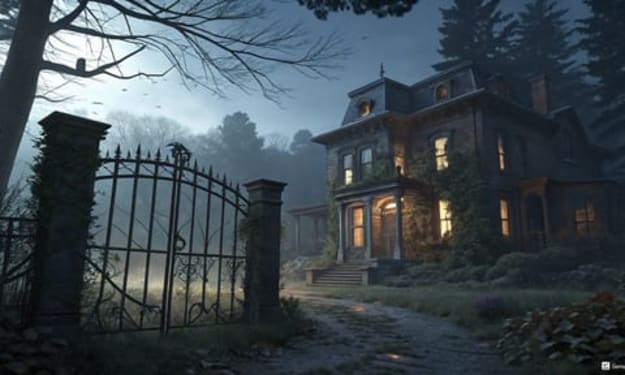
He had heard the rumors for years. Whispers among the villagers of a crumbling, mute structure standing at the edge of Blackwood Forest—a house long abandoned, its windows like hollow eyes watching the lonely road. Tonight, drawn by some irresistible force, Martin Crowley decided to see it for himself.
---
I. The Invitation of Silence
It was nearly midnight when Martin parked his aging sedan beneath a feeble streetlamp a hundred yards from the house. A chill wind tangled through his coat sleeves as he slipped from the car, heart beating a rapid tattoo against his ribs. The road behind him was deserted; the houses he had passed lay dark and lifeless.
Martin approached the manor on jagged stones that once formed a neat driveway. Ivy crept over collapsed walls, and the heavy iron gate hung twisted on one hinge. He paused, listening. Aside from his own shallow breathing, the only sound was the distant rustle of leaves.
A half-formed thought — “This is insane” — tried to dawn in his mind, but he pushed it aside. Ever since childhood he had been fascinated by abandoned places, by houses with stories etched in broken glass and muffled corridors. But Blackwood Manor was not just any ruin; it was a nexus of dread. Here, it was said, people went in—and never came out the same.
---
II. The Descent into Darkness
He slipped through the gate, its screech echoing against the nocturnal hush. Up close, the manor’s facade revealed peeling paint, splintered wood, and an unnatural sag in its roofline. He pressed a hand to the front door. It gave way with a groan like a wounded animal.
Martin’s flashlight beam danced across forbidding hallways. Portraits hung askew: stern-faced ancestors whose painted eyes seemed to follow him. The air was thick with damp rot, and the scent of earth and decay clung to his nostrils. At the center of the foyer lay a grand staircase, its banister carved into curling vines now reduced to dust. He mounted the stairs, each creaking board threatening to give way underfoot.
On the second floor, he found a long corridor bisected by shattered doors. Some rooms were empty; others held relics of a forgotten life—an overturned crib, a moth-eaten armchair, a tarnished music box cracked open on the floor, its gears still inexplicably spinning. It emitted a faint, mournful lullaby that wound through the hall like a requiem.
Martin swallowed hard. He knew he should turn back. But when he saw the door at the corridor’s end partially ajar, he felt a magnetic pull. He pushed it open.
---
III. The Chamber of Whispers
The room was small and windowless, lit only by his flashlight. At its center stood a writing desk, cluttered with yellowed papers and a rusted quill. As Martin stepped forward, the door slammed shut behind him. He spun around, stifling a yelp, and jammed his shoulder against it. It didn’t budge. Panic fluttered in his chest.
A low murmur drifted from the desk—like voices just beyond comprehension. He approached, overawed. On the papers lay a neatly penned letter dated October 13, 1923:
> “To whoever finds this: I cannot bear it any longer. The house demands sacrifice. It waits. You cannot leave. Neither can I.”
He turned to flee, but the flashlight flickered and died, plunging him into darkness. His breathing roared in his ears. Then he felt it: a faint brushing against his arm, as if distant passages of curtain were drifting without wind. He fumbled for his phone to use its light. No signal, dead. Only darkness.
The whispers grew louder, now sounding as distinct words: “Stay… stay… stay…”
His heart rattled against his ribs. He bolted for the door, only to find shadows pooling at its base, thick and viscous, blocking his path. He lunged past them, chest against the door. The whispers crescendoed into a cacophony. Then, silence.
---
IV. The Morning After
At dawn, a local jogger discovered Martin’s car abandoned under the lamp. Worried, she called the police, and an officer climbed the rusted gate and entered the house. He found the front door slightly ajar, the foyer empty, but signs of a struggle: scuffed floorboards, a broken flashlight, and a single footprint smeared in fresh mud.
He searched the ground floor, calling Martin’s name. No answer. Upstairs, he pushed open the final door—only to find the room bare, as if no one had ever entered. On the desk lay the old letter, quill snapped in two, ink spilled across the page in a dark, viscous pool. The whispers seemed to echo in his mind as he stared down at it.
Later, as the sun fully rose, a pair of hikers passing the perimeter noticed something near the gate: a motionless form, half-buried in brambles. They approached, shocked to see Martin Crowley, his face pale and eyes staring blankly at the sky. His wrist was pressed against his chest, and beneath his coat, the outline of what looked like a writing desk key protruded from his coat pocket.
Paramedics arrived and confirmed: he was dead. No visible wounds. No signs of external violence. His face bore a look of utter terror, mouth frozen in a silent scream.
---
V. Echoes of the Unseen
News spread quickly: “Man Found Dead Outside Blackwood Manor.” Speculation ran rampant. Some blamed a heart attack induced by fright. Others whispered of more sinister forces—of the house’s hunger for souls, renewing itself through sacrifice.
An investigator from the county coroner’s office took interest. He testified that Martin’s heart was intact. Blood tests found elevated levels of adrenaline and an unidentifiable toxin. But the biggest mystery remained: how did Martin exit the house? The only way out was through that chamber. The door, sealed by mud and shadows, gave no hint of having been forced by human hands.
The coroner’s final report noted the cause of death as “undetermined,” but recommended the house be condemned. Yet inspectors who entered found every door and window previously used by Martin inexplicably sealed from the inside—bricks, wood planks, and shards of mirror jamming the frames. The writing desk in the upstairs chamber had vanished, as if spirited away through a crack in reality.
---
VI. The Unquiet Rest
By nightfall, the manor stood silent once more. Only the wind rustled through the broken panes and the ivy draped against rotting shingles. Locals avoided even glancing in its direction, keeping candle lanterns in hand when they passed after dark.
A final rumor emerged: at midnight, a pale figure drifts from the manor, shivering on the gate. If you watch closely, you can see him clutching a slate of paper and a snapped quill, his eyes wide with unspent terror—forever trapped between the living world and the house’s endless hunger.
And so the story endures: the house still waits. It waits for the curious, the wanderers, those drawn by its silent call. For once you cross its threshold in the dead of night, there is no telling whether you will leave—alive, or at all.
About the Creator
Keep reading
More stories from Abdulrehma and writers in Earth and other communities.
The House That Waits
It was nearly midnight when Martin parked his aging sedan beneath a feeble streetlamp a hundred yards from the house. A chill wind tangled through his coat sleeves as he slipped from the car, heart beating a rapid tattoo against his ribs. The road behind him was deserted; the houses he had passed lay dark and lifeless.
By Abdulrehma 7 months ago in Earth
How Dangerous Is Chernobyl Radiation Today
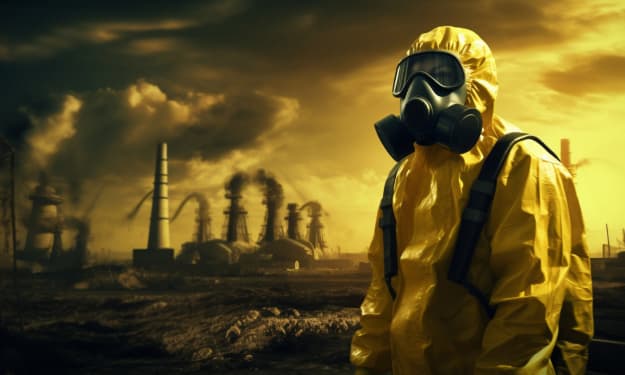
many people still ask the same question: how dangerous is chernobyl radiation today? The short answer is that the danger still exists, but it is very different from what it was in 1986. Radiation levels have dropped a lot, some areas are safer than others, and strict rules remain in place to protect people and the environment. To understand the real risk today, it is important to look at what happened, what has changed, and what dangers still remain.
By Horizon Dwellers6 days ago in Earth
Stanislav Kondrashov Explores the Hidden Power of Geothermal Energy
In a world racing to find cleaner, more reliable sources of energy, one solution has remained quite literally beneath our feet: geothermal energy. Often overlooked in favour of flashier alternatives, geothermal power quietly harnesses the Earth’s own heat to produce electricity and heating for homes, businesses, and even entire communities. It’s not new, it’s not loud, and according to energy expert and researcher Stanislav Kondrashov, it might just be one of the most stable paths forward.
By Stanislav Kondrashov 7 days ago in Earth


Comments
There are no comments for this story
Be the first to respond and start the conversation.