
The history of space exploration.
Space exploration is one of humanity’s greatest endeavors, marking milestones in scientific advancement, engineering, and our understanding of the universe.

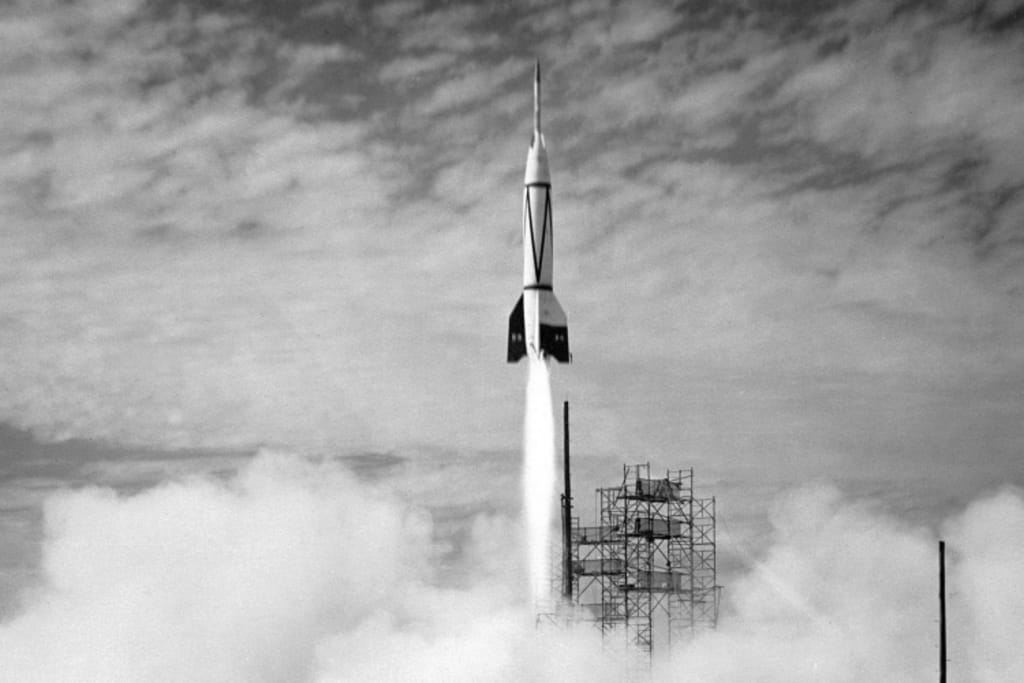
From early theoretical concepts to moon landings and interplanetary missions, space exploration has shaped the modern world. This article traces the history of space exploration, highlighting key events, technological advancements, and the future of humanity beyond Earth.
(I)Early Theories and the Space Race
Before the modern space age, space exploration was confined to theoretical studies and astronomical observations. Ancient civilizations, including the Babylonians and Greeks, studied the stars, but the real possibility of space travel only emerged with the development of rocketry in the early 20th century.
The foundation of modern space exploration was laid by pioneers such as Konstantin Tsiolkovsky, Robert Goddard, and Hermann Oberth. Tsiolkovsky, a Russian scientist, developed the mathematical equations for rocket propulsion, while American physicist Robert Goddard successfully launched the first liquid-fueled rocket in 1926.
The true beginning of space exploration, however, was marked by the Cold War-era competition between the United States and the Soviet Union known as the Space Race. On October 4, 1957, the Soviet Union launched Sputnik 1, the first artificial satellite, which orbited Earth and sent signals back to the planet. This event triggered an intense rivalry between the two superpowers.
On April 12, 1961, Soviet cosmonaut Yuri Gagarin became the first human in space aboard Vostok 1, cementing the USSR’s lead in the Space Race. In response, the U.S. intensified its efforts through NASA, which had been established in 1958. President John F. Kennedy’s famous 1961 speech set the ambitious goal of landing a man on the Moon.
(II)Apollo Program and Moon Landing
NASA’s Apollo program was the pinnacle of early space exploration. After a series of preparatory missions, Apollo 11 achieved the historic first human landing on the Moon on July 20, 1969. Neil Armstrong and Buzz Aldrin became the first humans to walk on the lunar surface, while Michael Collins remained in orbit. Armstrong’s words, "That's one small step for man, one giant leap for mankind," became an iconic statement of human achievement.
Between 1969 and 1972, five additional Apollo missions landed on the Moon, conducting experiments and bringing back lunar samples. However, with the high costs and changing political priorities, the U.S. ended the Apollo program in 1972.
(III)Space Stations and the Shuttle Era
Following the Moon landings, attention shifted toward long-term human presence in space. The Soviet Union launched Salyut 1, the first space station, in 1971, followed by the more advanced Mir station in the 1980s. Meanwhile, NASA developed the Space Shuttle program, which debuted in 1981 with Columbia. The Shuttle was a reusable spacecraft that transported astronauts and cargo into orbit, facilitating scientific research and satellite deployment.
One of the greatest international efforts in space exploration was the construction of the International Space Station (ISS). Built through collaboration between the U.S., Russia, Europe, Japan, and Canada, the ISS has been continuously inhabited since 2000, serving as a platform for scientific research and space technology development.
(IV)Exploring the Solar System and Beyond
While human spaceflight was a major focus, robotic exploration of the solar system provided groundbreaking discoveries. The Voyager 1 and Voyager 2 probes, launched in 1977, traveled beyond the outer planets and continue their journey into interstellar space.
Mars has been a significant target for exploration. The Viking landers (1976) provided the first images from the Martian surface, while the Curiosity and Perseverance rovers have provided insights into the planet’s geology and potential for past life.
Other missions, such as Cassini-Huygens (Saturn and Titan) and New Horizons (Pluto), expanded our understanding of the outer solar system, revealing stunning details of distant worlds.
(V)The New Space Age and the Future
In recent years, private companies are SpaceX, Blue Origin, and Virgin Galactic have revolutionized space travel. SpaceX’s Falcon 9 and Starship aim to lower costs and enable human missions to Mars, while Blue Origin and Virgin Galactic are pioneering space tourism.
NASA’s Artemis program aims to return humans to the Moon by the mid-2020s, with long-term plans to establish a lunar base as a stepping stone for Mars exploration. Meanwhile, China has emerged as a major space power, successfully landing rovers on the Moon and Mars and constructing its Tiangong space station.
Conclusion
The history of space exploration is a testament to human ingenuity, ambition, and curiosity. From the early rocketry pioneers to today’s interplanetary missions, space exploration has transformed our understanding of the cosmos. As humanity looks toward Mars, deep space travel, and beyond, the future promises even greater achievements in our quest to explore the final frontier.
About the Creator
Badhan Sen
Myself Badhan, I am a professional writer.I like to share some stories with my friends.
Keep reading
More stories from Badhan Sen and writers in Earth and other communities.
How bees communicate.
Unlike humans, who rely primarily on verbal language, bees use a combination of movement, pheromones, and touch to interact with one another. Understanding how bees communicate provides insights into their highly organized social structures and their role in maintaining ecological balance.
By Badhan Sen12 months ago in Earth
For Russia, Greenland Offers an ‘Ideal Solution’ to Its Ukraine Problem
In the complex chessboard of global geopolitics, some developments become unexpectedly powerful tools. One such flashpoint today is Greenland — the icy Arctic territory of Denmark that has suddenly captured international attention. While the world focuses on former U.S. President Donald Trump’s renewed interest in Greenland, Moscow is quietly calculating how this turmoil could serve its broader interests, particularly in the context of the war in Ukraine.
By Muhammad Hassana day ago in Earth
A building's lifetime climate impact is mostly determined by its daily energy use.
The majority of a building's climate impact is not caused by its construction. As the heating, lighting, and ventilation systems continue to function year after year, it gradually accumulates.
By Francis Dami7 days ago in Earth




Comments (1)
What a great look back at the 'The Race for Space'. Good job.