
The Hidden Hike: Bristlecone Pines Draw Tim Kizirian Beyond Mount Washington in Great Basin National Park
Most visitors head to Lehman Caves or Wheeler Peak, but Snake Creek Valley and the remote bristlecone grove are seen by only a fortunate few.
By Daniel Carter — Northern California Outdoors & Lifestyle Writer
Some people go to Great Basin National Park for the marquee attractions: the marble chambers of Lehman Caves, the popular Bristlecone Trail beneath Wheeler Peak, or the stargazing programs under the darkest skies in the West. But not Tim Kizirian.
On a recent weekend trip, Tim decided to chase something more elusive—the ancient bristlecones hidden on the backside of Mount Washington, far from visitor centers and paved paths. It’s the kind of adventure you don’t find in brochures, and it requires equal parts curiosity and grit.
When we spoke on the drive back, Tim told me about the climb into Snake Creek Valley and the winding fire roads that tested both his truck and his nerves. “This wasn’t sightseeing,” he said with a grin. “It was an expedition.”
Into Snake Creek Valley
Snake Creek Valley doesn’t announce itself like the main entrance of Great Basin. It’s quieter, rougher, and feels more like wild Nevada backcountry than a national park. The fire road Tim followed quickly turned into a series of hairpin switchbacks, the kind that demand a high-clearance 4WD vehicle and careful steering.
“Big SUVs don’t belong up there,” Tim cautioned. “The switchbacks are insane—tight turns with steep drop-offs. You need something nimble.”
The climb leads away from crowds, deeper into the White Pine Mountains where few visitors wander. With every turn, the views widen, but so do the risks. At night especially, the road becomes sketchy. Loose scree on the hillsides creates the constant danger of slipping into a crevasse on either side.
“This is not where you want to be after dark,” Tim said. “It’s pure wilderness. You’re very aware that if you make a mistake, help is a long way off.”
Among the Ancients
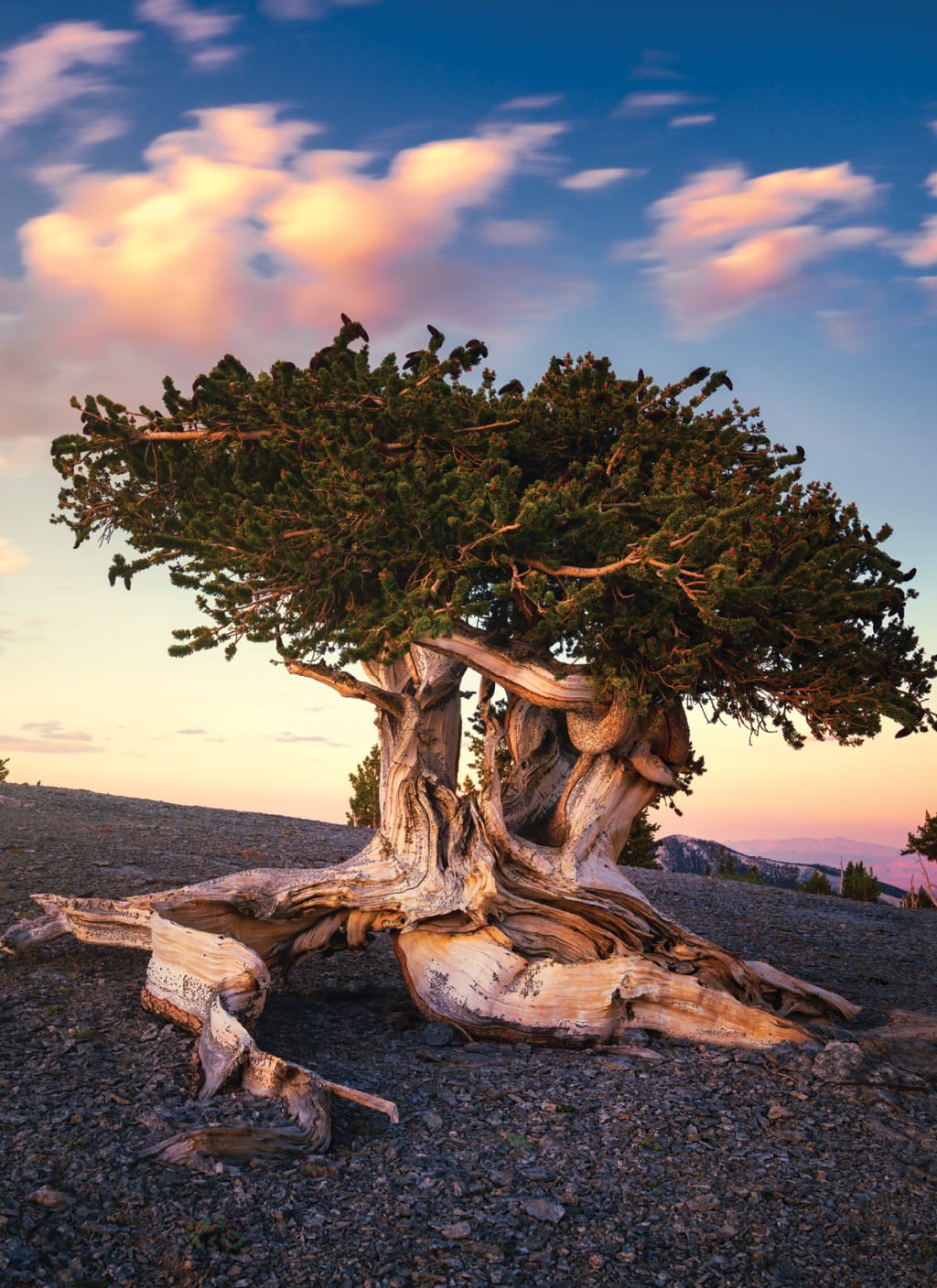
At the top of the climb lies a grove of ancient bristlecone pines, some of the oldest living things on earth. Unlike the more accessible groves beneath Wheeler Peak, these trees stand in near solitude.
Among them is a famous resident: the tree whose twisted, enduring form was chosen for the back of the Nevada state quarter. To stand beneath it, Tim said, was to feel the layers of history converge—the deep time of the tree itself and the modern symbol it became.
“You realize you’re standing in front of a living emblem,” he explained. “This tree has survived for thousands of years, and it’s been immortalized in our pocket change. But here, it’s just part of the forest, standing strong like the rest.”
A Park with Deep History
Though Great Basin National Park was only established in 1986, its landscapes have been drawing explorers for centuries. Lehman Caves, the park’s original gem, was first promoted to tourists in the late 1800s. Ranchers and sheepherders knew of the bristlecones long before scientists studied them.
In the 1960s, however, the world’s attention turned to the bristlecones for a sobering reason: the story of Prometheus.
Prometheus was a bristlecone pine growing high on Wheeler Peak, several ridges away from the grove Tim hiked on Mount Washington. Estimated at more than 4,900 years old—perhaps the oldest tree ever documented—Prometheus was cut down in 1964 during a research project gone wrong.
When a graduate student’s boring tool broke while attempting to core the tree, he and Forest Service officials made the fateful decision to fell it. Only afterward, when its rings were counted, did the full weight of the tragedy become clear. Prometheus had lived through nearly five millennia, only to fall to a saw in the name of science.
“That story haunts you,” Tim said. “You can’t walk among these trees—no matter the grove—without thinking about Prometheus. It makes you respect the ancients that are still standing all the more.”
Today, the Prometheus stump remains on Wheeler Peak as a stark reminder: ancient life deserves reverence, not exploitation.
Pristine Nature and Stark Silence
One of the things Tim emphasized was how different this Mount Washington grove felt compared to the busier bristlecone trails near the main park. There were no interpretive signs, no steady flow of hikers, no ranger talks. Just the silence of thin air, the sharp smell of resin, and the sound of gravel shifting underfoot.
“It felt untouched,” he said. “Like I was visiting the ancients in their own home, not walking through an exhibit. That’s what made it so powerful.”
The Road Back
As he recounted the hike, I noticed Tim wasn’t just talking about bristlecones. He was talking about the experience of stepping away from the predictable and leaning into the unknown. The kind of journey that’s as much about character as it is about scenery.
“Most people never go beyond Lehman Caves,” he said. “But when you push past the paved paths, you see the real heart of Great Basin. It’s raw, dangerous, and unbelievably beautiful.”
On the drive back, as the mountains faded in the rearview mirror, Tim reflected on how special the weekend felt. It wasn’t about mileage or summits. It was about choosing to see a side of the park most people will never know.
Visiting Tips for Adventurers
For anyone inspired by Tim’s trip, here are some takeaways:
- Use the right vehicle. A high-clearance 4WD is essential. Avoid large SUVs; the switchbacks are too tight.
- Avoid night travel. The scree slopes and drop-offs are treacherous after dark. Plan to descend well before sunset.
- Pack extra supplies. Water, food, and a spare tire aren’t optional—this is remote country.
- Balance crowds and solitude. While the main park swells with weekend visitors, Snake Creek Valley stays quiet. Just remember that remoteness means fewer safety nets.
Respect the grove. These bristlecones have stood for millennia. Tread lightly, and let their endurance humble you.
Off the Map, Onto Memory
For Tim Kizirian, this side trip wasn’t about ticking another trail off a list. It was about connection—to the land, to history, and to trees that make our human timelines look small.
“These bristlecones were ancient when civilizations we read about in history books were still young,” he said. “Standing among them makes you realize just how temporary we are—and how much beauty endures if left alone.”
It may not be the path most visitors choose. But for those willing to face switchbacks, scree, and solitude, Snake Creek Valley delivers something unforgettable: the quiet majesty of the ancients, rooted deep in Nevada stone, still thriving long after Prometheus fell, long after empires faded, and long after we are gone.
About the Creator
Keep reading
More stories from Bay Area Back Roads and writers in Earth and other communities.
Tim Kizirian Hikes the Ancient Bristlecone Pine Forest: Trails, History, and the Oldest Living Tree on Earth
By Daniel Carter — Northern California Outdoors & Lifestyle Writer When most hikers think of California trails, their minds go to Yosemite waterfalls or redwood groves along the coast. But Tim Kizirian has always veered off the beaten path. On a recent trip east of Bishop, he set his sights on the Ancient Bristlecone Pine Forest—home to some of the oldest living organisms on earth.
By Bay Area Back Roads4 months ago in Earth
Kyrsten Sinema Panel Interrupted by Men Claiming Affairs Amid Fresh Lawsuit
Former U.S. Senator Kyrsten Sinema faced a strange and uncomfortable moment during a public policy panel in Salt Lake City on January 16, 2026. Two men in the audience interrupted the discussion, loudly claiming they were having affairs with her. The incident occurred just days after Sinema became the subject of a civil lawsuit alleging she was romantically involved with a married member of her former Senate security team.
By Aarif Lashariabout 6 hours ago in Earth
Global Plastic Market Size and Forecast 2025–2033: Innovation, Sustainability, and the Future of a $894 Billion Industry
Introduction: A Market That Touches Every Industry The global plastics industry remains one of the most influential pillars of modern manufacturing, supporting everything from food packaging and construction to healthcare, automotive, and electronics. Despite growing environmental scrutiny, plastics continue to evolve, adapt, and expand—driven by technological innovation, economic growth in emerging markets, and the urgent shift toward recyclable and biodegradable materials.
By Janine Root a day ago in Earth



Comments