
The Green Revolution:
Follow the journey of a farmer who transforms his family's conventional farm into a sustainable, regenerative oasis in the face of drought and soil degradation. The story explores the emotional transformation of the farmer as he reconnects with nature and his ancestral roots.

In the heart of the countryside, where golden fields once swayed in the breeze, now lay the barren land of the Williamson family farm. For generations, the Williamson's had tilled the soil, relying on conventional farming methods that had brought them prosperity in the past. But as the years passed, the effects of climate change took a toll, bringing drought and soil degradation that threatened to decimate the farm.
John Williamson, the current steward of the land, stood amidst the dry fields, his heart heavy with grief. The land that had sustained his family for generations was now withering away before his eyes. His father's weathered hands, now laid to rest, had worked these fields with love and dedication, but even their legacy couldn't protect the farm from the changing climate.
As the weeks turned into months, John grappled with a painful decision. Should he abandon the farm and seek a livelihood elsewhere, or should he fight against the odds to save the land that held his family's history and his deepest roots?
One evening, as the sun set behind the barren fields, John's daughter, Emily, approached him with a determined glint in her eyes.
"Dad, we can't give up," she said. "I've been reading about sustainable farming practices, and I think we can make a difference if we try."
John looked at Emily, seeing the same spark of resilience that once shone in his own father's eyes. He had always believed in her potential, but he had also feared burdening her with the weight of the farm's future.
"Emily, it's not that simple," he sighed. "The land is dying, and I don't know if there's anything we can do to save it."
"But we have to try, Dad," Emily pleaded. "If we don't do something now, the farm will be lost forever, and with it, our connection to the land and our family's history."
Emily's words lingered in John's heart, igniting a glimmer of hope amidst the despair. He knew that she was right. He had to try, not just for the sake of the farm, but for the legacy of his ancestors and the future of his children.
With Emily's support, John embarked on a journey of discovery. He attended workshops on sustainable farming, read books about regenerative agriculture, and sought the guidance of experienced farmers who had successfully rejuvenated their land.
At first, the transition was challenging. John had to unlearn the conventional practices he had relied on for so long and embrace a new way of farming—one that worked in harmony with nature rather than against it.
He implemented techniques to improve soil health, such as cover cropping and crop rotation, to revitalize the once nutrient-depleted earth. He restored biodiversity to the farm, planting trees and creating habitats for beneficial insects and wildlife.
As John worked the land with newfound purpose, he began to feel a connection to the soil, the plants, and the creatures that thrived in this regenerative oasis. It was as if he was rekindling a relationship with his ancestors, tapping into a wisdom that had been passed down through generations.
Emily watched her father's transformation with pride, seeing a new light in his eyes—a light that had been dimmed by the weight of the farm's struggles. She knew that they were not just farming the land; they were healing it, nurturing it back to life.
One day, as John walked through the fields, he saw a flock of birds soaring through the sky, their cheerful chirping filling the air. The sight brought tears to his eyes. It was a sign—a symbol of nature's resilience and a testament to the healing power of regenerative farming.
As the seasons changed, so did the farm. The once-barren fields now bloomed with life, as crops flourished under the care of sustainable practices. The farm became a sanctuary not just for the Williamson family, but for the diverse flora and fauna that found refuge in this newfound haven.
Word of John's success spread, and neighboring farmers took notice. They, too, began to explore sustainable practices, and slowly, a green revolution spread across the countryside.
But it wasn't just the land that underwent a transformation; it was John himself. The weight of the farm's struggles that had burdened him for so long was replaced with a sense of purpose and fulfillment. He felt a deep connection to the land, knowing that he was now a steward of a thriving ecosystem that would sustain future generations.
One evening, as the sun set over the green fields, John stood beside Emily, his heart swelling with gratitude and love.
"Thank you, Emily," he said, his voice filled with emotion. "You saved the farm, and you saved me. You made me believe in the power of hope and the strength of our connection to the land."
Emily hugged her father tightly, tears streaming down her cheeks. "No, Dad, it was you who saved the farm. You had the courage to embrace change and to fight for something greater than yourself. I'm just grateful to have been a part of this journey with you."
As John looked out at the thriving farm, he knew that their fight was not just about survival; it was about reconnecting with nature and preserving a way of life that honored the land and its creatures.
The story of John Williamson's green revolution is a tale of resilience and renewal—a reflection of the emotional journey of a farmer who rekindles his connection to nature and his ancestral roots. It highlights the transformative power of sustainable practices and the impact of fighting for the preservation of the land that sustains us. Through John's journey, we are reminded of the profound relationship between humans and the earth, and the responsibility we all share in nurturing and protecting it for generations to come.
About the Creator
Alhassan Salia Hamidu
I write poems, stories and share my thoughts, experiences, and insights on various topics close to my heart. Through my write-up, I hope to inspire, motivate, and engage with readers from all walks of life.
Keep reading
More stories from Alhassan Salia Hamidu and writers in Earth and other communities.
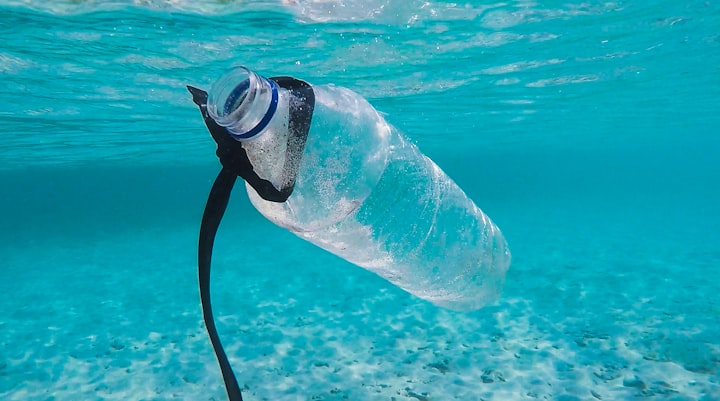
The Plastic Ocean:
In the coastal town of Oceanview, the sea had always been a source of wonder and abundance. For as long as she could remember, Lily had spent her days on the sandy shores, captivated by the beauty of the ocean and the creatures that called it home. But as the years passed, she began to notice a disturbing change—the once-pristine waters were now tainted with plastic waste.
By Alhassan Salia Hamidu3 years ago in Earth
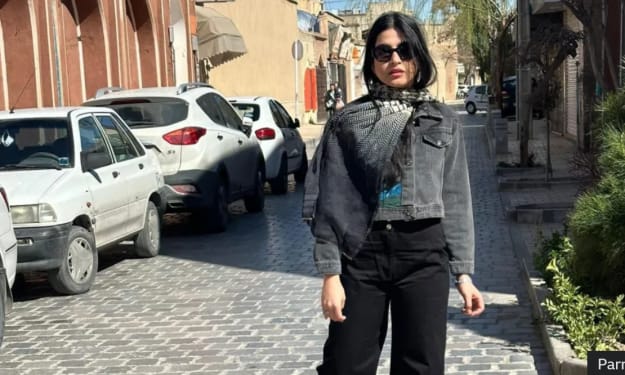
I Saw People Getting Shot’: Eyewitness Tells of Iran Protest Crackdown
When protests erupt, statistics often dominate headlines — numbers of arrests, deaths, or injuries. But behind those figures are people who witnessed events unfold in real time. One such eyewitness has spoken out about Iran’s protest crackdown, delivering a chilling but important account of what happened on the streets.
By Muhammad Hassan3 days ago in Earth
Dow Jones Futures: Tesla, Microsoft, Meta, Apple Lead Earnings Wave; What To Do Now
As the stock market enters the heart of earnings season, investors are closely watching the Dow Jones futures, which reflect expectations for the blue-chip index’s performance in the coming days. This week, Tesla, Microsoft, Meta, and Apple are at the forefront, with analysts and traders scrutinizing their results to gauge both company performance and broader market trends.
By Muhammad Hassan2 days ago in Earth
Rage
Content Warning: Domestic Violence, Assault Rage D. A. Ratliff “Who did this?” My voice echoed through the house. All I wanted was a cup of tea, but one of the twins, running through the house like maniacs, knocked it over. My nerves tingled, and every muscle in my body felt coiled like a spring. Survival seemed out of reach.
By D. A. Ratliff7 days ago in Fiction

Comments
There are no comments for this story
Be the first to respond and start the conversation.