
The Giant Black Hole in Our Galaxy Turned Out to Be Active
Active Galaxy
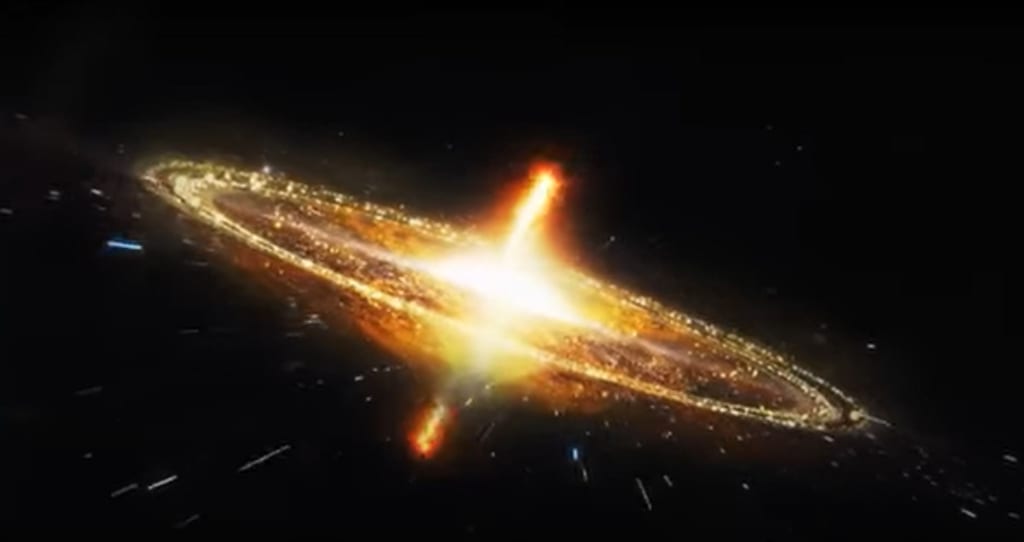
We'll explore some of the most bizarre places in our universe. Astronomers discovered that the supermassive black hole at the center of our Milky Way galaxy may be leaking, suggesting it may still be active. Researchers used the Hubble Space Telescope to spot a jet pushing into clouds of hydrogen at the center of our galaxy. When a gas cloud gets too close to the black hole, it gets swallowed and then belches small jets of matter. Fermi bubbles might be the result of these belches. There's a rotating neutron star called the black widow pulsar that's consuming its partner. Nuclear pasta is the strongest material in the universe. It can break, but only if you apply 10 billion times the pressure needed to shatter steel. There's a planet where it rains glass, and solar tsunamis tear across the sun's surface. Electric Hyperion, Saturn's moon, is charged with static electricity. There's a rogue planet with auroras drifting through galaxies.
We are going to explore some of the most unusual places in our universe. Astronomers have found that the supermassive black hole at the center of our Milky Way galaxy may be leaking. This discovery is significant because it suggests that the black hole, known as Sagittarius A star, may still be active. Its mass is 4.1 million times that of our sun. The recorded leakage may be the black hole hiccuping while swallowing gas.
The team of astronomers used the Hubble Space Telescope to spot a jet in the center of our galaxy. The jet looked like a blowtorch pushing into clouds of hydrogen. This kind of activity is common around active black holes. Powerful magnetic fields sweep a small part of the material outward, creating a jet. When a giant gas cloud gets too close to our supermassive black hole, it gets swallowed and creates small jets of matter.
Scientists have discovered a new giant bubble of hot gas aligned with a jet stretching for 35 light years from a supermassive black hole. It's possible that the jet plowed into the gas and inflated it. There are other breathtaking places in the universe, but some are extremely dangerous, like the rotating neutron star called the black widow pulsar. It's consuming its partner, a lightweight brown dwarf star, causing it to dwindle. Nuclear pasta, formed from the leftovers of extinguished stars, is the strongest material in the universe.
This substance can be squeezed into tangles and can break with extreme pressure. There's a planet that rains glass and has winds blowing at seven times the speed of sound. Solar tsunamis, called Terminator events, can last for weeks and happen every decade. Electric Hyperion, a moon of Saturn, is pockmarked with craters and charged with static electricity flowing out into space.
A rogue planet is drifting through galaxies with auroras. It was flung away from its parent star and is 200 light years away from Earth. This planet-sized object has a magnetic field 200 times stronger than Jupiter's, creating flashing auroras in its atmosphere. Black holes are extremely dangerous and should be avoided. They are some of the most perilous objects in the universe. How many black holes are there?
Some black holes could be very small, even as small as an atom. Despite their size, they can have the mass of a thousand sedans. One theory suggests that many micro black holes were created after the big bang. Some scientists believe that many black holes pass through our planet every day.
Next on our tour is an exoplanet called Gliese 436b. It's a paradox because it's made of scorching hot ice and orbits its parent star in just two days. The planet's temperatures rarely drop below 800 degrees Fahrenheit, possibly due to its close proximity to the star. Despite the heat, it hosts huge volumes of solid water ice known as ice X.
If you're a jewelry lover, you'll be interested in the next planet. It's a diamond planet located about 4,000 light years away from Earth. This planet appears to be one enormous diamond.
Diamond planet is the densest planet discovered and made mostly of carbon. Astronomers believe the carbon might be crystalline, but it's uncertain. Moon moons might exist, but there's no agreement among astronomers. DG sad 1 is a living fossil galaxy that's unique because it's sitting alone. Neutron stars emit x-rays or radio waves, but in 2018, an infrared stream from space was discovered. Unfortunately, people can't see it because they can't see infrared light.
Astronomers found an unusual stream of infrared light coming from a neutron star 800 light years away. It may be caused by a dust disc surrounding the star, but this theory is unproven. The Kuiper Belt, beyond Neptune's orbit, is filled with massive icy objects. Scientists cannot explain the pattern of their movement. A hypothetical planet, named Planet Nine, might be hiding from our sight behind Neptune. We must wait for confirmation of its existence. We can observe our star, but we must be cautious not to get too close. The sun's atmosphere is hotter than its surface, reaching millions of degrees. Scientists believe that bursts of heat from the Sun may be connected to a unique phenomenon. There is a dwarf planet named Paul Mia in the Kuiper belt that is worth visiting. It has an unusual elongated shape and two moons. Paul Mia is also the fastest spinning big object in our solar system with a day lasting only four hours. The most mysterious thing about Paul Mia is its thin 40-mile-wide ring circling it. If you enjoyed learning about Paul Mia, please like and share the video with your friends. For more interesting videos, click on the links and stay on the bright side.
About the Creator
Keep reading
More stories from Felix Agusiobo and writers in Earth and other communities.
Shattering Glass Ceilings
Introduction: Throughout history, women have faced countless challenges and obstacles in their pursuit of equality and success. However, there are remarkable individuals who have shattered glass ceilings, defying societal expectations and paving the way for future generations. Their stories of resilience, determination, and unwavering spirit serve as beacons of inspiration for women around the world. In this article, we will delve into the lives of extraordinary women who have triumphed over adversity, showcasing their remarkable achievements and highlighting the transformative power of breaking barriers.
By Felix Agusiobo3 years ago in Motivation
Police Warn Against ‘Ridiculous’ Parking at Beauty Spot Amid Snow Disruption
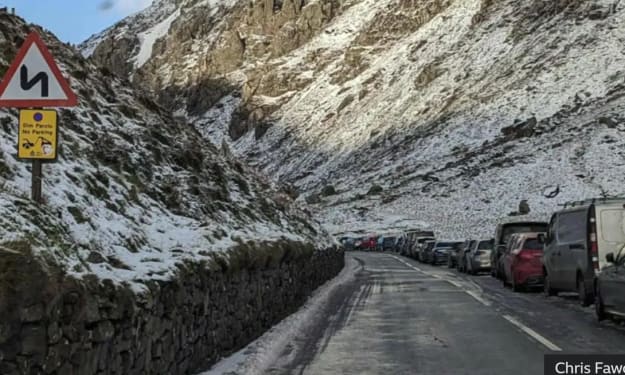
Heavy snowfall may transform beauty spots into winter wonderlands, but it also brings serious risks when visitors ignore basic safety and parking rules. Police have issued a strong warning against what they describe as “ridiculous” parking at a popular beauty spot, after snow disruption led to blocked roads, stranded vehicles, and delayed emergency access. As wintry conditions continue to affect travel, authorities are urging the public to prioritise safety over scenic photographs, reminding drivers that poor parking decisions can have life-threatening consequences during severe weather. Snowfall Turns Scenic into Hazardous The recent spell of snow attracted large numbers of visitors eager to enjoy picturesque landscapes blanketed in white. Hillsides, national parks, and rural viewpoints quickly became hotspots for walkers, families, and amateur photographers. However, police say the surge in visitors coincided with widespread parking chaos. Cars were left abandoned on narrow roads, grass verges, gateways, and even blocking access routes meant for emergency vehicles and local residents. What may appear to drivers as a harmless decision to “park for just a few minutes” can quickly escalate into a major safety issue—especially when snow and ice reduce road space and visibility. Police Response and Public Warning Local police forces have taken to social media and public statements to express frustration at the situation. Officers described some parking behaviour as not only irresponsible but dangerous, particularly given the weather conditions. Police warned that emergency vehicles, including ambulances and mountain rescue teams, were struggling to reach areas due to blocked roads. In severe weather, response times are already under pressure, and illegally parked vehicles can mean the difference between life and death. Authorities have also made it clear that enforcement action will be taken where necessary. Drivers risk fines, towing, and penalty points if their vehicles obstruct roads or endanger others. Impact on Emergency Services One of the most serious consequences of poor parking during snow disruption is its impact on emergency services. Narrow rural roads, already difficult to navigate in icy conditions, become completely impassable when cars are parked irresponsibly. Fire crews, paramedics, and rescue teams rely on clear access routes, particularly in popular beauty spots where accidents such as slips, falls, or stranded walkers are more likely in winter conditions. Police stressed that emergency vehicles do not have the luxury of “finding another way around” when roads are blocked. Delays caused by inconsiderate parking put both responders and the public at risk. Local Residents Left Frustrated It is not only emergency services that are affected. Residents living near popular beauty spots often bear the brunt of snow-related disruption. Driveways are blocked, access to homes becomes difficult, and essential journeys for work, medical appointments, or supplies are delayed. Many locals report feeling ignored by visitors who treat rural communities like seasonal attractions rather than lived-in areas. During winter weather, this frustration is magnified, as residents may already be dealing with power outages, poor road conditions, and limited access to services. Police have echoed these concerns, reminding visitors that beauty spots are often surrounded by working communities, not just open spaces for leisure. Why Snow Makes Parking More Dangerous Snow significantly reduces road safety margins. It narrows carriageways, hides road markings, and makes verges unstable. A car parked partly on a road might seem manageable in normal conditions, but in snow it can create blind corners, force vehicles into oncoming traffic, or cause skidding accidents. Additionally, snowploughs and gritters require space to operate effectively. Poorly parked vehicles can prevent these essential services from clearing roads, prolonging disruption for everyone. Authorities warn that even experienced drivers can underestimate how quickly conditions can change in winter weather. Social Media and the “Snow Day” Effect Police have also pointed to social media as a contributing factor. Viral images of snow-covered landscapes often encourage spontaneous trips without proper planning. People see beautiful photos and head out without considering parking availability, road conditions, or weather warnings. This “snow day” mentality can overwhelm rural infrastructure not designed for large volumes of traffic, particularly during adverse weather. Police urge visitors to check local advice before travelling and to be prepared to turn back if conditions are unsafe. Advice for Safe Winter Visits In response to the ongoing disruption, authorities have shared clear guidance for anyone planning to visit beauty spots during snowy conditions: Avoid unnecessary travel during severe weather warnings Park only in designated areas, never on roads or verges Do not block gateways, tracks, or emergency access routes Check weather and road conditions before setting off Be prepared to leave if parking is unavailable Police emphasise that no photograph or short walk is worth risking lives or causing serious disruption. Enforcement and Accountability While officers prefer to rely on public cooperation, they have confirmed that enforcement will be stepped up if irresponsible behaviour continues. Vehicles may be ticketed or removed, particularly if they pose a danger or obstruction. Authorities stress that enforcement is not about spoiling enjoyment but about ensuring public safety. Winter conditions demand higher levels of responsibility from drivers, not less. A Shared Responsibility Snow transforms landscapes, but it also tests public behaviour. Police warnings against “ridiculous” parking are not just expressions of frustration—they are urgent reminders that safety must come first. Enjoying nature is a privilege, not a right, especially during extreme weather. By parking responsibly and respecting local communities, visitors can help ensure that beauty spots remain accessible, emergency services remain effective, and winter days do not turn into preventable disasters. As snow disruption continues, the message from police is clear: think before you park, or don’t park at all
By Muhammad Hassan7 days ago in Earth



Comments
There are no comments for this story
Be the first to respond and start the conversation.