
The Future of Our Universe
A Timeline of Cosmic Events

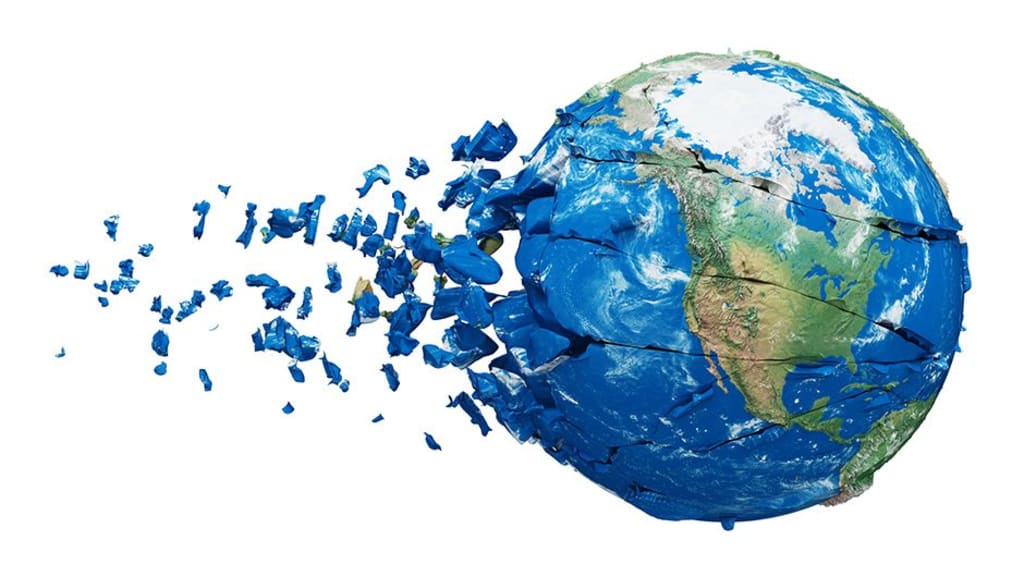
The future of our planet and the universe is a topic that fascinates many people. In this article, we will explore what may happen in the next billion years, and beyond. A billion years from now, the Earth will be unrecognizable. Due to the sun's increasing luminosity, the average surface temperature will have increased to 47 degrees Celsius. The oceans will have already evaporated away, and liquid water will only exist at the poles, which will become the final bastions of life on our planet.
However, time will continue to move forward, and in 1.5 billion years, the sun's luminosity will have caused its habitable zone to move outwards further into the solar system. The surface temperature of Mars during these times will resemble the Earth during the last ice age and would make a good home for any future advanced civilizations.
In 2.3 billion years from now, the outer liquid core of Earth will freeze, which means that Earth will lose its magnetic field forever. By 2.8 billion years, Earth's average surface temperature will have dramatically increased to 149 degrees Celsius, which means that even simple single-celled organisms on the planet will have completely died out for the first time in billions of years. Earth will be devoid of any life.
In 3.3 billion years, there is a 1% chance that Mercury's orbit will become unstable, which will cause it to collide with Venus, obliterating both planets and throwing the inner solar system into chaos. In 3.5 billion years, the sun's luminosity will have increased by 40% of its present value. Earth's surface temperature will have skyrocketed to roughly one thousand three hundred thirty degrees Celsius, which is hot enough to melt rocks. Earth at this point in time will very closely resemble Venus during our own time.
In four billion years from now, our entire galaxy will change dramatically. The Andromeda Galaxy, which is even bigger than our own galaxy, is currently on a four-billion-year-long collision course with us. When they finally collide, our two galaxies will begin the process of merging together to form one united galaxy, and the night sky on any planet located inside of them will look far more dramatic than anything we see in our own night sky of the present.
In five billion years, the sun will have exhausted its supply of hydrogen and will begin to evolve into its red giant phase. Much later, in 7.59 billion years from now, the sun will have expanded dramatically to 256 times its current size, and the moon may fall apart and rain down onto the Earth's molten surface. By 7.9 billion years from now, Mercury, Venus, and most likely Earth will be totally swallowed by the sun and cease to exist.
During these times, however, it is hypothesized that a moon of Saturn named Titan could achieve surface temperatures warm enough to support life. This means that as the sun grows larger, civilization on Earth could flee deeper into the solar system to escape the heat. But after eight billion years, the sun will have finally become a white dwarf star equal to fifty-four percent of its current mass. Temperatures inside of the solar system will plummet afterwards, and all still-existing life will likely die.
The number of years in the future will now begin to dramatically increase, and we'll start by going 100 billion years into the future. By this point, the expansion of the universe will have pushed everything outside of our small local group of galaxies far enough away that nobody here will be able to observe them anymore. Any intelligent beings that may exist here at this point will believe that they are at the center of the universe in a small bastion of light surrounded by infinite darkness. We know this to not be true, but after eight billion years, the sun will have finally become a white dwarf star, equal to fifty-four percent of its current mass. Temperatures inside of the solar system will plummet, and all still-existing life will likely die. The number of years in the future will now begin to dramatically increase, and we'll start by going 100 billion years into the future. By this point, the expansion of the universe will have pushed everything outside of our small local group of galaxies far enough away that nobody here will be able to observe them anymore. Any intelligent beings that may exist here at this point will believe that they are at the center of the universe in a small bastion of light surrounded by infinite darkness. We know this to not be true, but in the future, nobody will have any way of proving this to be incorrect, which will likely have a profound impact on future philosophy and culture.
In 450 billion years, the 47 different galaxies of the local group will have further coalesced together into a single gigantic galaxy, and that feeling of loneliness will be even further amplified all the way until four trillion years from now. The closest star to Earth, named Proxima Centauri B, will have survived, but afterwards, this ancient star will finally die, just as the sun did trillions of years before it.
Finally, twelve trillion years from now, the last star that exists today alongside you watching this video will have died out. The universe will be full of new stars born after our present age, but even these will not last forever. 120 trillion years from now is when the final stars in the universe will die out. The only objects that will still exist in space by this point will be white dwarfs, neutron stars, brown dwarfs, and black holes. Occasional collisions between brown dwarfs could continue to create new red dwarf stars in this era, but they will be extremely rare. Because of these collisions, there may exist around 100 red dwarf stars in the entire Milky Way galaxy at this point, a galaxy which today is home to over 100 billion different stars. But even these final stars will eventually die, and the universe will turn dark forever afterwards.
120 trillion years though is a longer time than any of us can really comprehend, so on the bright side, humanity has plenty of time to enjoy the majesty of our universe before the lights finally turned off.
About the Creator
Robby Rahadi Putra
Apart from my professional work as auditor, I am also an avid writer and reader. I enjoys writing novels and other creative content in my free time, as well as delving into books to expand my knowledge and understanding of the world.
Keep reading
More stories from Robby Rahadi Putra and writers in Earth and other communities.
From Singularity to Spaghettification:
Black holes are some of the most peculiar phenomena that exist in the universe. According to mathematical principles, any object that has mass can become a black hole. This means that any object, including humans, can become a black hole if their mass is condensed to a small enough space. This area is called the Schwarzschild Radius, which is the radius at which the object becomes so dense that nothing, not even light, can escape its gravitational pull. If an individual wanted to transform themselves into a black hole, they would need to condense all of the matter that makes up their body into an area that is one sextillion times smaller than a grain of sand. However, the more mass that gets compressed into a black hole, the stranger the effect can be.
By Robby Rahadi Putra3 years ago in Earth
The Collapse of a Brazilian Bank Ensnares Politicians and Judges
Brazil is grappling with one of the most shocking financial scandals in recent history: the collapse of a major bank that has sent tremors through the economy, the political system, and the judiciary. What began as a financial crisis quickly transformed into a story of political entanglement, judicial scrutiny, and public outrage, raising questions about oversight, accountability, and the fragile trust that binds citizens, bankers, and politicians. The implications of this collapse are vast, affecting not just shareholders and depositors, but also shaking the foundations of governance in Brazil. The Collapse: A Perfect Storm of Mismanagement The bank in question, a significant player in Brazil’s retail and corporate banking sectors, reportedly faced years of mismanagement, risky lending practices, and opaque financial dealings. For years, internal audits hinted at irregularities, but these warnings were either ignored or covered up. When the collapse finally occurred, thousands of customers lost access to their accounts, and businesses relying on the bank for loans and credit lines faced immediate disruption. The ripple effect extended beyond the banking sector, affecting real estate, commerce, and public confidence in financial institutions. Politicians in the Crossfire As investigations unfolded, authorities discovered that several politicians had deep financial ties to the bank. Allegations include preferential loans, insider deals, and the use of political influence to shield executives from scrutiny. These revelations have sparked outrage among the public, who see the situation as yet another example of how money and power intersect in ways that harm ordinary citizens. Brazil’s history of corruption scandals — including Operation Car Wash — has made the public wary of politicians’ involvement in business, and this banking collapse appears to confirm those fears. Some politicians are now under formal investigation, facing charges ranging from corruption to conflict of interest. Legal experts predict that the case could lead to resignations, trials, and possibly convictions. Judges Under Scrutiny The crisis has also ensnared members of the judiciary. Reports indicate that some judges may have overlooked warning signs, delayed investigations, or facilitated questionable transactions involving the bank. While it is unclear whether these actions were deliberate or a result of systemic inefficiencies, the optics are troubling. Public confidence in the judiciary is essential for democracy, yet this scandal highlights the vulnerability of institutions when financial and political interests collide. Brazilian citizens are now demanding transparency, calling for independent oversight to ensure justice is applied equally — whether to bankers, politicians, or judges. Economic and Social Fallout Beyond politics and the courts, the bank’s collapse has real-world consequences for everyday Brazilians. Customers report frozen accounts, lost savings, and halted payments. Small business owners face canceled loans and delayed contracts. Even those not directly affected worry about contagion in the financial system, fearing a broader economic downturn. Experts warn that if regulatory systems fail to prevent similar crises, Brazil’s economic growth could slow, foreign investment could decline, and public trust in institutions may erode further. The social cost — protests, strikes, and political unrest — is already visible in major cities. Why Oversight Failed The collapse raises important questions about regulation in Brazil. Financial watchdogs and central bank authorities are under pressure to explain how such a significant failure went unnoticed. Analysts suggest several systemic issues: Weak regulatory enforcement — audits and compliance checks were reportedly insufficient. Political interference — pressure from powerful politicians may have delayed corrective measures. Opaque financial practices — complex corporate structures and hidden liabilities masked the bank’s instability. This combination created a perfect storm, allowing risky practices to continue unchecked until the bank could no longer operate. Lessons for Brazil and Beyond The scandal is more than a national story — it is a cautionary tale for emerging economies worldwide. Financial institutions, no matter how large or influential, cannot be above scrutiny, and political entanglements must be carefully managed. Transparency, independent oversight, and robust regulatory frameworks are essential to prevent similar disasters. In countries where finance and politics overlap too closely, the risk of systemic failure is amplified, with devastating consequences for ordinary citizens. What Happens Next? Brazilian authorities are now facing immense pressure to act swiftly. Investigations will likely continue for months, if not years. Some potential outcomes include: Trials and convictions of bank executives and politicians Reforms in banking regulations and financial oversight Strengthened judicial accountability mechanisms Measures to restore public confidence in the financial system Meanwhile, citizens and businesses are left to navigate uncertainty, hoping for clear answers and protections against further damage. Final Thoughts The collapse of this Brazilian bank is more than a financial event — it is a story about the fragility of systems where money, politics, and justice intersect. It serves as a stark reminder that trust is the foundation of both banking and governance. When that trust is broken, the consequences are profound and far-reaching. For Brazil, this is a moment of reckoning. For the world, it is a cautionary tale about the need for transparency, oversight, and accountability in every institution that touches the lives of millions.
By Muhammad Hassan3 days ago in Earth




Comments
There are no comments for this story
Be the first to respond and start the conversation.