
The Forest Fire of America
A Battle Against Nature's Fury and the Courage to Rebuild

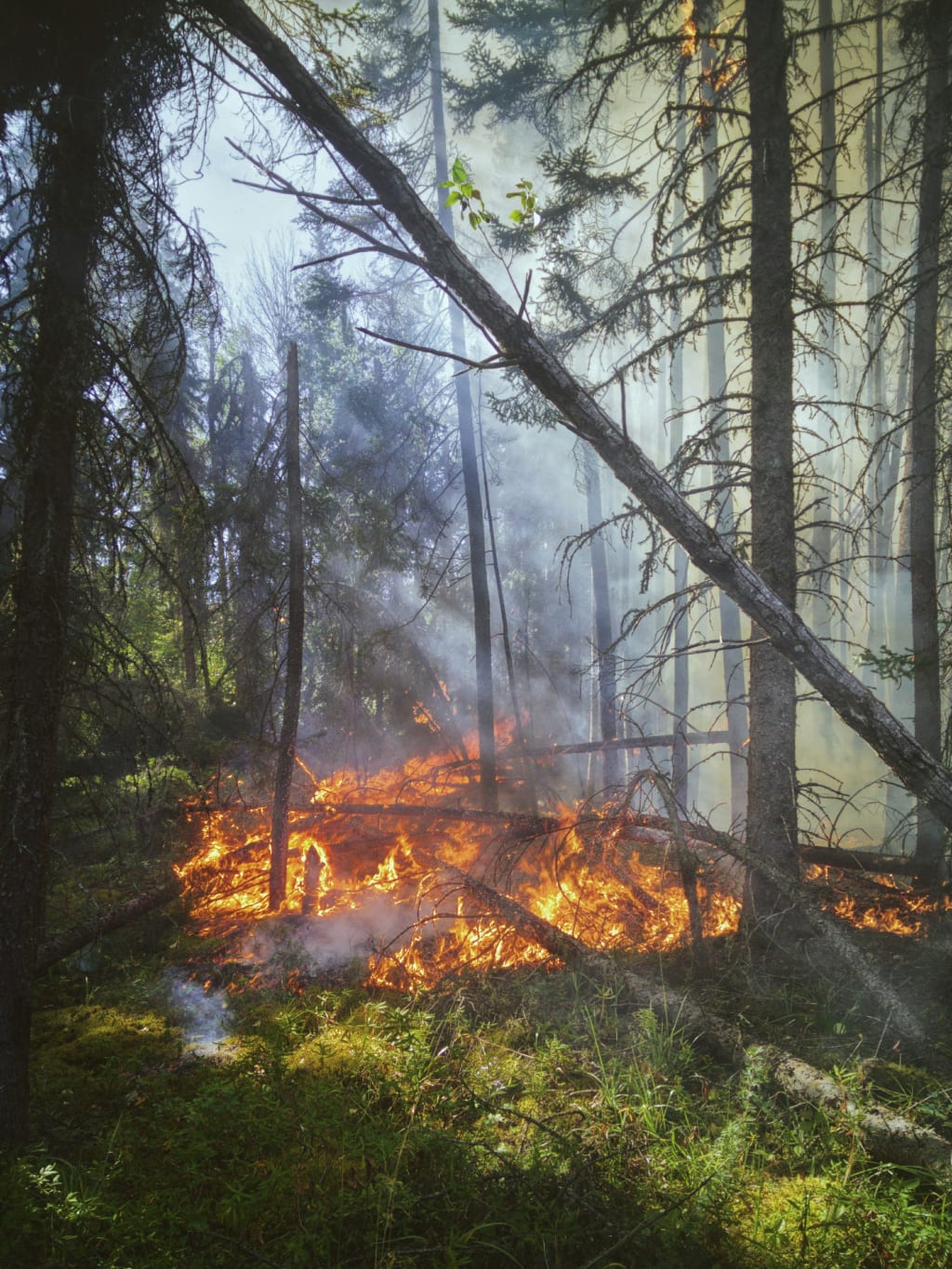
It was a dry summer, and the winds had been unforgiving across the western United States. The forests, once lush with towering pines, were now a tinderbox waiting for the smallest spark to ignite them. In the heart of California, nestled between rugged mountains and serene valleys, a fire began, small at first but soon spreading with terrifying speed.
The fire started innocuously in a remote area, unnoticed by many. A lightning strike, fueled by extreme drought conditions, sparked a blaze in the dense underbrush of the Sequoia National Forest. Within hours, the fire had begun to race through the dry brush, licking the bases of towering trees, moving with a ferocity that belied the quiet of the landscape. By the time anyone knew what was happening, it was too late.
Local firefighters, already stretched thin from fighting other blazes in the area, scrambled to get a handle on it. The flames were fierce, crackling through the brush, sending plumes of smoke high into the sky. It wasn’t long before the smoke was visible from miles away, a dark and foreboding omen. By mid-afternoon, the fire had spread rapidly, crossing roads, heading towards communities that had long existed under the safety of these ancient trees.
Megan Hughes, a firefighter from a nearby town, had been with the team for over five years. The sight of flames, the crackling sound of burning trees, and the heat—she knew them well. But this fire felt different. It wasn’t just an isolated spot that could be contained. This fire was relentless, racing across hillsides, unstoppable in its fury.
As the flames approached the town of Pineview, the residents were forced to evacuate. Megan’s heart sank when she heard the call. Pineview was a place she had grown up. It wasn’t just a town; it was a community—a place where everyone knew everyone else. She knew the elderly couple, the Harrises, who lived at the edge of town, and she thought of them immediately. They had no children and could barely get around. There was no time to spare.
Her unit quickly made its way to the town, battling the thick smoke that reduced visibility to almost zero. They moved fast, checking houses, evacuating people from their homes, and setting up lines to protect the structures closest to the fire. Every few minutes, the wind would shift, and the fire would change direction, making their task even more difficult.
In the midst of the chaos, Megan found the Harrises' home, an old, weather-beaten structure on the edge of town, with the fire creeping ever closer. She banged on the door. “Mr. and Mrs. Harris! It’s time to go!” she yelled.
The door creaked open, and the elderly woman stood there, her face pale with fear. "I can’t leave my garden," she whispered, her voice breaking. "It’s all I have left."
Megan looked behind her at the fire, now within a mile, and her heart sank. “Your garden can be rebuilt,” she said, her voice firm but gentle. “But you can’t be if you stay here. Please. We need to get you to safety.”
Reluctantly, Mrs. Harris agreed, and with help from Megan and her team, the couple was evacuated. As they drove away, Megan glanced back, her stomach tightening as she saw the glow of the fire creeping closer. She could only hope that the firebreaks they had set up would hold.
As the fire raged on, thousands of acres of forest were consumed by the flames. The iconic sequoias—trees that had stood for over a thousand years—began to fall, their massive trunks breaking apart like matchsticks in the inferno. The loss was unimaginable, not just for the beauty of the forest but for the ecosystems that had thrived there for generations.
For days, Megan and her team fought the fire, battling exhaustion, smoke, and the unforgiving terrain. Despite their best efforts, the fire continued to grow. Hundreds of homes were lost, and thousands of animals fled in terror. The fire had become a beast, out of control, a force of nature that could not be tamed.
Then, one morning, the winds shifted.
The firefighters had managed to set a backburn, lighting a controlled fire to create a firebreak that would stop the wildfire’s advance. As the backburn grew, the firefighters worked tirelessly to control it. The wind, once their enemy, now began to work in their favor, pushing the flames toward the firebreaks they had created.
For the first time in days, there was hope. Slowly, the fire began to lose its momentum, the smoke dissipating in the cool morning air. As the days passed, the fire was contained, though the damage was immense.
When it was finally declared "under control," the fire had burned over 200,000 acres of forest, destroyed hundreds of homes, and taken the lives of three firefighters who had been caught in the fire’s path. The town of Pineview was in ruins, but the community had pulled together to rebuild. Megan, exhausted and heartbroken, returned to her own town, where she began the difficult task of picking up the pieces.
It would take years for the forest to recover. The charred remains of the sequoias would stand as a testament to the fire’s destructive power, but the seeds of new life would eventually take root. In the wake of the disaster, there was a renewed sense of unity. Neighbors who had lost everything found comfort in one another, and together, they began the arduous process of rebuilding their homes, their lives, and the forest.
Megan stood at the edge of the charred forest, watching as the first signs of regrowth began to emerge. It would take time, but the land would heal. She knew it, just as she knew that the strength of the people and the resilience of nature would endure.
And as the sun set over the scorched earth, Megan could only hope that humanity would remember this fire—remember the lives lost, the destruction caused, and the strength it took to rebuild—not just the homes and the trees, but the spirit of the community.
About the Creator
Keep reading
More stories from Telhar Ali and writers in Earth and other communities.
The Lion and the Elephant
In the heart of the savanna, where the golden grasses swayed in the breeze, two creatures ruled in their own way: Leo, the lion, and Elara, the elephant. Both were majestic, both powerful, but they were worlds apart in how they ruled the land. Leo, the king of the savanna, with his golden mane and booming roar, commanded respect through his might and fear. Elara, with her towering frame and graceful movements, ruled through wisdom, compassion, and a deep connection with the earth.
By Telhar Ali10 months ago in Earth
Top Australian Writers’ Festival Cancelled After Palestinian Author Barred
One of Australia’s most respected literary festivals has been cancelled following a fierce backlash over the decision to bar a Palestinian author from participating. What began as a programming dispute quickly escalated into a national debate about free speech, cultural inclusion, and political pressure in the arts. The cancellation has sent shockwaves through Australia’s literary community, raising urgent questions about whose voices are allowed on public platforms and at what cost.
By Aarif Lashari3 days ago in Earth
The Trans Youth Athletes in the US Fighting for Their Rights: ‘Playing Is an Act of Resistance’
Across the United States, sports have become an unexpected front line in the fight over transgender rights. For many trans youth athletes, simply stepping onto a field, track, or court is no longer just about competition—it is an act of resistance. As state legislatures debate and pass laws restricting transgender participation in school sports, young athletes are finding themselves at the center of a national culture war that reaches far beyond the locker room.
By Aarif Lashari3 days ago in Earth



Comments
There are no comments for this story
Be the first to respond and start the conversation.