
The evolution of space stations
The development of space stations has been one of humanity’s most significant achievements in space exploration.


Over the decades, these orbiting laboratories have evolved from simple, rudimentary concepts into highly advanced platforms for scientific research, technology development, and international cooperation. The journey of space stations has not only revolutionized our understanding of space but has also laid the foundation for future space missions, including the potential for long-term human habitation on the Moon and Mars.
The Early Concepts
The idea of space stations began to take shape during the early days of the space race in the 1950s and 1960s. Visionaries like Konstantin Tsiolkovsky, the Russian scientist often regarded as the father of astronautics, and American engineer Wernher von Braun, who contributed to the development of the Saturn V rocket, were among the first to propose space habitats. These early concepts were largely theoretical, with the technological capabilities of the time far from being able to bring them to life.
The first practical effort came with the Soviet Union’s Salyut program in the 1970s. The Salyut 1, launched in 1971, became the first space station to be placed into orbit. It was a relatively small, cylindrical module that hosted a crew for short-term missions. Despite its technical limitations and the tragic loss of its crew on a subsequent mission, Salyut marked the first human-made structure in space, setting the stage for future developments.
The Space Race and the U.S. Skylab
The U.S. was not far behind in the race to create space stations. In 1973, NASA launched Skylab, America’s first space station, which was a significantly more advanced structure than the Salyut 1. Skylab was a large space station designed to accommodate astronauts for extended periods. It was used primarily for scientific research, including experiments in solar physics, space medicine, and the effects of prolonged spaceflight on the human body. Skylab’s legacy lies in its contributions to understanding the challenges of long-duration space missions, although it was only operational for about six years before re-entering Earth’s atmosphere in 1979.
The Rise of Modular Space Stations: Mir and the International Collaboration
The Soviet Union's Mir space station, launched in 1986, represented a significant leap forward in space station design. Unlike Skylab, which was a single, fixed module, Mir was a modular space station made up of interconnected modules that could be expanded over time. This concept of a modular space station would become the standard for future space habitats.
Mir was not just an engineering triumph, but also a groundbreaking platform for international cooperation in space. During its 15 years in orbit, it hosted astronauts from various countries, including the United States, Germany, France, and Japan. The research conducted on Mir provided vital data about the effects of long-term space travel on the human body, particularly the impact of microgravity on muscle atrophy and bone density. The experience gained from Mir laid the groundwork for the development of future, even more advanced space stations.
The International Space Station (ISS): A Global Endeavor
The International Space Station (ISS) is the most advanced and largest space station ever built, a product of collaboration between multiple nations including the United States, Russia, Japan, Canada, and the European Space Agency. The ISS began its construction in 1998 and has since become a symbol of global cooperation in space exploration.
The ISS was designed as a permanent orbiting laboratory for scientific research, offering a unique microgravity environment for experiments in fields ranging from biology to physics. Its modular design, similar to Mir, allows for the addition of new modules and systems as needed. The ISS has hosted over 240 astronauts from 19 different countries, providing valuable insights into long-term human spaceflight, medical advancements, and technology development.
In addition to scientific research, the ISS has also served as a testbed for technologies needed for future space exploration, particularly missions to the Moon and Mars. Innovations developed on the ISS have included advanced life support systems, space-based manufacturing, and new medical technologies.
Looking to the Future: Lunar and Mars Habitats
As we look toward the future, space stations are evolving beyond Earth’s orbit. The Lunar Gateway is a key project aimed at establishing a sustainable human presence on the Moon. This space station, part of NASA’s Artemis program, will serve as a staging point for lunar exploration and, eventually, for missions to Mars. The Lunar Gateway will be a smaller, modular space station than the ISS, but it will continue to build upon the lessons learned from previous space stations.
Private companies, such as SpaceX and Blue Origin, are also getting involved in the development of space stations. SpaceX’s Starship program, which aims to facilitate human missions to Mars, could ultimately contribute to the creation of commercial space stations in orbit around the Earth or on other celestial bodies. These private ventures signal the beginning of a new era in space exploration, where the private sector plays an increasingly important role in shaping humanity’s future in space.
Conclusion
From the humble beginnings of the Salyut 1 to the advanced, multi-national collaboration of the ISS, the evolution of space stations has been marked by incredible technological advancements, international cooperation, and a relentless pursuit of knowledge. As we move toward future exploration missions, space stations will remain central to humanity’s goals in space, offering invaluable research opportunities and serving as stepping stones for the next giant leap into the cosmos. The next phase of space station evolution is poised to push the boundaries of human exploration, with lunar and Mars habitats on the horizon, potentially opening the door for permanent human settlement beyond earth.
About the Creator
Badhan Sen
Myself Badhan, I am a professional writer.I like to share some stories with my friends.
Keep reading
More stories from Badhan Sen and writers in Earth and other communities.
The Science of Biohacking
Biohacking, often referred to as "DIY biology," is a rapidly evolving field that empowers individuals to experiment with biology to enhance their bodies, minds, and overall well-being. From self-quantification to genetic modifications, biohacking spans a broad range of activities, practices, and philosophies. Whether it involves changing your diet, using advanced technology, or attempting genetic modifications, the science of biohacking is driven by the idea that we can take control of our biology to unlock greater physical and mental potential.
By Badhan Sen10 months ago in Earth
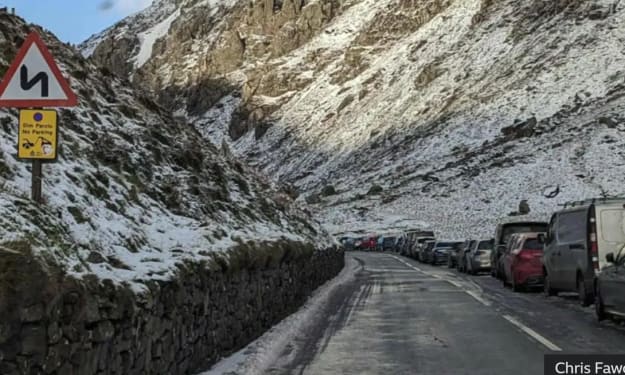
Police Warn Against ‘Ridiculous’ Parking at Beauty Spot Amid Snow Disruption
Heavy snowfall may transform beauty spots into winter wonderlands, but it also brings serious risks when visitors ignore basic safety and parking rules. Police have issued a strong warning against what they describe as “ridiculous” parking at a popular beauty spot, after snow disruption led to blocked roads, stranded vehicles, and delayed emergency access. As wintry conditions continue to affect travel, authorities are urging the public to prioritise safety over scenic photographs, reminding drivers that poor parking decisions can have life-threatening consequences during severe weather. Snowfall Turns Scenic into Hazardous The recent spell of snow attracted large numbers of visitors eager to enjoy picturesque landscapes blanketed in white. Hillsides, national parks, and rural viewpoints quickly became hotspots for walkers, families, and amateur photographers. However, police say the surge in visitors coincided with widespread parking chaos. Cars were left abandoned on narrow roads, grass verges, gateways, and even blocking access routes meant for emergency vehicles and local residents. What may appear to drivers as a harmless decision to “park for just a few minutes” can quickly escalate into a major safety issue—especially when snow and ice reduce road space and visibility. Police Response and Public Warning Local police forces have taken to social media and public statements to express frustration at the situation. Officers described some parking behaviour as not only irresponsible but dangerous, particularly given the weather conditions. Police warned that emergency vehicles, including ambulances and mountain rescue teams, were struggling to reach areas due to blocked roads. In severe weather, response times are already under pressure, and illegally parked vehicles can mean the difference between life and death. Authorities have also made it clear that enforcement action will be taken where necessary. Drivers risk fines, towing, and penalty points if their vehicles obstruct roads or endanger others. Impact on Emergency Services One of the most serious consequences of poor parking during snow disruption is its impact on emergency services. Narrow rural roads, already difficult to navigate in icy conditions, become completely impassable when cars are parked irresponsibly. Fire crews, paramedics, and rescue teams rely on clear access routes, particularly in popular beauty spots where accidents such as slips, falls, or stranded walkers are more likely in winter conditions. Police stressed that emergency vehicles do not have the luxury of “finding another way around” when roads are blocked. Delays caused by inconsiderate parking put both responders and the public at risk. Local Residents Left Frustrated It is not only emergency services that are affected. Residents living near popular beauty spots often bear the brunt of snow-related disruption. Driveways are blocked, access to homes becomes difficult, and essential journeys for work, medical appointments, or supplies are delayed. Many locals report feeling ignored by visitors who treat rural communities like seasonal attractions rather than lived-in areas. During winter weather, this frustration is magnified, as residents may already be dealing with power outages, poor road conditions, and limited access to services. Police have echoed these concerns, reminding visitors that beauty spots are often surrounded by working communities, not just open spaces for leisure. Why Snow Makes Parking More Dangerous Snow significantly reduces road safety margins. It narrows carriageways, hides road markings, and makes verges unstable. A car parked partly on a road might seem manageable in normal conditions, but in snow it can create blind corners, force vehicles into oncoming traffic, or cause skidding accidents. Additionally, snowploughs and gritters require space to operate effectively. Poorly parked vehicles can prevent these essential services from clearing roads, prolonging disruption for everyone. Authorities warn that even experienced drivers can underestimate how quickly conditions can change in winter weather. Social Media and the “Snow Day” Effect Police have also pointed to social media as a contributing factor. Viral images of snow-covered landscapes often encourage spontaneous trips without proper planning. People see beautiful photos and head out without considering parking availability, road conditions, or weather warnings. This “snow day” mentality can overwhelm rural infrastructure not designed for large volumes of traffic, particularly during adverse weather. Police urge visitors to check local advice before travelling and to be prepared to turn back if conditions are unsafe. Advice for Safe Winter Visits In response to the ongoing disruption, authorities have shared clear guidance for anyone planning to visit beauty spots during snowy conditions: Avoid unnecessary travel during severe weather warnings Park only in designated areas, never on roads or verges Do not block gateways, tracks, or emergency access routes Check weather and road conditions before setting off Be prepared to leave if parking is unavailable Police emphasise that no photograph or short walk is worth risking lives or causing serious disruption. Enforcement and Accountability While officers prefer to rely on public cooperation, they have confirmed that enforcement will be stepped up if irresponsible behaviour continues. Vehicles may be ticketed or removed, particularly if they pose a danger or obstruction. Authorities stress that enforcement is not about spoiling enjoyment but about ensuring public safety. Winter conditions demand higher levels of responsibility from drivers, not less. A Shared Responsibility Snow transforms landscapes, but it also tests public behaviour. Police warnings against “ridiculous” parking are not just expressions of frustration—they are urgent reminders that safety must come first. Enjoying nature is a privilege, not a right, especially during extreme weather. By parking responsibly and respecting local communities, visitors can help ensure that beauty spots remain accessible, emergency services remain effective, and winter days do not turn into preventable disasters. As snow disruption continues, the message from police is clear: think before you park, or don’t park at all
By Muhammad Hassan2 days ago in Earth
How Wind Energy Works: A Closer Look with Stanislav Kondrashov
As the world pushes further into the 21st century, the demand for sustainable and clean sources of energy has never been greater. At the heart of this shift is wind energy—a technology as old as the first sailboat, yet as modern as the towering turbines dotting coastlines and countrysides. Stanislav Kondrashov, an independent energy researcher and commentator, has long studied the mechanics and potential of wind power. His insights help demystify what’s often seen as a complex system driven by forces we can’t see.
By Stanislav Kondrashov 4 days ago in Earth
The steps to losing a child
Step One: Lose a child. Not what anyone wants to happen and nothing you can do to change it, but you can go through steps to becoming happy again. You can go through steps to loving again. You can go through steps to become a new you because after losing a child you will never be the same person you once were.
By Tabitha Hinkley4 days ago in Fiction



Comments
There are no comments for this story
Be the first to respond and start the conversation.