


Billion years ago it was a wild time on Earth. It was a chaotic playground, constantly bombarded by asteroids and crashing into other planets. It's a wonder that our resilient blue Homeworld managed to survive through it all. But if we want to take a thrilling journey through our planet's history, we have to go way back to the very beginning.
Approximately four and a half billion years ago, our solar system began to take shape from a dense cloud of interstellar gas and dust. This cloud underwent a collapse, forming a swirling disc of matter that gradually increased in temperature. Eventually, the fusion of hydrogen into helium gave birth to our sun, and simultaneously, the formation of baby Earth commenced. As our star came into existence, the matter located at the outer edges of the spinning disc began to coalesce. These clusters served as the foundation for the planets and moons within our solar system. As they accumulated more matter, they grew in size and assumed a more spherical shape. The clumps in the cooler regions of the solar system primarily consisted of ice, liquids, and gases. In contrast, the rocky material closer to the Sun contributed to the formation of inner planets like Mars and Earth.
As the spinning disc of matter continued to evolve, clumps of material started to form on the outer edges. These clumps would eventually become the planets and moons in our solar system. They grew larger and more spherical as they accumulated more matter. In the cooler regions, these clumps were mostly made of ice, liquids, and gases. Closer to the Sun, the rocky material formed the inner planets like Mars and Earth.
Our young Earth was a fiery and active place, constantly spewing out gases like hydrogen sulfide, methane, and carbon dioxide. These gases created the very first atmosphere on our planet. But Earth's early days were not without drama. It experienced a violent collision with Thea, a planet the size of Mars. This epic event threw chunks of matter all around Earth's orbit, which eventually came together under the force of gravity to form our beloved Moon.
In those early days, Earth was scorching hot, with no oceans in sight. Water existed only as gas. But around 3.8 billion years ago, our planet began to cool down enough for water to condense and become liquid. The very first primitive ocean covered this young Earth, transforming it into a water world.
And with water came the spark of life. About 3.7 billion years ago, living organisms appeared on Earth. These early pioneers paved the way for the incredible diversity of life that we see today.Life on our planet began to emerge in these ancient oceans. Simple single-celled organisms, known as prokaryotes, were the first to inhabit Earth. These microscopic creatures thrived in the nutrient-rich waters, paving the way for the evolution of more complex life forms.
As time went on, Earth experienced countless changes. Continents shifted, mountains rose and eroded, and new species evolved and went extinct. The planet endured ice ages, mass extinctions, and catastrophic events, yet life always found a way to adapt and survive.
Today, we stand on the shoulders of billions of years of Earth's history. Our planet has transformed from a chaotic playground to a diverse and vibrant home for countless species. It is a testament to the resilience and tenacity of life itself.
So, buckle up and get ready for a whirlwind tour through Earth's captivating history. From asteroid bombardments to violent collisions, from the birth of our sun to the formation of our Moon, and from the emergence of oceans to the dawn of life itself, our planet's story is nothing short of awe-inspiring. Let's dive in and uncover the secrets of our extraordinary Homeworld.
About the Creator
Reader insights
Outstanding
Excellent work. Looking forward to reading more!
Top insights
Compelling and original writing
Creative use of language & vocab
Easy to read and follow
Well-structured & engaging content
Eye opening
Niche topic & fresh perspectives
Masterful proofreading
Zero grammar & spelling mistakes
UAE’s New Child Digital Safety Law Puts Parents at Risk of Fines
The United Arab Emirates has rolled out a new Child Digital Safety Law, aimed at safeguarding children from online dangers. But this ambitious law does more than regulate digital platforms — it puts parents and legal guardians directly in the accountability frame, holding them responsible for monitoring their children’s online activities. Failure to comply could result in fines that reach up to AED 1 million, depending on the severity of the violation.
By Muhammad Hassanabout 14 hours ago in Earth
Tidal Barrier to Be 10m Shorter to Save Money
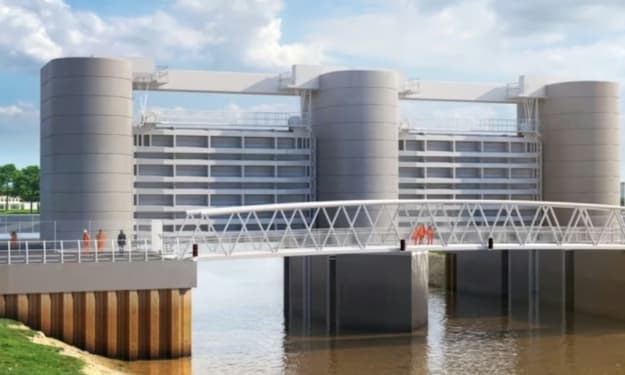
Rethinking Flood Protection in Somerset If you live near the coast, the threat of flooding isn’t just news — it’s a reality you can feel. That’s the situation in Bridgwater, Somerset, a historic market town near the Bristol Channel. For years, plans have been underway to build a tidal barrier to protect homes, businesses, and livelihoods from storm surges. Now, new updates reveal the barrier will be about 10 metres shorter than originally planned, a decision aimed at reducing costs while still keeping the town safe. This announcement has sparked conversations about engineering, budgets, and how communities adapt to climate challenges. Why the Barrier Is Being Shortened The Bridgwater Tidal Barrier was initially designed to be a high-profile flood defence, protecting thousands of properties from tidal surges that travel up the River Parrett. But after a recent design efficiency review, engineers concluded the barrier could be slightly shorter without compromising safety. Reducing the barrier by 10 metres lowers construction complexity, saves money, and reduces long-term maintenance costs. The Environment Agency and local authorities say this approach allows the project to move forward on time and on budget, ensuring the community gets protection sooner rather than later. The Cost Factor Public infrastructure projects like this don’t happen in a vacuum. Rising inflation, global supply chain disruptions, and labor shortages have increased costs for large-scale projects. Officials argue that the revised design is a responsible compromise: it balances cost savings with safety. Somerset Council leaders have welcomed the decision, noting that managing costs wisely helps the project reach completion without compromising protection for residents. Community Voices and Concerns Local engagement has been a key part of the project. Residents have attended consultations and drop-in sessions to see the updated plans and ask questions. Some community members appreciate the cost savings and faster timeline. Others worry whether a shorter barrier will be as effective against future extreme weather events. Questions include: Will the barrier remain strong against increasingly unpredictable storms? Does reducing the height limit future adaptability as climate impacts grow? What effect might it have on local ecosystems and fish habitats? These are valid concerns, reflecting how communities are increasingly involved in climate adaptation decisions. Engineering Flood Defence Today Tidal barriers are not new — Britain has relied on them for decades. London’s Thames Barrier, for instance, has protected the capital since the 1980s. But today, rising sea levels and more frequent storms mean engineers must balance safety, cost, and environmental impact carefully. In Bridgwater, officials say the revised barrier will still protect against 1-in-200-year tidal events. It’s designed to provide robust safety now while remaining adaptable for the future. The Human Side of Flood Protection It’s easy to get lost in numbers and metres, but behind the design decisions are real people. Residents depend on reliable flood protection to feel secure in their homes and communities. For families, businesses, and local services, knowing a barrier is being built — even a slightly shorter one — provides peace of mind. It’s not just a structure; it’s a symbol of resilience and preparedness. Next Steps for the Barrier The Bridgwater project is still under construction, with the revised design undergoing final refinements. Once completed, the tidal barrier will provide long-term protection for thousands of properties and critical infrastructure in Somerset. Officials emphasize that the shortened design does not compromise safety. If anything, staying on budget ensures the project is completed faster, meaning protection arrives sooner for the community. A Lesson in Climate Adaptation The story of the Bridgwater Tidal Barrier is more than engineering or economics. It’s about how communities respond to climate risks and how governments make tough choices balancing safety, cost, and sustainability. The barrier being 10 metres shorter may seem small on paper, but it reflects a larger truth: infrastructure planning today is as much about community engagement, adaptability, and long-term resilience as it is about concrete and steel. By keeping people involved and making informed, cost-effective decisions, Somerset shows how towns can adapt to climate change without sacrificing safety. Conclusion The Bridgwater Tidal Barrier demonstrates that infrastructure projects in the 21st century must adapt to multiple pressures: climate change, financial constraints, and community expectations. While the barrier is slightly shorter than originally planned, it remains a critical line of defence against flooding. More importantly, it highlights the importance of public involvement, transparency, and strategic planning in building a resilient community. For Bridgwater residents, the message is clear: the tide may rise, storms may come, but with smart planning and community engagement, the town will be ready
By Muhammad Hassan7 days ago in Earth



Comments
There are no comments for this story
Be the first to respond and start the conversation.