
The Enduring Legacy of the Pen: A Journey Through History
From Reed Pens to Ballpoint Pens: The Evolution of Writing Instruments

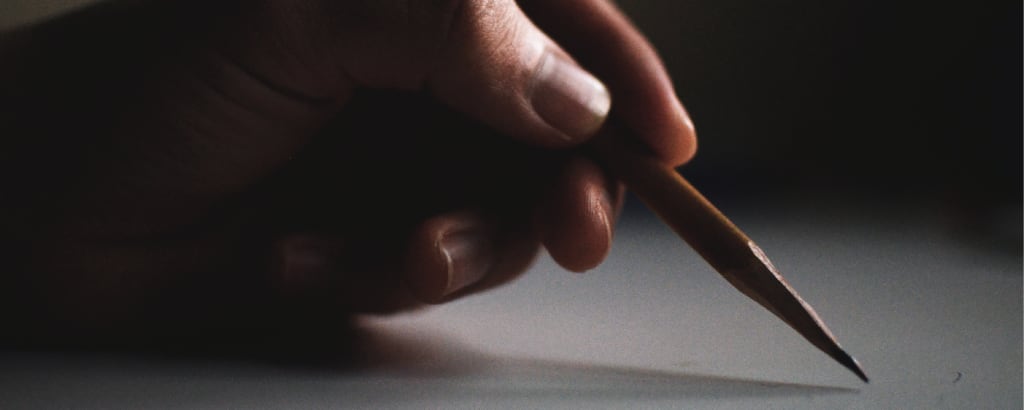
Pens have been an essential writing tool for centuries, used by people of all ages and professions. From schoolchildren learning to write their first words to professionals drafting important documents, the pen is a ubiquitous tool that has stood the test of time. In this article, we will explore the history and significance of the pen.
Click to see my pen suggestion!
The earliest form of a pen dates back to ancient Egypt, where scribes used reed pens to write on papyrus scrolls. These pens were made from a hollow reed stem, sharpened at one end to create a writing nib. The ink was made from soot mixed with water and applied to the paper with the reed nib. Over time, reed pens evolved, with the nib becoming more refined and the ink more sophisticated.
In the Middle Ages, quill pens became popular. Made from the feathers of birds such as geese or swans, these pens had a sharp nib that could hold more ink than a reed pen. Quill pens were used for everything from writing letters to illuminating manuscripts, and they remained popular until the invention of the steel nib pen in the 19th century.
The steel nib pen was a significant advancement in pen technology. It was made from a thin, pointed piece of steel that could be dipped into ink and used to write on paper. The steel nib allowed for more precise and consistent writing than the quill pen, and it was quickly adopted by writers and professionals around the world.
In the early 20th century, the fountain pen became the most popular writing instrument. Fountain pens were similar to the steel nib pen, but they had a reservoir of ink that allowed for longer periods of writing without needing to dip the pen in ink. Fountain pens were also more comfortable to use, with a grip that prevented the hand from slipping while writing. They remained the primary writing instrument until the ballpoint pen was invented in the 1940s.
The ballpoint pen revolutionized the pen industry, with its ability to write on almost any surface and its long-lasting ink. The ballpoint pen has become the most widely used writing instrument in the world, with billions of them sold each year.In conclusion, the history of the pen is long and varied, with different types of pens evolving over time to meet the needs of writers and professionals. From the reed pen to the ballpoint pen, the pen has been a vital tool for communication, creativity, and innovation. Despite the rise of digital technology, the pen continues to be an essential tool in our daily lives.
In the 1800s, the steel pen was invented, replacing the quill pen. The steel pen was made from a thin, pointed piece of steel and was dipped in ink before use. Steel pens allowed for more precision and consistency in writing, making them a popular choice for writers and professionals.
In the early 1900s, the fountain pen became popular. Fountain pens had a reservoir of ink that allowed for longer periods of writing without needing to be refilled. They were also more comfortable to use and had a grip that prevented the hand from slipping while writing.
In the 1940s, the ballpoint pen was invented, and it revolutionized the pen industry. The ballpoint pen had a small ball bearing at the tip that rotated as the pen was moved across the paper, dispensing ink. Ballpoint pens were more durable, long-lasting, and could write on almost any surface. They quickly became the most popular type of pen in the world.
In recent years, the popularity of pens has decreased due to the rise of digital technology. However, pens remain an essential tool in many professions and are still widely used for personal and creative purposes.In conclusion, pens have played a crucial role in human communication and creativity throughout history. From reed pens to ballpoint pens, the evolution of writing instruments has had a significant impact on society. Despite the rise of digital technology, pens remain an essential tool for many, and their legacy continues to endure.
About the Creator
Can Alper Holoğlu
Those who think they should watch or read it do so, those who don't think so don't. But of course we're happy when someone likes it, right? Or if you have added something to someone. I don't know, I can't find any other reason.
Keep reading
More stories from Can Alper Holoğlu and writers in Earth and other communities.
Practical and Stylish: The Benefits of Using a Backpack for Everyday Carry
Practical and Stylish: The Benefits of Using a Backpack for Everyday Carry Click here to access the recommended product. Backpacks have been around for centuries, and they have evolved over time to become an essential accessory for daily use. Whether you're a student, a commuter, or a traveler, a backpack can be a practical and stylish way to carry your essentials.
By Can Alper Holoğlu3 years ago in Earth
Pretty Privilege vs. Pretty Punishment
In today’s image-driven world, beauty is often described as a superpower. Attractive people are believed to get more opportunities, more attention, and more advantages in life. This phenomenon is commonly called pretty privilege. But there is another side of this story that is discussed far less often — pretty punishment.
By Aarif Lashariabout 20 hours ago in Earth




Comments
There are no comments for this story
Be the first to respond and start the conversation.