
The Elegance of Japanese Architecture: A Symphony of Simplicity and Serenity
From Ancient Temples to Modern Minimalism, Discover Japan’s Architectural Masterpieces

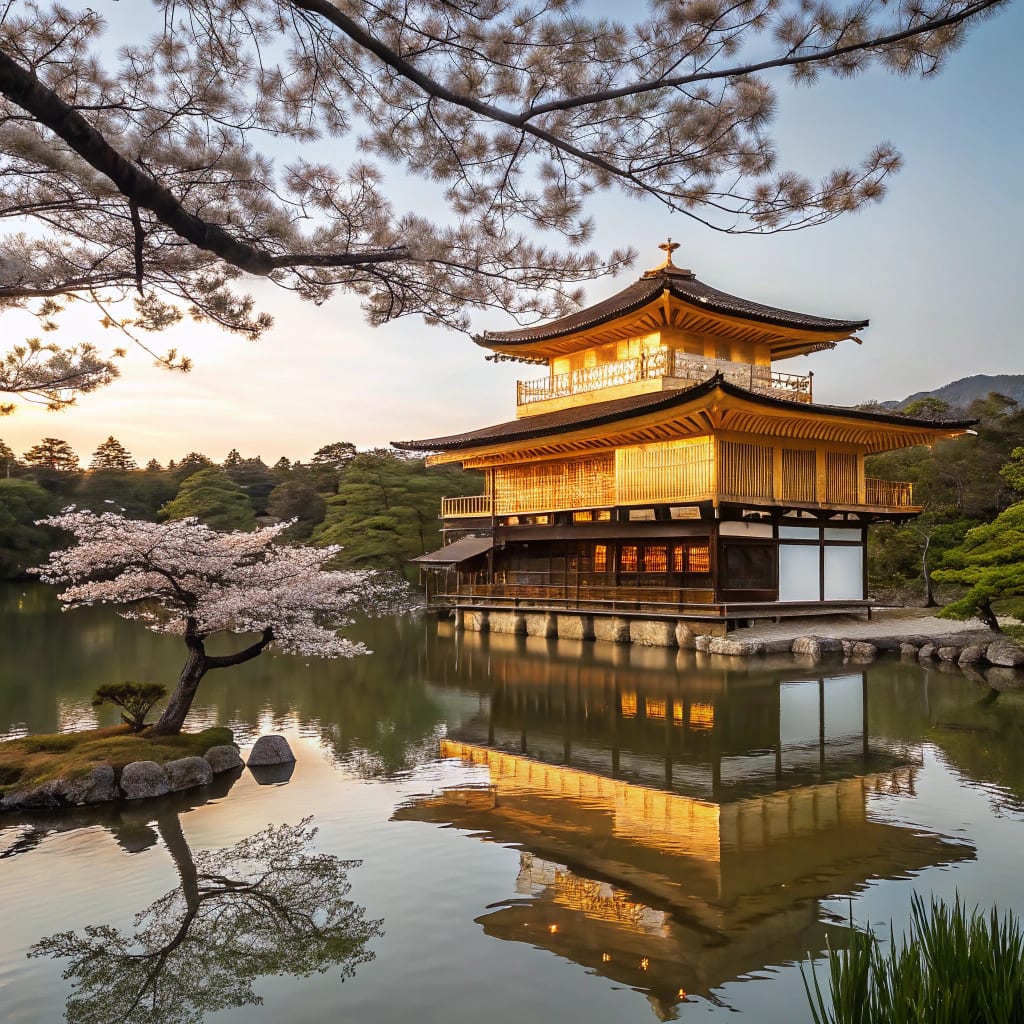
Japanese architecture is a captivating blend of simplicity, harmony, and innovation, reflecting the nation’s deep-rooted philosophies and aesthetic sensibilities. Rooted in Shinto and Buddhist principles, it emphasizes balance with nature, meticulous craftsmanship, and timeless elegance. From ancient wooden shrines to cutting-edge urban designs, Japan’s architectural legacy is both profoundly spiritual and strikingly modern. This post explores five iconic examples of Japanese architecture, each a testament to the country’s ability to create spaces that inspire awe and introspection. Journey through Japan’s architectural wonders, where tradition and innovation dance in perfect harmony.
1. Kinkaku-ji, Kyoto: The Golden Pavilion
Kinkaku-ji, the Temple of the Golden Pavilion, is a Zen Buddhist masterpiece built in the 14th century. Its top two stories, covered in gold leaf, shimmer against a tranquil pond, embodying the Muromachi period’s aesthetic of wabi-sabi—beauty in imperfection. The structure blends three architectural styles: shinden (aristocratic), samurai, and Zen, reflecting Japan’s layered cultural history. The surrounding garden, designed to mirror paradise, invites contemplation. Kinkaku-ji’s serene beauty and philosophical depth make it a must-visit, offering insights into Zen’s influence on Japanese design and spirituality.
2. Himeji Castle, Hyogo: The White Heron
Himeji Castle, a UNESCO World Heritage Site, is Japan’s finest surviving feudal castle, built in the 14th century and perfected in the 17th. Known as the "White Heron" for its elegant, white-plastered walls, it combines defensive ingenuity with aesthetic grace. Its labyrinthine paths, steep stone walls, and wooden interiors showcase samurai-era architecture, blending functionality with beauty. The castle’s cherry blossom-framed views in spring captivate visitors, while its engineering reveals Japan’s mastery of balance between form and purpose, making it a powerful symbol of resilience and artistry.
3. Itsukushima Shrine, Miyajima: Floating Serenity
The Itsukushima Shrine, a UNESCO site on Miyajima Island, is renowned for its "floating" torii gate, which appears to rise from the sea at high tide. Built in the 12th century, this Shinto shrine exemplifies Japan’s reverence for nature, with its red-lacquered structures harmonizing with the surrounding sea and mountains. The shrine’s open design, with elevated walkways and delicate wooden pillars, reflects Shinto’s emphasis on purity and connection to the divine. Visiting at sunset, when the torii glows against the water, offers a profound experience of Japan’s spiritual architecture.
4. Naoshima’s Art Houses: Tradition Meets Avant-Garde
Naoshima, an island in the Seto Inland Sea, redefines Japanese architecture through its Art House Project, where traditional homes are transformed into contemporary art installations. Old wooden machiya houses, with their sliding doors and tatami mats, are reimagined by artists like Tadao Ando, blending minimalist design with local heritage. The Chichu Art Museum, partially underground, uses natural light to enhance its serene spaces, embodying Japan’s modern architectural ethos. Naoshima’s fusion of old and new offers a thought-provoking exploration of how architecture can bridge time and inspire creativity.
5. Tokyo’s Nakagin Capsule Tower: Futuristic Minimalism
The Nakagin Capsule Tower, built in 1972 by Kisho Kurokawa, is a bold example of Japan’s Metabolism movement, envisioning architecture as living, adaptable organisms. Its modular capsules, attached to a central core, resemble sci-fi pods, reflecting Japan’s post-war embrace of innovation and efficiency. Though now largely dismantled, its legacy highlights Japan’s ability to push architectural boundaries while maintaining minimalist principles. The tower’s compact, functional design offers lessons in sustainability and urban living, making it a landmark of Japan’s forward-thinking architectural vision.
Conclusion: Japan’s Architectural Soul
Japanese architecture is a profound dialogue between nature, culture, and innovation. From Kinkaku-ji’s golden serenity to Himeji Castle’s fortified elegance, Itsukushima’s spiritual harmony, Naoshima’s artistic fusion, and Nakagin’s futuristic minimalism, each structure tells a story of balance and creativity. These masterpieces invite visitors to explore Japan’s philosophical depth and aesthetic genius, where every beam and space is intentional. Whether you’re drawn to ancient tranquility or modern innovation, Japan’s architectural legacy is a powerful journey of discovery, resonating with timeless beauty and wisdom.
About the Creator
Arjun. S. Gaikwad
Truth Writing unveils reality beyond illusion, power, and propaganda words that awaken conscience and challenge comfort. Fearless, honest, and thought-provoking, it explores politics, humanity, and spirit to inspire awareness and change.
Keep reading
More stories from Arjun. S. Gaikwad and writers in Earth and other communities.
The Majesty of Chinese Architecture: A Legacy of Harmony and Innovation
Chinese architecture is a profound expression of the nation’s philosophy, history, and ingenuity, blending harmony with nature, intricate craftsmanship, and bold innovation. Spanning millennia, it reflects China’s cultural evolution, from ancient wooden temples to futuristic urban marvels. This post explores five iconic examples of Chinese architecture, each showcasing the nation’s ability to create structures that are as visually stunning as they are intellectually significant. Dive into a journey through China’s architectural wonders, where tradition and modernity converge in breathtaking ways.
By Arjun. S. Gaikwad6 months ago in Earth
Europe Wheat Market Size and Forecast 2025–2033
Europe Wheat Market Overview The Europe Wheat Market is projected to grow from US$ 13.78 billion in 2024 to US$ 19.59 billion by 2033, expanding at a CAGR of 3.99% during 2025–2033, according to Renub Research. This steady growth is supported by rising food consumption, strong export demand, improved yields, government-backed agricultural policies, and the rapid adoption of modern farming technologies across the region.
By Aaina Oberoiabout 5 hours ago in Earth




Comments
There are no comments for this story
Be the first to respond and start the conversation.