
The difference between sodium carbonate and sodium bicarbonate, life is not afraid to use the wrong, production use to be careful
The difference between sodium carbonate and sodium bicarbonate, life is not afraid to use the wrong, production use to be careful

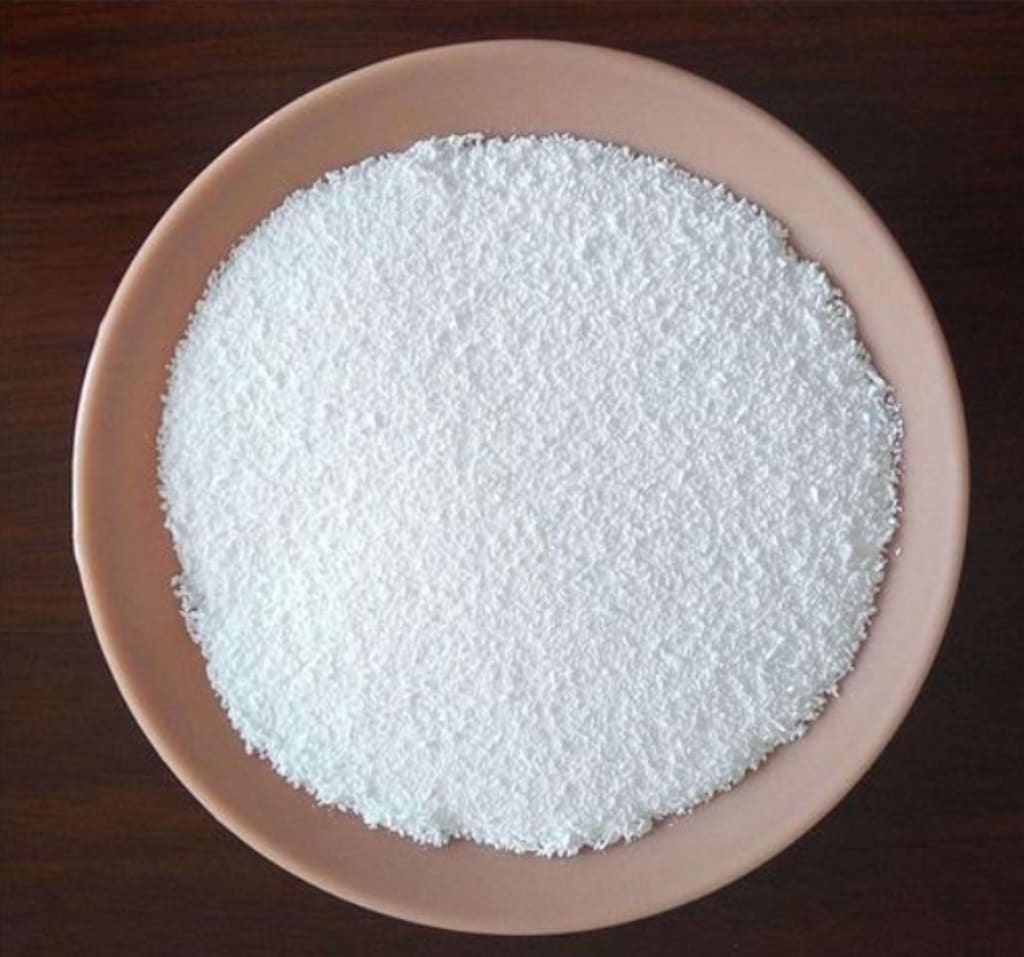
A friend recently started to get into the food sector and decided to make a career out of it. I was a bit surprised to hear this news. "Don't you just like to eat and are too lazy to cook? How can takeaway make you happy?" He said he should still do it. He wanted to eat and cook for himself, to be healthy and hygienic. By the look on his face, I thought something was wrong with him. "What's wrong with you?" He smiled and asked me what the difference was between soda and baking soda.
Soda and baking soda are really two things that a lot of people can't figure out. Let me introduce them properly next.
Soda, chemically known as sodium carbonate, has the chemical formula Na2CO3. there are many aliases. Besides soda, there are also soda ash, lye, lye powder, lime, oral soda, soda crystals, soda with water, washed soda, sodium washed soda, soda crystals, crystal soda. Usually white powder or fine crystals, odourless, highly absorbent, easily forms hard lumps. It decomposes at high temperatures, is easily soluble in water and the aqueous solution is alkaline.
Although soda ash is also called soda ash or alkali, it is a salt, not a base. It has this name because when soda is dissolved in water, the aqueous solution is alkaline. Long before soda ash was synthesised, our working people had already discovered the existence of this substance and used it in their daily lives. That is why the name has been used to this day.
Sodium carbonate is widely used in the chemical, pharmaceutical, metallurgical, ceramic, rubber, mechanical, printing and dyeing industries. It is a chemical raw material that is not available to us. In everyday life, sodium carbonate can be found in the kitchen, usually used to wash grease stains and added when making buns and steamed buns.
Baking soda, chemically known as sodium bicarbonate, has the chemical formula NaHCO3. It does not have as many aliases as soda, except for baking soda, only sodium bicarbonate and acidic sodium carbonate. It is usually a white crystalline powder, odourless and soluble in water. It decomposes slowly in humid air or hot air to produce carbon dioxide. It is easily decomposed when heated to 270°C. The decomposition products are sodium carbonate, water and carbon dioxide.
Sodium bicarbonate is also widely used, in much the same way as sodium carbonate, but not as much as sodium carbonate. It is the most widely used expansion agent in food processing and is used in the production of biscuits, bread, etc. It is the producer of carbon dioxide in soft drinks. It can be compounded with alum to form an alkaline baking powder or with soda ash to form a civil soda; it can also be used as a butter preservative.
So what is the difference between sodium carbonate and sodium bicarbonate? Firstly, as can be seen from their chemical formulae, sodium carbonate is heavier. There is more sodium bicarbonate than sodium carbonate for the same weight. From their appearance, sodium carbonate is mainly a white powder, bright white, while sodium bicarbonate is mainly white crystals, dark white. Sodium bicarbonate is unstable, so it decomposes in air, but only absorbs water and clumps. In the same weight of aqueous solution, sodium carbonate is more alkaline, whereas sodium bicarbonate is only weakly alkaline. This is well understood because sodium bicarbonate hydrolyses to produce sodium carbonate.
In fact, sodium carbonate and sodium bicarbonate still feel similar, but it is only in their use that a distinction is made. Especially for industrial use, there is still a big difference. In fact, it is not a serious household problem and is rarely used. And the edible soda that people buy now is a mixture of sodium carbonate and sodium bicarbonate.
Personally, I think it's a summary of the main points :
1. soda, the chemical name is sodium carbonate, the chemical formula is Na2CO3. usually white powder or fine crystals, odorless, absorbent, easy to form hard lumps. It decomposes at high temperatures, is easily soluble in water and the aqueous solution is alkaline.
2. Baking soda, chemically known as sodium bicarbonate, the chemical formula is NaHCO3. It is usually a white crystalline powder, odourless and soluble in water. It decomposes slowly in moist air or hot air to produce carbon dioxide. It decomposes easily when heated to 270°C. The products of decomposition are sodium carbonate, water and carbon dioxide.
3. The difference between sodium carbonate and sodium bicarbonate. Firstly, their chemical formulas show that sodium carbonate is heavier. For the same weight, sodium bicarbonate is more than sodium carbonate. From their appearance, sodium carbonate is mainly a white powder, bright white, while sodium bicarbonate is mainly white crystals, dark white. Sodium bicarbonate is unstable, so it decomposes in air, but only absorbs water and clumps. In the same weight of aqueous solution, sodium carbonate is more alkaline, while sodium bicarbonate is only weakly alkaline.
About the Creator
Paul Weiest
Opening the windows of science to you
Keep reading
More stories from Paul Weiest and writers in Earth and other communities.
When hot and cold water are put into the fridge at the same time, the hot water freezes first, which is counter-intuitive but true
When I went to my little cousin's house the other day, I happened to run into his mother and asked him to help me freeze the ice water. Then this little guy picked up the hot water he had just boiled, filled a glass, and put it in the fridge. When his mother saw this, she hurriedly took the hot water out and then criticized and taught him. Looking at his aggrieved face, I couldn't help but want to take revenge for him.
By Paul Weiest3 years ago in Earth
Nature’s Hidden Gems: Discovering the Rarest Flowers on Earth
Introduction: When Beauty Meets Rarity Nature is filled with wonders, but few are as captivating—and as elusive—as the rarest flowers on Earth. From enormous parasitic blooms to delicate orchids that appear only under precise conditions, these plants challenge our understanding of survival, evolution, and beauty.
By Ahmed aldeabella4 days ago in Earth
Verizon Outage Today
A sudden Verizon outage can feel unsettling, especially when your phone switches to “SOS” or “emergency calls only” without warning. Across social media and outage-tracking platforms, users often rush to ask the same questions: Is Verizon down right now? Why is my phone in SOS mode? What happened to Verizon today, and when will Verizon be back up? While outages are never convenient, they are not uncommon for large national carriers like Verizon Wireless. Understanding what a Verizon service outage means—and how to respond—can help reduce confusion during moments when connectivity disappears. Is Verizon Down? Understanding Service Outages A Verizon wireless outage occurs when part of Verizon’s cellular or data network becomes unavailable. This can affect voice calls, text messages, mobile data, or all services at once. Some outages are isolated to specific cities, such as Verizon outage NYC, Atlanta, Houston, or New Jersey, while others expand into a broader Verizon nationwide outage. When service is disrupted, users commonly report: Verizon down today Verizon network down Verizon not working Is Verizon down in my area? Verizon service outage These reports often surface within minutes, especially on outage-monitoring platforms. Why Does My Phone Say SOS? One of the most alarming signs during a Verizon outage today is seeing SOS, SOS only, or emergency calls only at the top of an iPhone. This leads many to ask, “Why is my phone in SOS mode Verizon?” SOS mode does not mean your phone is broken. It indicates that your device cannot connect to the Verizon network but can still place emergency calls using any available carrier signal. Common searches during outages include: Why does my phone say SOS only? iPhone stuck in SOS mode Why is my phone on SOS Verizon? What does SOS mean on iPhone? How to get phone out of SOS mode In most cases, the issue resolves automatically once Verizon restores network connectivity. What Caused the Verizon Outage Today? When connectivity drops, users naturally want immediate answers to what caused the Verizon outage today. Verizon does not always publish technical details right away, but outages are typically linked to: Network maintenance or system upgrades Fiber or backend routing failures Power outages affecting Verizon towers Severe weather or environmental damage Unexpected network congestion Despite online speculation, most Verizon outages are not related to cyberattacks. Searches like “Verizon cyber attack today” often trend during disruptions, but confirmed causes are usually infrastructure-related and temporary. How to Check Verizon Outage Status in Real Time If you’re wondering “Is Verizon still down?”, there are several reliable ways to check. Downdetector Verizon Platforms like Downdetector and Down Detector Verizon track real-time user reports. A spike in complaints usually confirms a Verizon outage before official statements are released. Verizon Outage Map Verizon provides a Verizon wireless outage map, sometimes including outage views by ZIP code. This helps answer questions like: Is there a Verizon outage near me? Is Verizon down in my area? My Verizon App and Network Status Pages The My Verizon app and Verizon’s official network status tools may display service alerts and updates during larger outages. Verizon Customer Service During an Outage During a widespread Verizon service outage, many users attempt to call Verizon customer service or search for the Verizon customer service number. While support teams remain active, wait times often increase significantly during major disruptions. Important things to keep in mind: Customer service representatives usually cannot provide exact repair timelines Rebooting your phone repeatedly during an outage rarely helps Network restoration often happens region by region Monitoring Verizon outage updates is typically more effective than calling support during peak outage periods. When Will Verizon Be Back Up? The most pressing question remains: When will Verizon service be restored? The answer depends on: Whether the outage is local or nationwide The cause of the disruption Whether physical repairs are required Minor outages may resolve within minutes or hours. Larger incidents—such as a Verizon cellular outage affecting multiple states—can take longer. Verizon generally prioritizes emergency communications before restoring full voice and data services. Search trends during outages often include: When will Verizon be fixed? How long will Verizon be down? When is Verizon going to be back up? While exact times are rarely guaranteed, service usually returns gradually rather than all at once. Verizon, Competition, and Broader Impact High-profile outages often spark comparisons with competitors like AT&T and T-Mobile. Searches for AT&T outage or T-Mobile outage frequently rise at the same time, as users explore alternative networks. Although outages generate headlines and social media frustration, they rarely have lasting effects on Verizon stock unless disruptions become frequent or prolonged. What to Do If Your Phone Is in SOS Mode If your phone shows SOS only during a Verizon outage: Enable Wi-Fi calling if available Avoid changing SIM or resetting network settings mid-outage Keep your device charged and updated Check Verizon outage updates periodically Once Verizon’s network stabilizes, most phones exit SOS mode automatically. Final Thoughts A Verizon outage can be disruptive, especially when communication suddenly feels out of reach. However, seeing SOS mode does not mean your phone is damaged—it simply reflects a temporary network issue. Staying informed through trusted sources like Downdetector, Verizon’s outage maps, and official Verizon updates can help users navigate these moments with clarity. While outages are frustrating, they are typically temporary, and service restoration is usually a matter of time rather than cause for alarm.
By Saboor Brohi 4 days ago in Earth



Comments
There are no comments for this story
Be the first to respond and start the conversation.