
The dangers of deepfake technology
Deepfake technology has emerged as a powerful tool that allows individuals to manipulate videos, audio, and images, creating hyper-realistic portrayals of people doing or saying things they never actually did.


While deepfakes have legitimate applications in entertainment, art, and education, the technology poses significant dangers, especially when misused. As deepfake technology becomes more accessible and sophisticated, it raises concerns about its impact on privacy, security, and society at large. Below, we explore the various risks associated with deepfakes.
1. Misinformation and Fake News
One of the primary dangers of deepfake technology is its ability to spread misinformation and fake news. Deepfake videos and audio recordings can be fabricated to make it seem like a public figure is making controversial statements, engaging in inappropriate behavior, or endorsing harmful ideologies. These videos can quickly go viral, especially on social media platforms, where false information spreads rapidly.
For example, a deepfake video could create the illusion of a political leader endorsing a policy they never actually supported, influencing public opinion and even election outcomes. In the digital age, where the lines between fact and fiction are increasingly blurred, deepfakes can make it challenging for individuals to distinguish real news from fabricated content, undermining trust in the media and the integrity of democratic processes.
2. Personal and Professional Reputations
The ability to create realistic fake videos or audio recordings of individuals saying or doing things they didn’t actually do is a significant threat to personal and professional reputations. A deepfake video could make it appear as though someone is engaging in criminal activity, cheating, or making offensive remarks. Such videos can have devastating consequences for people’s careers, relationships, and mental well-being.
For example, a deepfake could be used to impersonate a CEO or an employee of a company, causing damage to that person’s professional reputation or even leading to job loss. Similarly, deepfakes could be used to harass or defame private individuals, leading to emotional distress or social isolation. The mere existence of a deepfake can cast doubt on an individual’s credibility and harm their reputation, regardless of its authenticity.
3. Political Manipulation and Election Interference
Deepfake technology has the potential to undermine the integrity of political systems by facilitating the creation of fake videos that manipulate public opinion or disrupt democratic processes. Politicians, world leaders, and activists could be targeted with deepfakes designed to discredit them, spread propaganda, or incite political unrest.
During election cycles, deepfakes could be used to deceive voters by presenting fake footage of candidates saying or doing things that support specific political agendas. In extreme cases, deepfakes could be used to create fake speeches or alter video footage to undermine a candidate’s campaign, causing confusion and polarization among voters. In regions with less stringent media literacy or regulation, deepfakes can be especially dangerous, as they might sway undecided voters or provoke civil unrest.
4. Privacy Violations and Blackmail
Deepfakes also pose a significant risk to personal privacy. Malicious actors can use deepfake technology to impersonate someone’s likeness or voice, creating videos that are designed to invade privacy or extort money. For instance, deepfake videos could be used to create false accusations of misconduct or create embarrassing footage of individuals in compromising situations.
Moreover, deepfake technology is sometimes used in “revenge porn” or blackmail schemes. A person’s likeness could be digitally inserted into explicit videos, even if they have never been involved in such activities. These videos can be used to harm the victim’s reputation, cause emotional distress, or coerce them into complying with demands. This type of abuse is particularly dangerous because deepfakes are often convincing enough to be mistaken for real footage, making it difficult for the victim to defend themselves.
5. Security and Fraud Risks
The rise of deepfake technology also increases the risk of security breaches and financial fraud. Cybercriminals could use deepfakes to impersonate high-ranking executives, tricking employees into authorizing fraudulent transactions or sharing sensitive company data. For example, a hacker could use a deepfake to simulate the voice of a CEO or manager and instruct employees to wire large sums of money to fraudulent accounts.
Additionally, deepfakes could be used to bypass security systems that rely on facial recognition or voice authentication. If a deepfake video or audio recording of an individual can convincingly mimic their appearance or voice, it could potentially be used to gain unauthorized access to secure systems, accounts, or financial assets.
6. Erosion of Trust and Social Cohesion
The proliferation of deepfakes threatens to erode the fundamental trust that binds society together. In a world where deepfakes can make anyone appear to say or do anything, it becomes increasingly difficult to trust what we see or hear. This lack of trust can lead to skepticism, fear, and anxiety, making it harder for individuals and communities to function cohesively.
The uncertainty created by deepfakes can have far-reaching effects on society. It could lead to the breakdown of social institutions, as people become more suspicious of the information they receive and the individuals they interact with. As deepfakes continue to evolve, they may contribute to a “post-truth” society, where objective facts are overshadowed by emotional appeals and manipulated narratives.
Conclusion
While deepfake technology has the potential to revolutionize the entertainment and media industries, its misuse presents significant dangers. From spreading misinformation to damaging personal reputations and undermining political systems, deepfakes are capable of causing harm on a global scale. As deepfake technology continues to advance, it is essential for society to develop new tools, regulations, and strategies to detect and combat the negative effects of this powerful technology. Only by addressing these dangers head-on can we protect privacy, security, and trust in an increasingly digital world.
About the Creator
Badhan Sen
Myself Badhan, I am a professional writer.I like to share some stories with my friends.
Keep reading
More stories from Badhan Sen and writers in Earth and other communities.
How does wi-fi work?
It uses radio waves to transmit data between devices like laptops, smartphones, tablets, and routers, making it possible for you to browse the web, stream videos, play games, and much more without the need for cables. Below is a comprehensive explanation of how Wi-Fi works, broken down into various parts:
By Badhan Sen10 months ago in Earth
China Bans Rare Earth and Strategic Exports to Japan After Takaichi’s Comments
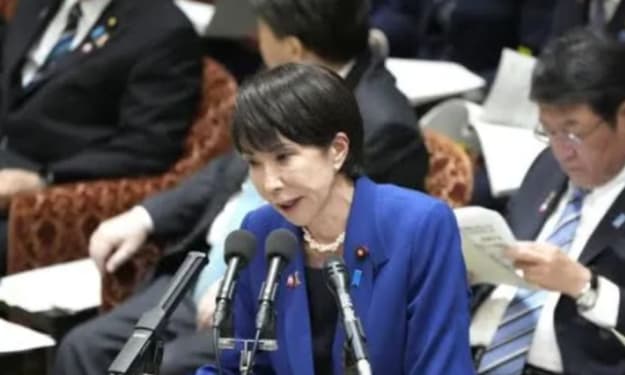
China’s decision to ban certain rare earths and other strategic exports to Japan for military purposes has sent a sharp signal across the Asia-Pacific region. Triggered by comments from Japanese politician Sanae Takaichi, the move highlights how trade, technology, and national security are now inseparable in an era of intensifying geopolitical rivalry. What may appear on the surface as a targeted trade restriction is, in reality, part of a much broader struggle over influence, deterrence, and the future balance of power in East Asia. By using export controls as a political response, Beijing has once again demonstrated how economic tools are becoming central instruments of statecraft. The Spark: Takaichi’s Comments and Beijing’s Reaction Sanae Takaichi, a prominent conservative figure in Japanese politics, has been outspoken on issues related to defense, Taiwan, and Japan’s strategic autonomy. Her recent remarks — interpreted in Beijing as provocative and aligned with a more assertive military posture — appear to have crossed a red line for Chinese authorities. While Beijing did not frame its decision explicitly as retaliation, the timing left little doubt. China announced restrictions on the export of certain rare earth elements and other materials deemed sensitive for military applications, specifically targeting shipments to Japan. The message was unmistakable: political rhetoric has consequences, and China is prepared to use its economic leverage to enforce boundaries. Why Rare Earths Matter So Much Rare earth elements are not rare in geological terms, but they are extremely difficult and costly to process. China dominates global refining capacity, giving it outsized influence over supply chains essential to modern technology. These materials are critical for advanced weapons systems, electric vehicles, wind turbines, semiconductors, radar systems, and missile guidance technologies. Japan, despite being a technological powerhouse, relies heavily on imported rare earths, particularly from China. By restricting exports for military purposes, Beijing is targeting a strategic vulnerability. Even limited disruptions can slow production, raise costs, and force governments to rethink procurement and defense planning. Economic Statecraft in Action China’s move fits into a broader pattern of economic statecraft, where trade and investment tools are used to achieve political objectives. Over the past decade, Beijing has increasingly demonstrated a willingness to weaponize its economic position when disputes escalate. Japan is hardly alone in facing this pressure. Other countries have experienced similar tactics, from trade slowdowns to informal boycotts. What makes this case particularly sensitive is its explicit link to military use, pushing the dispute beyond economics and firmly into national security territory. For Beijing, the logic is straightforward. If rivals frame China as a threat, China will respond by reminding them of their dependencies. Japan’s Strategic Dilemma Tokyo now faces a difficult balancing act. On one hand, Japan has been steadily strengthening its defense posture in response to regional threats, including North Korea’s missile program and China’s growing military presence. On the other, it remains deeply integrated into China-centered supply chains. The export ban reinforces long-standing fears within Japan about overreliance on a single supplier for critical materials. It also strengthens arguments among Japanese policymakers for diversifying supply chains, investing in domestic processing, and deepening cooperation with allies. However, diversification takes time and money. Alternative suppliers exist, but scaling up production and refining capacity outside China is neither quick nor cheap. In the short term, Japan must manage the immediate impact while signaling resolve without provoking further escalation. Regional and Global Implications China’s decision is being closely watched across the region and beyond. For the United States and its allies, it underscores the strategic risks of concentrated supply chains and the urgency of building resilient alternatives. Washington has already been pushing for closer coordination with allies on critical minerals, including rare earths. The move against Japan may accelerate these efforts, encouraging deeper cooperation between the U.S., Japan, Australia, and European partners. At the same time, the episode adds another layer of tension to an already volatile regional environment. With disputes over Taiwan, maritime boundaries, and military modernization simmering, economic pressure increases the risk of miscalculation. A Message Beyond Japan While Japan is the immediate target, the signal is global. Beijing is reminding other countries that political statements, particularly on security matters, are not cost-free. The use of export controls as a response to rhetoric — not just policy actions — suggests a lowering threshold for economic retaliation. For middle powers navigating between China and the West, this creates a chilling effect. Governments may think twice before making public statements that could invite economic consequences, even when those statements align with domestic political priorities. Critics argue that such tactics undermine trust and accelerate decoupling. Supporters within China counter that the country is merely defending its interests in a hostile international environment. The Risk of Accelerated Decoupling Ironically, China’s use of export restrictions may hasten the very outcome it seeks to avoid: reduced dependence on Chinese supply chains. Each instance of economic pressure reinforces the perception that reliance on China carries political risk. Japan has already begun investing in rare earth recycling, alternative sourcing, and partnerships with resource-rich countries. This latest move is likely to intensify those efforts, even if it comes at higher short-term costs. Over time, a more diversified global supply chain could weaken China’s leverage. But in the near term, Beijing’s dominance remains a powerful tool — one it appears willing to use. Conclusion: Trade as a Battlefield China’s ban on certain rare earth and strategic exports to Japan is more than a trade dispute. It is a vivid example of how economic power is being deployed as a strategic weapon in a world defined by rivalry and mistrust. For Japan, the episode is a wake-up call about vulnerability and resilience. For China, it is a demonstration of strength and deterrence. And for the rest of the world, it is a reminder that in today’s geopolitical landscape, supply chains are as consequential as alliances. As tensions continue to rise, one thing is clear: the era of neutral trade is fading. In its place stands a world where economics and politics are tightly bound — and where a single comment can ripple through global markets and military planning alike.
By Muhammad Hassan7 days ago in Earth
Why Putin Went Quiet When Challenged by Trump Over Venezuela
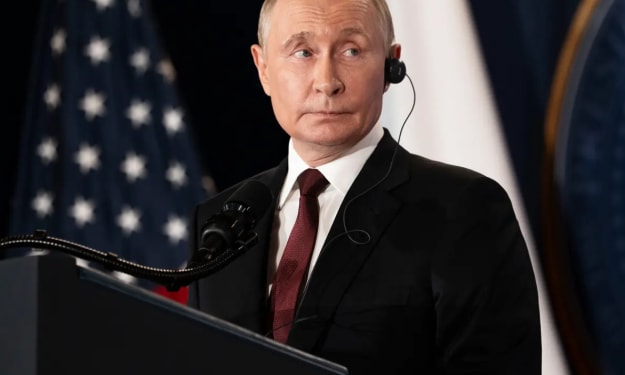
When U.S. forces captured Venezuelan President Nicolás Maduro in early January 2026, the world was stunned. Venezuela has long been a Russian ally, yet Russian President Vladimir Putin remained almost completely silent when challenged directly by U.S. President Donald Trump. Why would a leader so often outspoken on the world stage hold back in such a dramatic moment? Let’s unpack the story and explore what it means for global politics. A Bold Move That Shocked the World On January 3, U.S. forces executed a daring operation in Venezuela, taking Maduro into custody in New York to face charges including drug trafficking and narco‑terrorism. The operation was framed by the U.S. as a step to enforce justice, but critics saw it as an extraordinary overreach of power. Venezuela is no ordinary country for Russia. Since the days of Hugo Chávez, Moscow has cultivated close ties with Caracas, offering military support, energy deals, and diplomatic backing on the global stage. Past actions included Russian bombers visiting Venezuela and high-profile defense agreements. Given this history, many expected a fiery response from Putin. Yet, the Kremlin remained calm, issuing measured statements rather than sharp threats. Why Silence Was Strategic Experts suggest there are several reasons for Putin’s muted reaction, each revealing the careful calculation behind the Kremlin’s foreign policy. 1. Focus on the War in Ukraine Russia’s primary priority remains Ukraine. Engaged in a high-stakes military and diplomatic battle, Putin cannot afford distractions or new confrontations far from home. Escalating tensions with the United States over Venezuela could jeopardize Moscow’s position in Europe. A New York Times report highlighted that Russia is “subordinating all other interests to the war in Ukraine,” suggesting that even a high-profile ally like Venezuela takes a back seat to Moscow’s strategic goals. 2. Limited Military Options While Russia’s alliance with Venezuela is longstanding, much of the support has been symbolic rather than operational. Defense systems and military cooperation exist on paper, but Russia lacks the immediate ability to counter a U.S. operation thousands of miles away. Putin may have recognized that responding aggressively would be both ineffective and costly, potentially risking military and economic consequences that Moscow cannot afford. 3. Maintaining Diplomatic Channels with Washington With Donald Trump back in the White House since 2025, there has been cautious optimism in Moscow about recalibrating U.S.–Russia relations. Avoiding a dramatic confrontation over Venezuela keeps diplomatic channels open, allowing Russia to negotiate on other high-priority issues like Ukraine and sanctions relief. In other words, silence can be a calculated strategy, signaling restraint rather than weakness. 4. Russia’s Global Influence Is Waning The Maduro episode also highlights a broader geopolitical reality: Russia’s global reach has limits. Since the 2022 invasion of Ukraine, Moscow’s influence in regions like the Middle East and parts of the former Soviet Union has weakened. Venezuela remains one of its few high-profile allies outside Europe, but even there, Russia’s power is largely symbolic. By not escalating, Putin is acknowledging a practical truth: Russia cannot be everywhere at once, and some battles are not worth fighting. 5. Choosing Battles Wisely Some analysts emphasize that Putin’s quiet response is more about strategic prioritization than capitulation. In a world dominated by nuclear powers and volatile global politics, direct confrontation with the United States over Venezuela could spiral into a far larger crisis. By staying silent, the Kremlin may be signaling that it picks its battles carefully, focusing resources on Ukraine, where the stakes are highest. What This Means for the World Putin’s silence sends several messages: Russia is currently stretched, economically and militarily. Moscow is prioritizing Ukraine over symbolic allies. Strategic restraint is sometimes more powerful than public confrontation. The limits of Russian influence are becoming more visible to the world. This episode reflects a new reality in geopolitics: power is as much about choosing when not to act as when to assert force. The Bigger Picture The capture of Maduro is a defining moment not just for Venezuela, but for global politics. It shows the United States asserting power in a way not seen for decades, while Russia’s quiet reaction underscores its current limits and priorities. For observers, Putin’s silence is a lesson in modern geopolitics: even the most assertive leaders exercise restraint when stakes are high and risks are global. In the end, the Maduro affair reminds us that in today’s world, the loudest response is not always the most effective one — sometimes, quiet calculation speaks volumes. Sources and Further Reading The US capture of Maduro reveals Russia’s weakness – Atlantic Council ‘It sends a horrible signal’: US politicians react to capture of Nicolás Maduro – The Guardian Russia slams 'neocolonial threats' against Venezuela – Reuters
By Muhammad Hassan3 days ago in Earth


Comments
There are no comments for this story
Be the first to respond and start the conversation.