
The Curse of Dougs
A Land Touched by Magic, Claimed by Fate

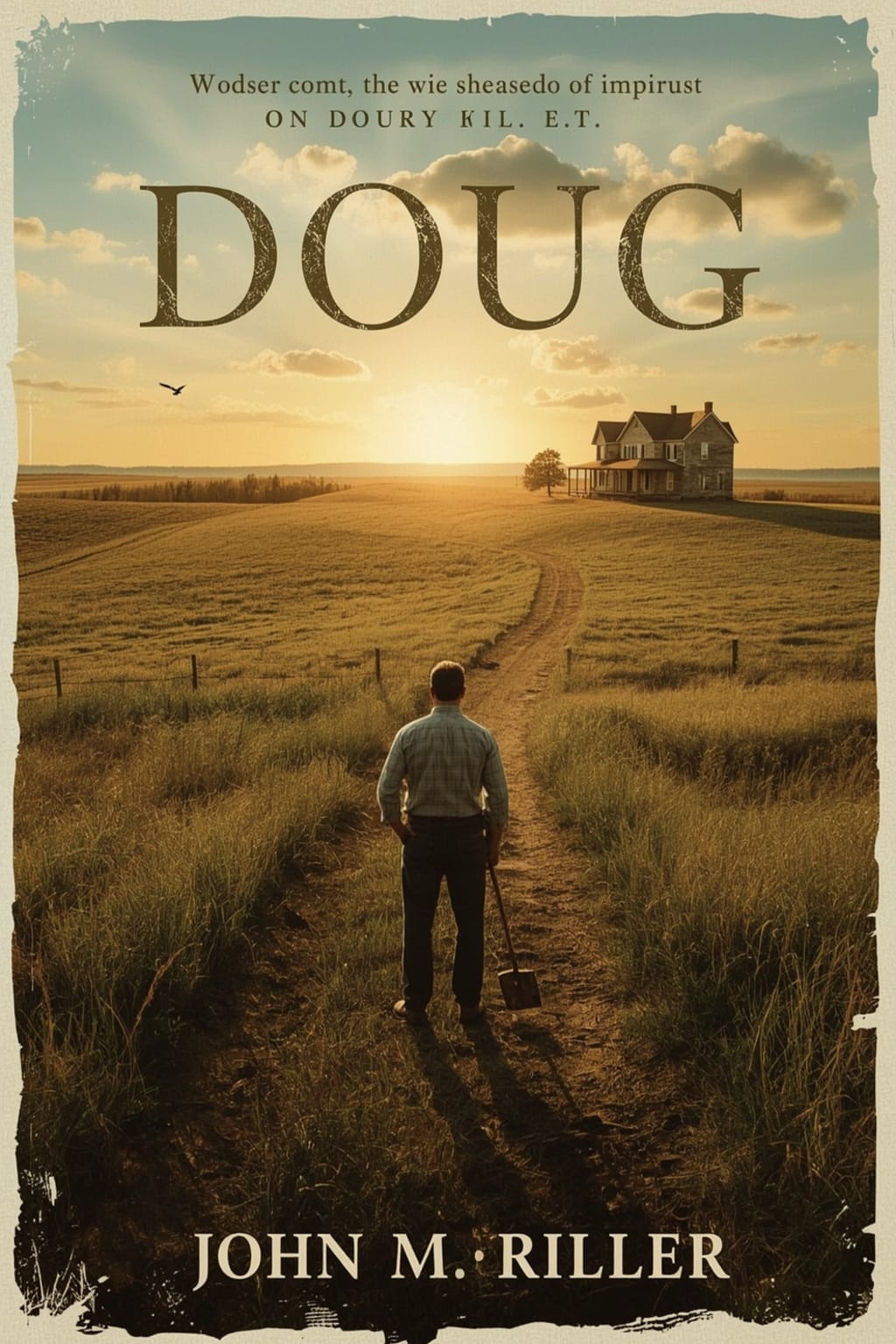
Doug Turner hadn’t stepped foot on the land in over twenty-five years.
He didn’t expect to again, truthfully—not after the shouting match that ended in slammed doors and his father’s last words: “Then don’t come back.”
But death has a way of pulling people home.
Now, standing on the cracked gravel path that led up to the house, Doug stared at the sagging porch, the leaning mailbox still bearing his family’s name—Turner—barely legible in flaked paint. Weeds had overtaken the edges of the field. The barn’s roof sagged in one corner. But the scent of honeysuckle still drifted from the fence line, just like it had when he was a boy.
The lawyer had been clear: the land was his now. No will, no siblings to contest it. Just 84 acres of soil, timber, and silence.
Doug stepped forward slowly, every footfall stirring up ghosts. He could almost hear his father’s boots creaking on the porch, almost hear his mother humming in the kitchen. Almost—but not quite.
Inside, the house was surprisingly intact. Dust had blanketed the counters and windowsills, but it was all there: the oak dining table, the wall clock stuck at 3:17, and a faded photo of a much younger Doug, grinning next to his dad in the hayfield, their hands dirty from fence work.
Doug picked up the frame, thumb brushing over the glass. God, we were close once, he thought.
What had driven the wedge? The truth was, Doug had wanted a different life. One with clean clothes and an air-conditioned office. One where land didn’t decide your worth and the sky didn’t ruin your plans with a summer storm. His father had called it betrayal. Doug had called it ambition.
He spent the next few days clearing paths, fixing a hinge here, replacing a broken step there. Not because he had decided to stay—he hadn’t. But because he couldn’t bear to see the place rot. He worked in silence, save for the songs of cicadas and the occasional bark of a neighbor’s dog across the ridge.
One morning, as he walked the old fence line near the eastern edge of the property, he spotted something half-buried under a pile of branches. Kneeling, he cleared it away. A rusted toolbox. Inside, wrapped in a rag, was a folded letter addressed to him in his father’s jagged handwriting.
Doug froze. The air seemed to thicken as he opened it.
“If you’re reading this, I suppose I’ve finally gone and left you with the mess. I never knew how to say the right things when we fought. You had big dreams, and I didn’t know how to handle that. I thought if you left, the land would die without you. I forgot what my father taught me—that this land isn’t made of fences and fields, but people who care for it. If you still care, even just a little… then maybe it still has a chance.”
–Dad
Doug sat there for a long time, letter in hand, heart full of old anger mixed with a flood of grief. The apology came too late, but it came all the same.
That night, a thunderstorm rolled in, just like the ones he remembered as a boy. Rain pounded the roof, wind rattled the windows. But Doug lay awake, thinking—not just about the land, but about what it meant.
He wasn’t a farmer. He didn’t know the first thing about managing 84 acres anymore. But something in him had changed. Maybe it was seeing the house still standing. Maybe it was the letter. Maybe it was time.
Weeks passed. Then a month. When the local real estate agent called—offering to list the land—Doug said he’d get back to her.
Instead, he called an old classmate, Rachel, who ran the county co-op now. He asked questions about soil, grants, partnerships. She was surprised, but not dismissive.
Then he reached out to a nearby school to see if they’d be interested in an agricultural learning program—“a working land classroom,” he called it. They were more than interested.
The barn got a new roof. The house got solar panels. Doug got dirt under his nails again. And it felt… good.
Six months later, a new mailbox went up at the end of the lane.
It read simply: Turner Homestead.
The fields weren’t perfect, but they were green again. A group of kids came every Saturday to plant beans and carrots, guided by an older couple Doug had partnered with. The place buzzed with laughter, tools clanking, stories being told under the shade of the big maple.
And Doug? Doug finally understood. The land didn’t need to be conquered. It needed to be cared for.
In the evening, he sat on the porch with a cup of black coffee, watching the sun dip low over the hills. Sometimes, he’d imagine his father there beside him, nodding quietly, maybe even proud.
Maybe the land had waited for him. Or maybe, he’d just taken too long to come home.
Either way—Doug’s Land had found its steward again.
About the Creator
wilson wong
Come near, sit a spell, and listen to tales of old as I sit and rock by my fire. I'll serve you some cocoa and cookies as I tell you of the time long gone by when your Greats-greats once lived.
Keep reading
More stories from wilson wong and writers in Earth and other communities.
The Year I Lived Without Saying No
By: [Your Name] wilson wong I didn’t plan to change my life. I didn’t read a book, or hit rock bottom, or have some teary moment of clarity. It happened on a Tuesday. Rainy. Bland. I was standing in front of my fridge, staring at half a bag of spinach and leftover Chinese, and realized I had spent the last four weekends doing absolutely nothing. I mean, nothing. Declining invites. Ignoring texts. Saying "maybe next time" to things I knew I’d never do. And that’s when it hit me — I was letting life pass me by, one quiet “no” at a time.
By wilson wong9 months ago in Earth
Australia Horticulture Market 2026: Climate-Smart Farming, Export Demand & Agri-Tech Innovation
Australia Horticulture Market Overview Australia’s horticulture market plays a crucial role in the country’s agricultural economy, supplying fresh fruits, vegetables, nuts, flowers and nursery products to both domestic and international markets. The sector is widely recognized for high-quality produce, strong biosecurity standards and advanced farming practices. Growing consumer demand for nutritious foods, expanding export opportunities and continuous technological innovation in agriculture are driving sustained development across Australia’s horticulture industry.
By Amyra Singh8 days ago in Earth



Comments
There are no comments for this story
Be the first to respond and start the conversation.