
The Controversy Surrounding AI in Employment: Challenges and Opportunities
Challenges and Opportunities

With the rapid advancement of Artificial Intelligence (AI), the application of automation technology in various fields has sparked extensive debates. The impact of AI on employment, particularly the transformation it brings, has become a highly discussed topic. This article aims to delve into the influence of AI on jobs, exploring both the challenges it presents and the opportunities it holds.
AI and Employment: Current Status and Trends
1.1 Application of AI across domains: How automation technology replaces certain job positions, from manufacturing to the service industry.
1.2 Scope of affected employment: Identifying which professions face significant replacement risks and which ones can benefit from AI technology.
1.3 Speed of job transformation: Assessing whether the potential impact of AI on employment will occur gradually or through disruptive changes.
Challenges: Negative Impact of AI on Employment
2.1 Job displacement and the risk of unemployment: The automation of tasks through AI may result in job losses, leaving some individuals at risk of unemployment.
2.2 Skills gap and difficulties in transitioning: The rise of AI technology might render certain skills obsolete, necessitating reskilling and the acquisition of new competencies.
2.3 Social inequality and job instability: The influence of AI on employment structures could exacerbate societal stratification and increase employment uncertainty.
Opportunities: New Job Prospects Created by AI
3.1 Emerging professions and skill demands: The development of AI creates new job opportunities, such as data scientists and machine learning engineers, leading to an increased demand for new skills.
3.2 Innovation and entrepreneurial prospects: AI technology provides entrepreneurs with novel avenues for innovation, fostering the growth of emerging industries and startups.
3.3 Human-AI collaboration and enhanced work efficiency: Collaborating with AI can enhance work efficiency and productivity, creating more valuable job positions.
Coping Strategies: Cultivating Adaptability and Social Support
4.1 Education and lifelong learning: Offering skill training and continuous learning opportunities to workers, enabling them to adapt to technological changes and evolving job market demands.
4.2 Policy support and social security: Implementing policies and providing social support to aid workers affected by AI in transitioning to new work environments.
Conclusion:
The impact of Artificial Intelligence on employment is a double-edged sword, encompassing both challenges and opportunities. While automation technology may lead to the disappearance of certain job positions, it also creates new careers and opportunities for innovation. Dealing with the transformation AI brings to employment requires comprehensive strategies, including continuous education and training, policy support, and social security measures, to ensure workers can adapt to technological changes and achieve a more sustainable and inclusive employment future.
In addition to the challenges and opportunities discussed above, the impact of AI on employment is a topic that demands careful consideration and proactive measures. It is essential to address the ethical and social implications associated with the widespread adoption of AI in the workplace.
One key concern is the potential erosion of job satisfaction and fulfillment. While AI systems can automate repetitive tasks, they may also contribute to a sense of alienation and disconnection from meaningful work. It is crucial to prioritize the human element in job design and ensure that AI is used to augment human capabilities rather than replace them entirely. Emphasizing roles that require creativity, critical thinking, and interpersonal skills can help cultivate job satisfaction and a sense of purpose.
Another critical aspect to consider is the equitable distribution of benefits and opportunities. The deployment of AI technology should not exacerbate existing inequalities or create new ones. Efforts must be made to bridge the digital divide and provide equal access to AI education and training. By promoting diversity and inclusivity in the development and deployment of AI systems, we can avoid biases and ensure fair representation and opportunities for all individuals.
Additionally, a comprehensive regulatory framework is necessary to address privacy, data security, and accountability concerns associated with AI. Transparent algorithms, robust data protection measures, and clear guidelines for responsible AI usage are crucial to build trust among users and stakeholders. Governments, industry leaders, and experts must collaborate to establish ethical standards and regulatory frameworks that safeguard individual rights while fostering innovation.
Lastly, continuous dialogue and collaboration between academia, industry, and policymakers are vital to staying abreast of AI advancements and their potential impact on employment. This collaborative approach will help identify emerging trends, anticipate future skills requirements, and enable timely interventions to ensure a smooth transition for workers.
In conclusion, the impact of AI on employment is a multifaceted issue with both challenges and opportunities. By embracing a human-centric approach, prioritizing job satisfaction, fostering inclusivity, implementing robust regulations, and promoting continuous dialogue, we can harness the potential of AI while mitigating potential risks. Ultimately, the goal should be to create a future where AI and humans work in harmony, shaping a more sustainable, equitable, and prosperous society.
About the Creator
Keep reading
More stories from writers in Earth and other communities.
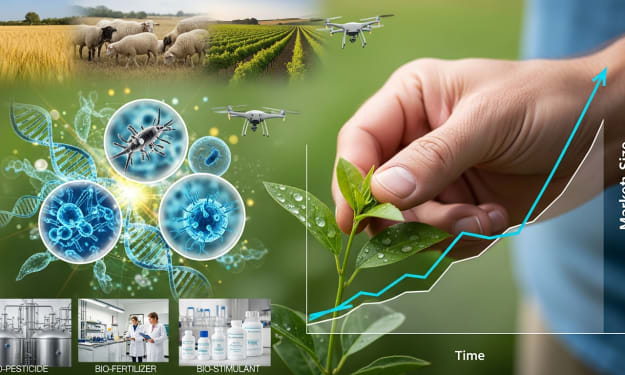
Australia Agricultural Biologicals Market 2026: Sustainable Farming, Crop Protection & Biological Innovation
Australia Agricultural Biologicals Market Overview The Australia agricultural biologicals market is gaining steady momentum as farmers, agribusinesses and policymakers increasingly focus on sustainable crop production and environmentally responsible farming practices. Agricultural biologicals include products derived from natural sources such as microorganisms, beneficial insects, plant extracts and naturally occurring compounds. These products are used for crop protection, soil enhancement and plant growth promotion, offering alternatives or complements to conventional chemical inputs. According to IMARC Group, the Australia agricultural biologicals market size reached USD 218 Million in 2025. Looking forward, IMARC Group expects the market to reach USD 680 Million by 2034, exhibiting a growth rate (CAGR) of 13.5% during 2026-2034. This growth reflects increasing adoption of integrated pest management, rising demand for residue-free produce and expanding organic and regenerative farming practices.
By Amyra Singh4 days ago in Earth
Self Help: Grifters' Gospel
On Self-Help, Snake Oil, and the Illusion of Change Psychology professionals and students can be imagined on two opposite sides of a line called self-help books: likely a larger group opposes pop-science and step-by-step manuals filled with talk of success, journaling, and not giving a f**k; others love them, but they aren’t many.
By Avocado Nunzella BSc (Psych) -- M.A.P 6 days ago in BookClub



Comments
There are no comments for this story
Be the first to respond and start the conversation.