

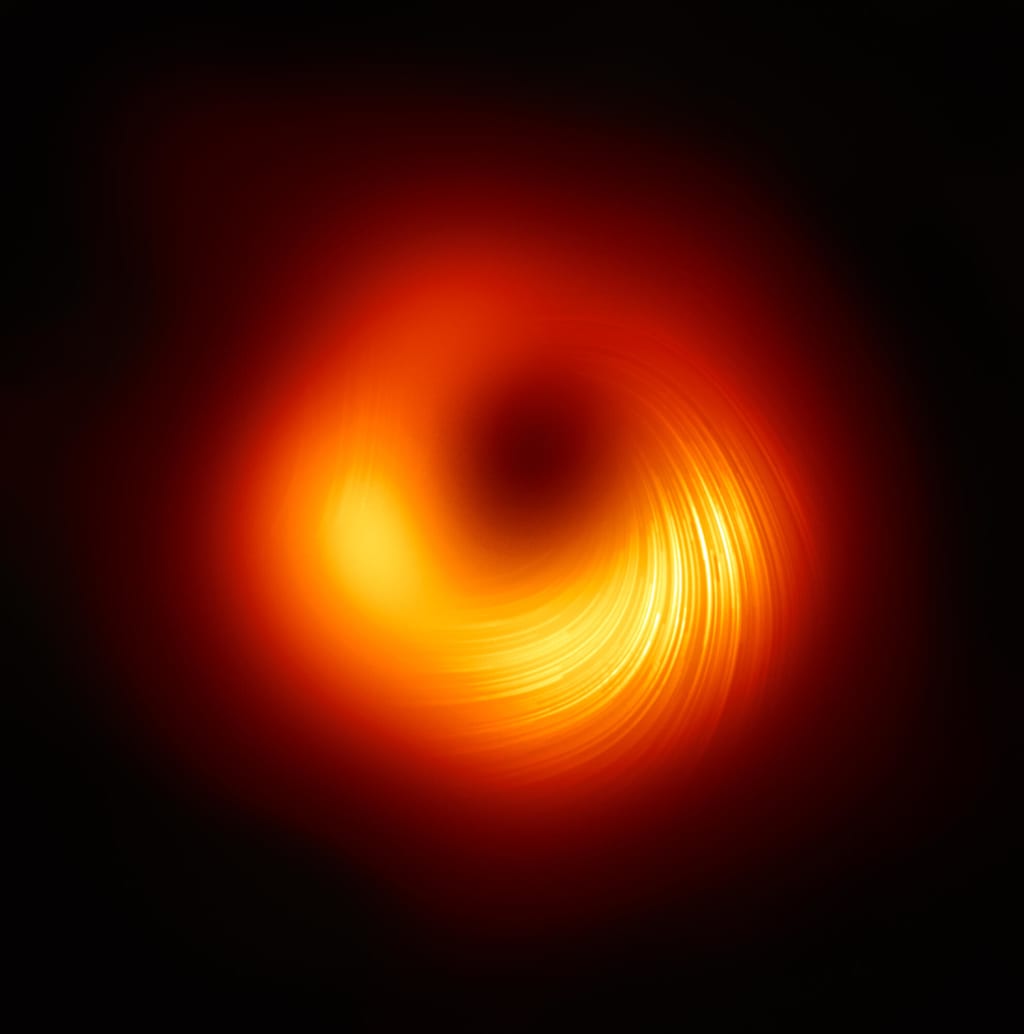
Black holes, one of the most mesmerizing and enigmatic entities in the universe, defy comprehension with their remarkable attributes. These cosmic regions possess an irresistible gravitational force that prevents even light, the fastest entity known to us, from escaping. Referred to as the event horizon, this boundary marks a point of no return, concealing from our sight the secrets held within. As objects cross this threshold, they succumb to the black hole's singularity—an infinitesimally small and infinitely dense point where the laws of physics, space, and time cease to apply. This essay explores the captivating characteristics of black holes, their diverse classifications, the methods employed to detect them, and their profound influence on the universe.
The allure of black holes lies not only in their immense power but also in their role as gateways to the unknown. These cosmic enigmas hold the potential to unravel the mysteries of the universe, offering glimpses into the nature of spacetime, the origin of galaxies, and the workings of fundamental forces. The study of black holes continues to be a frontier of scientific research, with ongoing efforts to refine our understanding and develop new technologies for observation. As we delve deeper into the captivating characteristics and profound influence of black holes, we embark on a journey that challenges our perception of reality and fuels our insatiable quest for knowledge.
The birth of black holes can be attributed to the gravitational collapse of massive stars. These stellar black holes, typically 10 to 20 times the mass of our sun, emerge when these colossal celestial bodies reach the end of their lifecycle and undergo a cataclysmic implosion. Throughout the vast expanse of the cosmos, numerous stellar black holes likely exist, with many potentially residing within our own Milky Way galaxy. Additionally, supermassive black holes, possessing millions or even billions of times the mass of our sun, dominate the cores of galaxies, including our own. The origin of these behemoths remains a subject of speculation among scientists.
At the heart of black holes lies the event horizon, an elusive boundary that defines their existence. Within this boundary lies the singularity, an infinitesimally compact and incredibly dense point where the familiar concepts of space, time, and the laws of physics lose their meaning. These fundamental attributes imbue black holes with an alluring mystique and leave scientists and observers in awe.
Due to their inherent invisibility, the detection and study of black holes require indirect methods. Scientists rely on the examination of their influence on surrounding matter to glean insights into their existence. By observing accretion disks—a swirling collection of particles formed from gases and dust spiraling toward a black hole—and investigating the powerful quasars that emanate from supermassive black holes, researchers gain valuable data for analysis.
The understanding of black holes remained largely theoretical until the 20th century, when Karl Schwarzschild, building upon Einstein's general theory of relativity, postulated that any mass, when sufficiently compressed, could give rise to a black hole. In a momentous discovery in 1971, astronomers identified the first black hole within the constellation Cygnus. Since then, scientific inquiry has continued to deepen our comprehension of black holes, inspiring further exploration of the cosmos.
Black holes, with their unfathomable gravitational forces and profound influence on the universe, have long captivated human imagination. Whether formed from the demise of massive stars or existing as supermassive entities at the core of galaxies, these cosmic marvels persistently inspire scientific investigation and ignite our collective curiosity. As we venture further into the study of black holes, we unlock new dimensions of knowledge, pushing the boundaries of our understanding of space, time, and the intricate fabric of our vast universe.
About the Creator
Khaled Ahmed
Here you will find different and intersting topics that will satisfy your curiosity.
Keep reading
More stories from Khaled Ahmed and writers in Earth and other communities.
The Implications of Artificial Intelligence: Perspectives and Concerns
Artificial intelligence (AI) has emerged as a transformative force poised to reshape our lives and the world at large. However, there remains a lack of consensus on the precise implications of this technology. In an illuminating interview conducted by the World Economic Forum, esteemed computer science professor Stuart Russell offers invaluable insights into the challenges and considerations surrounding AI. This essay delves into the themes discussed, including the need for adaptable objectives in AI systems, the impact on employment, and the preservation of human knowledge in the face of advancing AI.
By Khaled Ahmed3 years ago in Earth
Olandria Carthen Shines as a Walking Work of Art at Paris Fashion Week
A Star Emerges in the Fashion Capital Olandria Carthen has made a striking impression at Paris Fashion Week, turning heads with every step on the runway. Known for her bold, artistic aesthetic, Carthen is being celebrated as a modern muse, seamlessly merging fashion with performance art.
By Aarif Lashari7 days ago in Earth




Comments
There are no comments for this story
Be the first to respond and start the conversation.