
The bird which live in jail (Tuki Tuki)
Especially female led a jail life in breeding stage


The Fascinating World of Hornbills: Unveiling the Secrets of their Unique Nesting Behavior
Introduction
Hornbills are a unique and fascinating group of birds that play a vital role in maintaining the ecological balance of their habitats. Here are some key ecology details about hornbills:
- Diet: Hornbills are omnivores, feeding on fruits, insects, small reptiles, and amphibians. They help disperse seeds and nutrients through their droppings, supporting forest regeneration.
- Habitat: Hornbills inhabit tropical forests, woodlands, and grasslands, with different species adapted to various environments. They require large trees for nesting and roosting.
- Nesting: Hornbills are cavity-nesters, using natural holes or excavating their own nests in tree trunks. They seal the entrance with mud and saliva, leaving only a small slit for the male to feed the female and chicks.
- Conservation: Hornbills face threats from habitat loss, hunting, and the illegal wildlife trade. Many species are listed as Endangered or Vulnerable on the IUCN Red List, emphasizing the need for conservation efforts.
- Social behavior: Hornbills are social birds, often living in small groups. Some species are known for their unique courtship displays, involving elaborate displays of casque (the horn-like structure on their beak) and plumage.
- Ecological role: Hornbills act as seed dispersers, nutrient vectors, and predators, influencing forest composition and structure. They also serve as indicators of ecosystem health, as changes in hornbill populations can signal broader environmental issues.
In the lush tropical forests of Asia and Africa, a fascinating bird species has long captivated the attention of ornithologists and wildlife enthusiasts alike. The hornbill, with its distinctive casque and vibrant plumage, is a sight to behold. However, it's not just their striking appearance that sets them apart; their unique nesting behavior is a remarkable example of evolutionary adaptation and parental dedication. In this blog, we'll delve into the fascinating world of hornbills, exploring their nesting characteristics, habits, and the remarkable bond between hornbill parents and their young.
Hornbill Nesting: A Unique Approach
Hornbills are members of the Bucerotidae family, comprising 60 species spread across the Old World tropics. One of the most distinctive aspects of hornbill biology is their nesting behavior, which involves a remarkable process called "sealed nesting." This unique approach sets them apart from other bird species, where the female hornbill plays a crucial role in creating a safe and secure environment for her eggs and chicks.
The Sealing Process
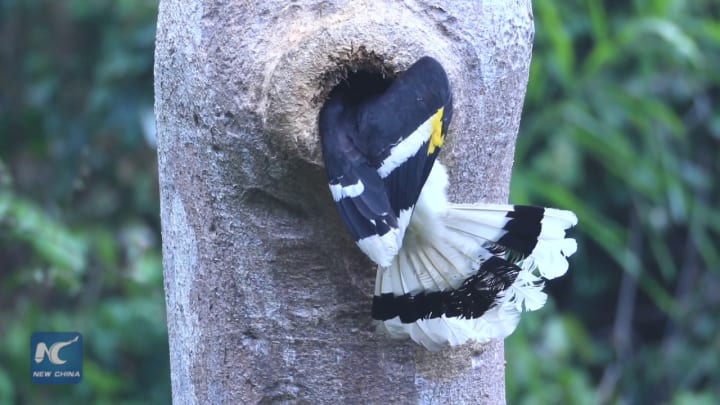
As the breeding season approaches, hornbill pairs establish their territories and begin searching for a suitable nesting site. The female hornbill selects a tree cavity or rock crevice, which she then seals with a mixture of mud, saliva, and plant material. This sealing process can take several days to complete, with the female applying multiple layers of the mixture to create a sturdy barrier.
The entrance to the nest is reduced to a small slit, just large enough for the male hornbill to pass food through. The female then enters the nest, where she will remain for the entire incubation period, which can last up to 50 days. During this time, she is completely dependent on her mate for food and hydration.
The Male's Role
While the female is sealed in the nest, the male hornbill takes on the responsibility of providing for her and their future offspring. He forages for fruit, insects, and small animals, which he then regurgitates and passes through the narrow entrance to the nest. This remarkable display of parental care is crucial to the survival of the female and their eggs.
Incubation and Hatching
Inside the sealed nest, the female hornbill incubates her eggs, which can number up to four. The incubation period is remarkably long, lasting around 40-50 days. During this time, the female's body undergoes significant changes, including a reduction in body temperature and a decrease in metabolic rate.
After the eggs hatch, the female cares for the chicks, feeding them and keeping them warm. The chicks grow rapidly, and their beaks and casques begin to develop. As the chicks grow, the female's dependence on the male for food increases, and he must continue to provide for his family.
Nest Exit and Fledging
After around 60-70 days, the chicks are fully developed, and the female begins to break out of the nest. This process can take several days, with the female slowly dismantling the sealant and eventually emerging from the nest. The chicks follow shortly after, and the family is reunited.
The fledglings are initially dependent on their parents for food and protection but soon begin to forage on their own. They remain with their parents for several months, learning essential skills and behaviors that willThere was a problem generating a response. Please try again later.
About the Creator
Keep reading
More stories from Mohammed thanvir and writers in Earth and other communities.
Animals that exhibit shy or discreet behavior during Sex
Animals exhibit discreet mating behaviors for various reasons, including avoiding predators, reducing competition, and ensuring successful reproduction. Here are detailed descriptions of discreet mating behaviors in ten different animals:
By Mohammed thanvir2 years ago in Earth
BRICS Wargames: Why They Matter — And Why India Chose to Sit Out
BRICS — the economic and political bloc comprising Brazil, Russia, India, China, and South Africa — has long been seen as a counterweight to Western-dominated global institutions. Over the years, it has expanded its influence in finance, trade, and diplomacy. Yet, in recent times, BRICS has begun exploring another domain that grabs headlines and sparks speculation: military cooperation, including large-scale wargames. These exercises are designed to simulate joint operations, test interoperability, and send a signal of strength. For members like Russia and China, wargames serve as both a show of force and a tool to deepen military collaboration within the bloc. However, India’s decision to opt out of recent BRICS wargames has raised questions: why does this matter, and why is India taking a different path from its BRICS partners? The Rise of BRICS Military Exercises Historically, BRICS has been portrayed as primarily economic, focused on initiatives like the New Development Bank (NDB) and trade agreements aimed at reducing Western dominance. But recent years have seen an evolution. Military drills among BRICS members are increasingly prominent, especially in the context of global tension and regional conflicts. These wargames are about more than just tactical drills. They serve multiple purposes: Strategic signaling: By conducting joint exercises, BRICS countries demonstrate unity and military capability to the rest of the world. Operational readiness: Countries test their ability to coordinate in complex scenarios, from humanitarian missions to potential combat operations. Diplomatic leverage: The exercises send subtle messages to other global powers, indicating that BRICS members can collaborate beyond economic forums. For nations like Russia, recently facing sanctions and international scrutiny, these exercises are particularly important. They showcase the ability to maintain partnerships and project power despite global isolation. For China, it is a way to cement strategic influence in Asia and beyond. Why BRICS Wargames Matter Globally The significance of these exercises extends beyond the bloc itself. Analysts note several key implications: Challenge to NATO and U.S. influence: BRICS wargames signal that alternative power centers exist outside Western-led military alliances. Regional security dynamics: Countries bordering BRICS members, particularly in South Asia, Africa, and Latin America, must monitor these developments carefully. Economic-military linkages: Military coordination among major emerging economies could shape security considerations in trade corridors, energy supply routes, and resource-rich regions. In essence, BRICS wargames are not just about soldiers and tanks, but about the broader geopolitical landscape: signaling, strategy, and shaping perceptions of influence. India’s Calculated Decision to Opt Out While Russia, China, Brazil, and South Africa have shown interest in participating actively, India has strategically chosen to abstain from the most recent wargames. This decision may appear surprising, given India’s economic and political stake in BRICS, but several factors explain it. Geopolitical balancing: India maintains complex relations with both China and Russia. While it has defense and historical ties with Russia, its relationship with China has grown tense due to border disputes and regional competition. Joining a wargame with China could be politically and militarily sensitive. Alignment with Western partnerships: India has strengthened ties with Western-led coalitions, including the Quad (U.S., Japan, Australia, India). Participating in BRICS military drills could conflict with these alliances, potentially sending mixed signals. Strategic autonomy: India has long emphasized a policy of strategic autonomy — making decisions based on national interest rather than bloc pressure. Opting out allows India to maintain flexibility in foreign policy and avoid entanglement in exercises that may not align with its regional objectives. Domestic perception: Indian public opinion and political narratives favor cautious engagement with China and Russia on military matters. Skipping the wargames minimizes domestic criticism of appearing too closely aligned with either of the more assertive BRICS powers. What India Gains by Sitting Out Choosing not to participate does not mean India is disengaged from BRICS. Economically and diplomatically, it remains a key player in the bloc. By skipping the wargames, India can: Maintain regional credibility in South Asia while avoiding the perception of aligning militarily with China. Signal strategic independence, reinforcing its image as a nation that prioritizes national security over bloc politics. Focus on bilateral and multilateral exercises elsewhere, such as those with the U.S., Japan, and Australia, which are more aligned with India’s current security priorities. In short, opting out allows India to navigate the delicate balance between its BRICS commitments and broader global strategic interests. Implications for BRICS and Global Security India’s abstention also reflects broader trends within BRICS: the bloc is not monolithic. While economic cooperation is often strong, military integration faces political and strategic limits. Differing national interests, historical rivalries, and regional tensions prevent uniform alignment. For global observers, this is crucial. It shows that while BRICS wargames are important, they are not necessarily indicative of a fully unified military bloc. The exercises are as much about optics as operations, and India’s absence underscores the challenges of aligning countries with divergent security priorities. Conclusion BRICS wargames matter because they are a window into the bloc’s evolving strategic ambitions. They signal power, test cooperation, and demonstrate emerging global influence. Yet India’s decision to opt out highlights that even within this growing coalition, national interests remain paramount. For India, the choice reflects a calculated approach: engage where it benefits national interest, avoid where risks outweigh gains, and maintain strategic flexibility. For the rest of the world, it is a reminder that BRICS, while increasingly important, is not a military monolith. Ultimately, BRICS wargames are as much about geopolitics and signaling as they are about military maneuvers — and India’s careful stance illustrates how emerging powers navigate this complex global chessboard.Start writing...
By Muhammad Hassan4 days ago in Earth
United States Plastic Market Size and Forecast 2025–2033
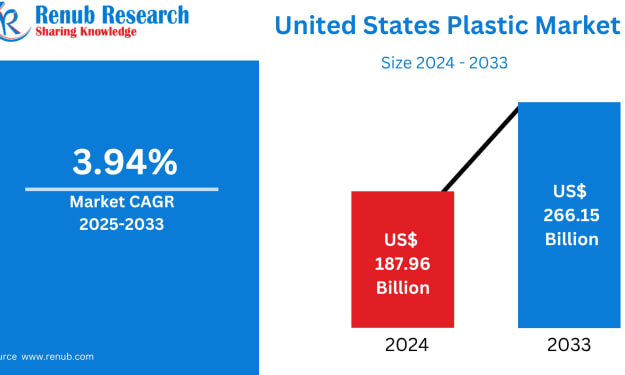
United States Plastic Market: Size and Forecast 2025–2033 The United States plastic market is projected to expand significantly, growing from US$ 187.96 billion in 2024 to US$ 266.15 billion by 2033, reflecting a steady Compound Annual Growth Rate (CAGR) of 3.94% during 2025–2033. This sustained growth is being fueled by rising demand across packaging, automotive, construction, healthcare, and consumer goods industries, alongside rapid innovations in recycling technologies and sustainable polymer development.
By Aaina Oberoi5 days ago in Earth
The Dryads are Calling
They say the forest by Phoenix River sings. Perhaps it is just the wind howling through the leaves, or a particular birdsong. But Percy Fisher knows better; he knows what lies in those woods, and he knows that the forest sings of his demise.
By Leigh Hooperabout 16 hours ago in Fiction



Comments
There are no comments for this story
Be the first to respond and start the conversation.