
“The beauty of the night sky”
- Exploring the stars, constellations, and the science behind them


As I lay on the grassy field on a clear summer night, I couldn’t help but gaze up at the vast expanse of the night sky. The stars twinkled like diamond studs against the deep black canvas, and the milky way seemed to stretch out endlessly. I felt a sense of wonder and awe wash over me as I thought about the vastness of space and the mysteries it holds.
Understanding the stars
“The stars are not just lights in the sky, they are doorways to the infinite possibilities of the universe.”Stars are one of the most fascinating and awe-inspiring things in the night sky. They are incredibly distant and yet, they are also incredibly close to us. They have properties that make them unique, and it is essential to understand them to better appreciate their beauty and significance.
There are various types of stars, each with different characteristics and properties. For instance, red giants are much larger and cooler than other stars, while white dwarfs are much smaller and hotter.
Stars are formed from the gas and dust clouds, and the process of star formation is not well understood yet. The process of stellar nucleosynthesis is a critical aspect that helps stars convert hydrogen and helium into heavier elements. Stars also go through a life cycle, from birth to death, and understanding this life cycle can help us better appreciate the night sky and the stories behind it.
Proxima Centauri is the nearest star to Earth, and it is about 4.2 light-years away. Other stars that are visible to the naked eye are also considered nearest stars to Earth.
Constellations
Constellations are patterns of stars that have been grouped together based on their shape or location in the sky. They have played a significant role in human history, from ancient cultures using them for navigation to modern-day stargazers using them as a guide to explore the night sky.
In ancient cultures, constellations were used for both navigation and storytelling. They helped sailors navigate the seas, and they also served as a way for cultures to pass down stories and myths from generation to generation .There are many well-known constellations in the night sky, such as Orion, the Big Dipper, and Cassiopeia.
The science behind the night sky
The laws of motion and gravity, first formulated by Sir Isaac Newton, govern the motion of celestial bodies in our solar system. These laws explain why planets move in elliptical orbits around the sun, why the moon orbits Earth, and why comets move in elongated orbits.
The night sky is not just a display of twinkling lights, it is also a display of light and color. The stars, planets, and other celestial bodies emit different wavelengths of light, and this is what gives them their unique colors.
Astronomy and space exploration are ongoing fields of research, and there are many exciting discoveries being made all the time. From the search for exoplanets to the study of dark matter, scientists are constantly making new discoveries that shed light on the mysteries of the universe
As we watch the stars above us, it’s important to remember that behind the beauty, there’s a whole scientific world to uncover.
The night sky is an endless source of wonder and inspiration. It holds many mysteries and secrets waiting to be explored, and by understanding the science behind it, we can deepen our appreciation for the natural world and our place in it. The beauty of the night sky is just waiting to be discovered, so next time when you’re looking up, take a moment to appreciate it, and remember to keep exploring it.
About the Creator
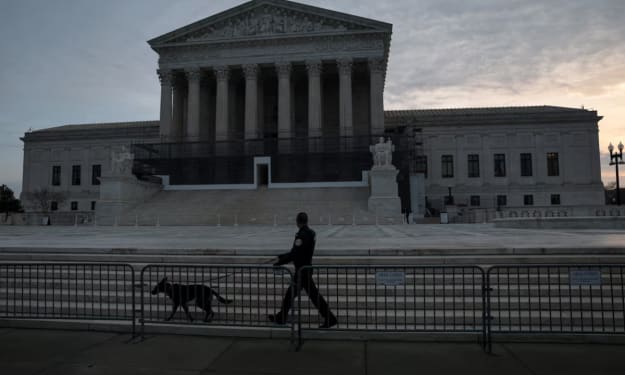
Supreme Court Set to Issue Rulings, with Trump Tariffs Case Still Pending
The U.S. Supreme Court is gearing up for a series of critical rulings that could have far-reaching effects on American politics, the economy, and ongoing legal controversies involving former President Donald Trump. Among these high-profile cases is the long-awaited decision on the Trump tariffs case, which remains unresolved and continues to draw national attention. A Pivotal Moment for the Supreme Court The Supreme Court, as the highest judicial body in the United States, has the power to shape not only legal precedent but also economic and political landscapes. Every term, the Court issues decisions that can influence everything from civil liberties to federal policies. This session, observers are particularly focused on cases involving trade, executive power, and regulations implemented during Trump’s administration. The Trump tariffs case, in particular, highlights the tension between presidential authority and congressional oversight. The case challenges certain tariffs imposed by Trump on imports from countries like China, Mexico, and the European Union, arguing that they exceeded the executive branch’s authority and bypassed proper legislative procedures. What the Trump Tariffs Case Is About During his presidency, Donald Trump frequently used tariffs as a tool to bolster U.S. manufacturing, address trade imbalances, and pressure foreign governments into renegotiating trade deals. While some praised these measures for protecting domestic industries, critics argued that they overstepped legal boundaries and caused economic strain on American consumers. The case currently pending before the Supreme Court examines whether Trump acted within his executive authority when imposing these tariffs. Legal analysts note that a ruling against Trump could set a precedent limiting future presidents’ power to unilaterally impose trade restrictions without congressional approval. Conversely, a ruling in his favor could reinforce broad executive powers in trade matters. Broader Implications for Trade and the Economy The Supreme Court’s decision is more than just a legal formality—it has significant economic implications. If the Court rules that the tariffs were unlawful, the U.S. could face demands to refund millions in duties collected, impacting businesses and international trade relations. Companies that relied on protective tariffs to compete in global markets might also face increased competition from foreign imports. On the other hand, upholding the tariffs could embolden future administrations to take aggressive action in trade disputes, potentially triggering new tensions with other countries. Investors, trade associations, and policymakers are closely monitoring these developments, as the ruling could influence stock markets, trade negotiations, and long-term economic strategies. Political Stakes Remain High Beyond economics, the Trump tariffs case has political dimensions. Donald Trump’s legal and political team is watching the case closely, as the outcome could influence his broader legal battles and political ambitions. While the case focuses on trade, it also touches on questions of executive authority, a topic central to debates about checks and balances in the U.S. government. Democrats and Republicans alike are analyzing the case for its potential impact on future administrations. Some lawmakers have expressed concern that a broad interpretation of executive power could set a dangerous precedent, allowing presidents to implement sweeping economic measures without sufficient legislative oversight. Other Supreme Court Decisions to Watch While the Trump tariffs case is the most high-profile, the Supreme Court is expected to issue rulings on several other major issues this session, including voting rights, environmental regulations, and federal agency authority. Each decision could have ripple effects across the nation, shaping laws and policies for years to come. Observers are particularly interested in cases that intersect with current political debates. With midterm elections approaching, the timing of these rulings could influence public opinion, political campaigns, and legislative priorities. What Comes Next For now, all eyes remain on the Supreme Court. Legal experts are divided on the likely outcome of the Trump tariffs case, with some predicting a narrow decision and others expecting broader implications. Regardless of the verdict, the ruling will be closely studied by policymakers, businesses, and citizens alike. In the meantime, companies affected by tariffs, trade advocates, and political analysts continue to prepare for potential scenarios. Whether the Court sides with Trump or challenges his administration’s actions, the ruling will shape the legal landscape for presidential authority and U.S. trade policy for years to come. Final Thoughts The Supreme Court’s upcoming rulings, particularly on the Trump tariffs case, underscore the enduring tension between executive authority, congressional oversight, and judicial interpretation. These decisions will not only influence the immediate legal battle but could also redefine the boundaries of presidential power and trade policy in the United States. For citizens, investors, and policymakers, understanding the implications of these rulings is crucial. As the nation waits for the Court’s verdict, one thing is clear: the outcome will resonate far beyond the courtroom, affecting politics, economics, and the balance of power in Washington, D.C.
By Muhammad Hassan4 days ago in Earth
TODAY’S WEATHER NEWS ACROSS THE UNITED STATES WHAT AMERICANS SHOULD EXPECT RIGHT NOW
TODAY’S WEATHER NEWS ACROSS THE UNITED STATES WHAT AMERICANS SHOULD EXPECT RIGHT NOW Weather conditions continue to be one of the most discussed daily topics across the United States, especially as seasonal transitions bring noticeable changes in temperature, storms, and regional weather patterns. Today’s weather reflects a mix of warming trends, lingering cold pockets, and active systems affecting different parts of the country. From the West Coast to the East Coast, Americans are paying close attention to how temperatures will feel, whether rain or snow is expected, and how conditions may impact daily routines.
By America today about 10 hours ago in Earth
The Devil's Cut
“Comrade, finally you’re awake.” The voice was smooth, sensual. A flickering incandescent bar was all that lit the white, sterile room. All Vladimir remembered was everything going black. He tried to move his arms and found them strapped to the gurney.
By Matthew J. Fromm4 days ago in Fiction



Comments
There are no comments for this story
Be the first to respond and start the conversation.