
The Beauty of Nature: Capturing Rain and Lightening in Photos
Lightening is incredible. Joy in looking and comprehending is nature's most beautiful gift.
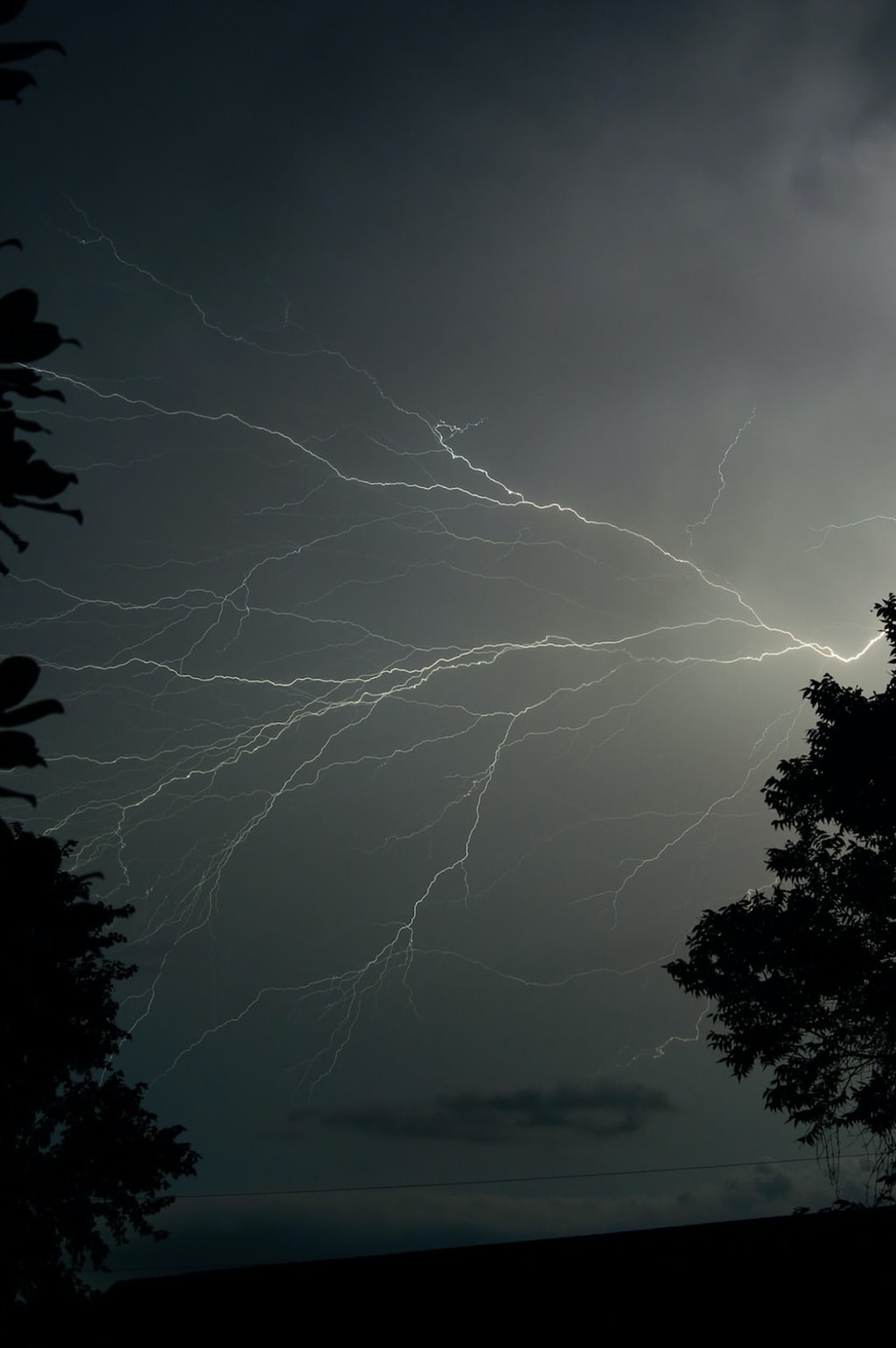
Nature can be a beautiful and unpredictable thing, making it one of the most exciting things to capture with a camera. Rain and lightening can be especially difficult to capture in photos, as they often come and go in a moment's notice. But, when it's done right, the results can be breathtaking. Capturing rain and lightening in photos can be a thrilling experience, as you never know what you're going to get. You could capture a single raindrop hitting the ground, or a full-on lightening storm. You could get a shot of a rainbow, or a beautiful night sky with lightening in the background. The possibilities are endless when you decide to take pictures of rain and lightening. Whether you're an amateur photographer or a professional, you can discover the beauty of nature and make something truly special with your camera.
What is the beauty of nature?
Capturing nature in photos gives us the chance to see the world in a completely different way. It gives us the opportunity to slow down and appreciate the little things that we often overlook. When we see a photo of an open field filled with wildflowers, we get a completely different experience than we get when we're in that same field. With a camera, we can appreciate the color of the flowers, the way the light shines down on them, and the different scents that fill the air. When we're in the field itself, we're too busy trying not to get bugs in our teeth to truly appreciate the beauty of the moment. Nature is beautiful in all seasons, in all weather conditions, and at all times of day. You can capture the beauty of nature in an endless variety of ways, from a rainbow that stretches across the sky to a single leaf that has fallen to the ground.
Capturing rain and lightening in photos
When it comes to capturing rain and lightening in photos, there are a few things you need to know about the weather to get the perfect shot. First, you need to know where the storm is. You can usually find this information in the weather forecast. If you don't have access to a forecast, you can sometimes find out where storms are by talking to people in your area, or looking out at the sky and seeing where the clouds are moving. When you know where the storm is, you can position yourself in between the storm and the sun. The sun will create beautiful shadows on the ground as it shines through the raindrops, creating a truly stunning photo. When you're capturing lightening, it's important to keep your camera away from water, as water can attract lightening. It's also best to keep your camera as far away from tall objects, like trees, because lightening can travel through them and shock your camera.
The thrill of capturing rain and lightening
Capturing rain and lightening in photos is thrilling because you never know how long you have before the storm moves on or dies out completely. Sometimes, you only get a few minutes to get the perfect shots. You might get lucky and have a storm last for hours, but that's rare. As you're out in the field, trying to get the perfect shot, you need to be careful. A storm can be beautiful, but it can also be dangerous. You don't want to put yourself in any unnecessary danger while trying to get the perfect shot. If you're in an area where there is risk of flooding, or you're in a field that could be damaged by the storm, you might want to reconsider trying to get up close and personal with the storm. Safety first! The thrill of capturing a storm comes from being so close to the action, not knowing what's going to happen next. It's that feeling of being so close to a natural disaster that can change the landscape in an instant. It's also the feeling of being in a truly beautiful and special moment that you want to remember for the rest of your life.
Tips for capturing rain and lightening
The best time to try to capture rain and lightening in photos is in the late afternoon, or early evening hours. You want the sun to be low in the sky so that it's shining through the raindrops, creating beautiful shadows on the ground. You also want the light to be low enough that it doesn't create harsh shadows on your subjects, or cause your photos to look too yellow. Another great thing about trying to capture rain and lightening in photos during this time is that the colors in the sky are often much more vibrant and beautiful than they are in the middle of the day. You can also try to take photos during a full moon. You can also consider waiting for a rainy day to try to capture rain and lightening in photos. This will give you the advantage of having dark skies with no blue in them, allowing the lightening to really stand out in your photos. Another thing to consider when trying to capture rain and lightening in photos is the water level in the area where you're waiting. Make sure you have a way to stay dry, whether that be in the car, under a roof, or in the middle of a field with a big umbrella!
Examples of stunning rain and lightening photos
These two photos were captured just as the sun was setting. You can see how the shadows are long and dark, and how the lightening is shining through the raindrops, creating a truly stunning photo. These types of photos can be hard to come by, especially when you're trying to capture them on your own. You can see how lucky these photographers were to get the shots they did. You can try to recreate these photos, but it's unlikely you'll get the same results, which is why it's always important to be lucky when you're trying to capture beautiful photos. These two photos make it clear how important it is to stay away from water when trying to capture lightening in photos. The water in the bucket is conducting the lightening, meaning that it's drawing the lightening towards the camera. The photographer waits until the last second to throw the bucket away from them and towards the camera, protecting his equipment in the process.
Capturing rain and lightening with an amateur camera
When trying to capture rain and lightening in photos with an amateur camera, you need to make sure you have a sturdy camera that is waterproof. You also should try to make sure that the camera is protected from any water that is running towards you. You can do this by standing under a roof or keeping your camera under your jacket. You want to make sure that you're not standing in an area where water might be flooding, and that you're staying as dry as possible while waiting for the storm to pass. Try to get your camera set up before the storm hits, so you can try to get the best shots while the storm is at its most exciting. You can also try to get creative and wait for a full moon to try to capture photos of lightening. The dark skies will make the lightening stand out even more, making the photos even more stunning. You can also try to go out in the rain to try to get photos of rain and lightening. You can try to get creative with the photos by getting down low under the rain or waiting for it to get heavier.
Capturing rain and lightening with a professional camera
When trying to capture rain and lightening in photos with a professional camera, you need to make sure you have a camera that is waterproof. You should also try to find a location that has low water levels. Try to stay as dry as possible while waiting for the storm to arrive, and make sure that any water that is coming towards you isn't getting into the equipment. Also, make sure you have a clear view of the sky so that you can see when lightening is about to hit. You can try to get creative with your photos by finding a unique location, like a rooftop, a bridge, or the roof of your car. You can also try to get down low, or find a tree that is low to the ground to try to get a different view of the storm.
Conclusion
No matter when you try to take photos of rain and lightening, remember to be safe. Don't try to get too close to the action, and don't try to get under anything that might be flooding. Be prepared for the storm to pass quickly, or last for hours. Stay patient, and keep an eye on the sky so that you know when the storm is coming. Once the storm arrives, you need to act quickly. Try to get your camera set up as quickly as possible, and try to get as many photos as you can before the storm passes. When the storm
About the Creator
Reader insights
Good effort
You have potential. Keep practicing and don’t give up!
Top insights
Excellent storytelling
Original narrative & well developed characters
Heartfelt and relatable
The story invoked strong personal emotions
Keep reading
More stories from Zaki Mahad and writers in Earth and other communities.
How to Install the Robokiller App and Stop Annoying Spam Calls for Good (That Works December 2022)
If you’re tired of getting annoying, unsolicited spam calls, then you’ll be glad to know that there is a solution. Robokiller is an app that can help you take back control of your phone and stop those pesky spammers. Installing the app is simple and can be done in just a few minutes. With Robokiller, you can finally say goodbye to those annoying spam calls and enjoy a peaceful phone experience. Best of all, the app is free and easy to use, allowing you to start blocking spam calls immediately. So, if you’re ready to take back control of your phone and stop those annoying spam calls for good, then follow this simple guide and learn how to install the Robokiller app!
By Zaki Mahad3 years ago in Lifehack
"NASA satellites confirm that China’s Great Green Wall is effectively slowing desert expansion and reshaping entire regions
NASA satellite data has confirmed what scientists, policymakers, and local communities in China have hoped for decades: the Great Green Wall is working. Designed to slow the relentless expansion of deserts across northern China, this ambitious ecological project is not only reducing desertification but also reshaping entire regions—environmentally, economically, and socially. Often compared to Africa’s Great Green Wall, China’s version is one of the largest environmental engineering projects in human history. Officially known as the Three-North Shelter Forest Program, it stretches across northern, northeastern, and northwestern China, covering an area larger than many countries. Launched in 1978, the project aims to combat desert expansion, reduce sandstorms, protect farmland, and stabilize local climates through large-scale tree planting and vegetation restoration. For years, critics questioned whether planting trees in arid and semi-arid regions was sustainable. Some argued that trees would consume scarce groundwater, while others doubted whether satellite images could capture meaningful ecological change. Now, decades later, NASA’s satellite observations provide compelling evidence that the Great Green Wall is having a measurable and positive impact. According to satellite data, vegetation cover across northern China has increased significantly. Areas once dominated by shifting sand dunes now show stable plant growth, reduced soil erosion, and improved land productivity. These changes are not isolated; they span vast regions, indicating that the project is influencing ecosystems on a continental scale. Desert expansion, once advancing at alarming rates, has slowed dramatically in several high-risk zones. One of the most visible benefits has been the reduction in sandstorms. Cities like Beijing, which once endured frequent and severe dust storms originating from nearby deserts, have seen noticeable improvements in air quality. NASA imagery reveals that wind-blown dust has decreased as vegetation acts as a natural barrier, anchoring soil and reducing airborne particles. This has direct public health benefits, lowering respiratory illnesses and improving overall quality of life for millions of residents. Beyond environmental gains, the Great Green Wall is reshaping regional economies. Stabilized land allows farmers to reclaim fields once lost to encroaching deserts. In some areas, agroforestry—combining trees with crops—has created new income streams while maintaining ecological balance. Satellite data shows that these mixed-use landscapes are more resilient to drought and climate extremes than monoculture farming systems. The project has also influenced local climate patterns. Increased vegetation helps regulate surface temperatures and moisture levels. NASA observations indicate slight increases in local rainfall and reductions in surface heat in reforested zones. While these changes may seem modest, over large areas they contribute to more stable weather patterns and reduced vulnerability to climate shocks. However, the success of the Great Green Wall is not uniform. Satellite analysis also reveals areas where tree survival rates are low or where non-native species struggle to adapt. In response, China has adjusted its strategy, shifting from mass tree planting to ecosystem-based restoration. This includes planting native grasses and shrubs, restoring wetlands, and allowing natural regeneration where possible. The evolving approach reflects lessons learned from decades of experimentation. Another key factor behind the project’s effectiveness is long-term commitment. Unlike short-term environmental campaigns, the Great Green Wall spans generations. NASA’s ability to track changes over decades has been crucial in demonstrating progress that would be invisible on shorter timelines. This long-view perspective underscores an important lesson for global climate efforts: meaningful ecological recovery takes time, patience, and sustained investment. Internationally, China’s experience is drawing attention. Countries facing desertification—from parts of Africa to the Middle East and Central Asia—are studying the Great Green Wall as a model. NASA’s confirmation adds scientific credibility, showing that large-scale land restoration can work when supported by data, adaptive management, and local participation. Still, challenges remain. Climate change continues to intensify droughts, heatwaves, and extreme weather events, threatening fragile restored ecosystems. Experts caution that the Great Green Wall is not a permanent solution but a dynamic system that requires continuous monitoring, maintenance, and adaptation. Satellite technology will remain essential in identifying stress points and guiding future interventions. In the end, NASA’s findings do more than validate a single project—they reshape how we think about humanity’s relationship with nature. The Great Green Wall demonstrates that environmental degradation is not always irreversible. With science, long-term planning, and political will, even vast deserts can be slowed, reshaped, and partially healed. As the world searches for solutions to climate change and land degradation, China’s Great Green Wall stands as a powerful example: proof that large-scale environmental action, guided by data from space, can transform landscapes on Earth.
By Fiaz Ahmed 3 days ago in Earth
Miss Persephone's Manual to a Seemingly Ordinary Life
Miss Persephone was found at the dining table, her blue eyes swollen, her tears arriving and retreating like the tides of the ocean. Earlier that day, her family had visited her in the retirement home where she had lived for eight years. It was her eightieth birthday.
By Imola Tóth4 days ago in Fiction




Comments
There are no comments for this story
Be the first to respond and start the conversation.