
The Ancient Comet Crossing Our Solar System: What 3I/ATLAS Tells Us About the Universe’s Past
Water ice, carbon dioxide, and billions of years — insights from the bone-dry void beyond our own star.
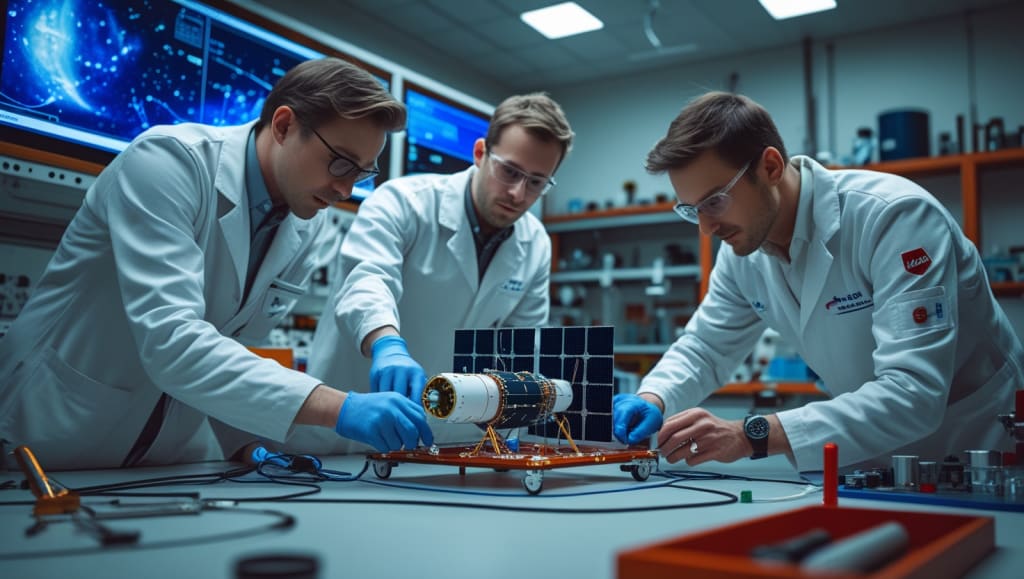
Every once in a while, the universe sends us a visitor from far away — a body that has traveled for billions of years, carrying with it frozen secrets of another star system. That’s exactly what 3I/ATLAS represents: a comet-like object now passing through our solar system, only the third interstellar wanderer ever observed.
Unlike the asteroids and comets we’ve cataloged locally, 3I/ATLAS didn’t form here. Its icy nucleus, gases, and dust date back to the protoplanetary disk of a completely different star. That means studying it is like holding a time capsule from another world.
A Billion-Year Journey
Astronomers believe interstellar comets like 3I/ATLAS are ejected from young solar systems during chaotic periods of planet formation. Gravitational interactions fling these icy bodies into deep space, where they wander for billions of years until they happen to cross paths with another star — in this case, ours.
That journey through interstellar space preserves them in remarkable ways. Shielded from starlight, their ices remain frozen, unaltered for eons. When they finally approach a new star, those ices begin to sublimate, creating the glowing coma and tail that make comets so spectacular.
What the Chemistry Tells Us
Spectroscopic studies of 3I/ATLAS have revealed a familiar but intriguing cocktail: water vapor, carbon dioxide, carbon monoxide, and organic molecules. While these match what we see in local comets, the proportions are slightly off — a hint that the star system it came from had different chemical abundances.
That’s where the excitement lies. By comparing interstellar comets to our own, scientists can test theories about how planets form and whether the building blocks of life are common across the galaxy.
“If we find the same organics in distant comets as in our own, it suggests the seeds of life are widespread,” explained one planetary scientist. “If we see major differences, that tells us each solar system is truly unique.”
A Living Fossil of the Cosmos
Think of 3I/ATLAS as a living fossil. Just as paleontologists study ancient bones to understand Earth’s past, astronomers study comets to understand the early solar system. In this case, we’re looking not just at our history, but at the history of an entirely different star.
That’s why scientists are racing to collect as much data as possible before the comet swings past the Sun and back into interstellar space. Every observation adds to our cosmic archive.
The Human Side of Discovery
Beyond the data, there’s something deeply moving about these encounters. Millions of people worldwide have followed news of 3I/ATLAS online, downloading telescope images and marveling at the idea that material from another star system is briefly within reach.
For many, it sparks profound questions: Are we alone? Are other planets out there like ours? Could the same chemistry that seeded life on Earth be unfolding somewhere else right now?
A Glimpse Into the Future
As detection technology improves, astronomers expect we’ll spot more interstellar comets every decade. Some may even become targets for spacecraft missions, offering a chance to directly sample alien ices. NASA and ESA have already floated proposals for “rapid response” probes capable of chasing down such visitors.
Imagine holding in your hands a piece of a comet from a star dozens of light-years away. It would be like touching another solar system without ever leaving our own.
Final Thoughts
3I/ATLAS isn’t just a green dot in the sky. It’s a messenger from across the galaxy, carrying whispers of another world’s origin. By studying it, we gain insight not only into the mechanics of comets but into the broader story of how stars and planets — and perhaps even life — emerge in the universe.
Whether or not 3I/ATLAS provides definitive answers, it has already succeeded in doing what science does best: reminding us that we are part of something vast, ancient, and interconnected.
About the Creator
Keep reading
More stories from Shahjahan Kabir Khan and writers in Earth and other communities.
When the Moon Turns Red: How to See Sunday’s Rare ‘Blood Moon’ Total Lunar Eclipse
A Sky Show Written in Shadows Sometimes the universe arranges a performance that causes city dwellers to stop, gaze up, and briefly forget the daily life's rush and bustle. This Sunday night, when a rare full lunar eclipse known as a Blood Moon occurs, such a chance will arise. The shadow of the Earth will be a deep, copper hue when the Sun, Moon, and Earth are perfectly aligned during this event. The Moon will be completely covered in the Earth's shadow.
By Shahjahan Kabir Khan5 months ago in Earth
White Mushroom Market Size and Forecast 2025–2033
Introduction White mushrooms—scientifically known as Agaricus bisporus—are no longer confined to salads, pizzas, and soups. Once considered a humble kitchen staple, they are now emerging as a strategic crop in the global agrifood ecosystem. Driven by sustainability trends, plant-based eating, and rising health consciousness, white mushrooms have carved out a powerful position in both consumer markets and foodservice industries.
By jaiklin Fanandish3 days ago in Earth


Comments
There are no comments for this story
Be the first to respond and start the conversation.