
The ancestor of the horse is the ancestral horse, and the ancestor of the ancestral horse is the stone claw beast. How did it become a horse?
The ancestor of the horse is the ancestral horse

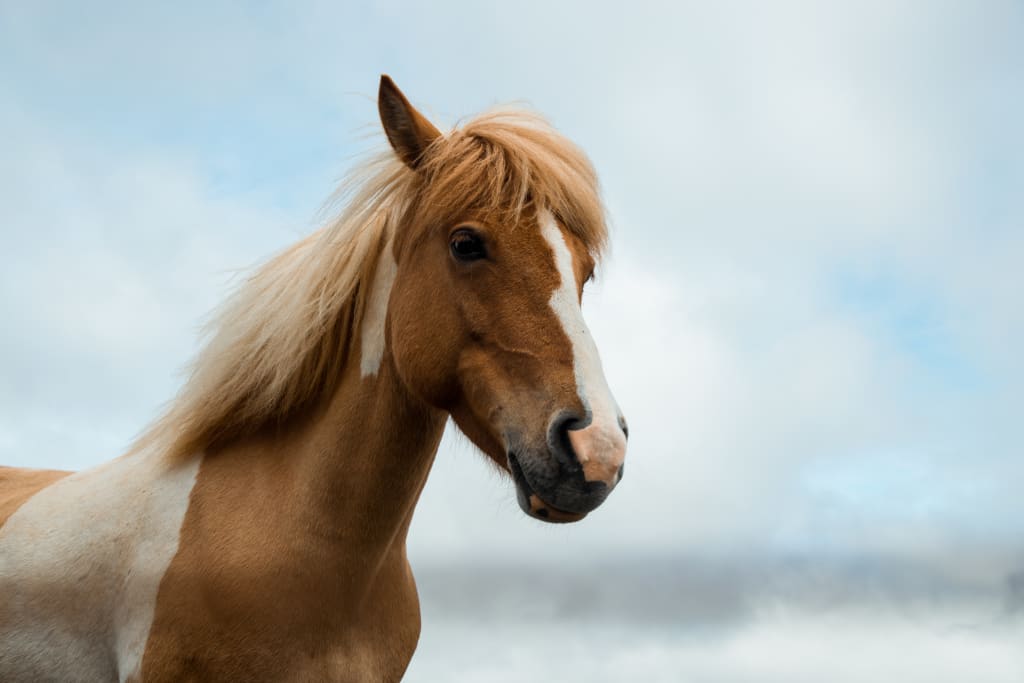
If any animal has made the greatest contribution to the development of human civilization, it is likely to be the horse.
Almost from the beginning of the birth of human civilization, horses began to play an important role in human production and life. Later, horses were used in the military field and became an important mobile force in the age of cold weapons, even in dozens of Years ago, the cavalry remained an indispensable mobile force. The reason why horses can make such a huge contribution to the development of human civilization is because horses are an animal that combines strength, endurance and speed. Sometimes we have the illusion that horses are for born of humans.
In fact, the horse is an independent life form. Like any life form in the world, it is not an appendage of other creatures. Moreover, the horse is not what it is now from the beginning. Its ancestors are the same as the current ones. Horses are very different in appearance, and we call them ancestor horses. However, the ancestor horse is not the starting point of horse evolution. If we continue to trace it forward, we will find that the ancestor horse also has an ancestor, which we call the stone claw beast.
The ancestor of the horse is the ancestral horse, and the ancestor of the ancestral horse is the stone claw beast, so how did this creature called the stone claw beast become a horse step by step? This may be as far back as 50 million years ago.
On the earth about 50 million years ago, there lived a huge creature, but from the perspective of appearance, it is difficult to associate it with a horse. When it comes to horses, the first characteristic you may think of is "running fast", and this ancient creature is obviously not fast, because it has long and short legs, with long front legs and short hind legs, and the difference is very obvious. This kind of creature with long front legs and short hind legs is actually not unusual, because there is a child's favorite animal in the zoo that looks like this, it is the giraffe. Yes, physically, this ancient creature is very similar to a giraffe, but it is not related to giraffes.
The unique physical characteristics of giraffes are to be able to eat the leaves at high places. It can be inferred that the stoneclaw has the same physical characteristics and also to eat the leaves. This is not only an inference, but also supported by evidence. A large number of rock layers of tree fossils can be found near the stoneclaw fossils discovered so far. Coupled with the low teeth displayed by the stoneclaw fossils, it can basically be concluded that In conclusion, this animal is vegetarian and eats leaves.
At present, fossils of stone-clawed beasts have been found in Asia, Africa and the Americas, indicating that the distribution of this creature is still very wide. Such a widely distributed creature with a sturdy body, why did it gradually become the current horse? It's likely that climate change has helped. This kind of creature that feeds on the leaves of tall trees is most afraid of the weather becoming cold, but what is it afraid of, the earth is really cold.
As the earth's climate cools, tall trees wither and wither, and low plants become the protagonists. In some relatively warm parts of Africa, there are still some low grasses, while in other areas, only some mosses may remain. Plant up.
Food suddenly became scarce, and the huge body of the stoneclaw beast was unsustainable, so it quickly went to extinction. However, climate change is a process. During this process, some stone-clawed beasts have embarked on different evolutionary paths in order to survive. In the stone-clawed beasts living in Africa, the forelimbs gradually shortened and became as long as the hindlimbs. They changed from living on leaves to feeding on grass. Slowly, the claws of these creatures disappeared and their heads grew. The horns, after a long period of change, have become another huge herbivore, the rhinoceros. Yes, the ancestor of the rhino is also a stoneclaw, so it is related to the horse. Compared with the stoneclaws living in Africa, the life of the stoneclaws living in the Americas is more difficult, so they have to make greater concessions.
The stone-clawed beasts living in the Americas have not only changed in shape, but also become smaller and smaller in order to feed their stomachs. Finally, they evolved into a small animal with a weight of less than 20 pounds. This is the ancestor of the horse. , the ancestor horse.
Although the body became smaller, life was still not easy, so the ancestor horse began to migrate. At that time, the Bering Strait was not a strait, and animals could pass freely, so the ancestor horse spread across the white-collar strait to the world. Later, with the gradual warming of the climate, the size of the ancestor horse began to gradually increase, and it developed a strong running ability in the process of avoiding predators. This is the wild horse. Later, the wild horse was domesticated by humans and became what we are now. horses seen. Unfortunately, although the ancestors of horses originated in the Americas, the wild horses in the Americas became extinct, and only the horses that migrated to Eurasia survived and finally completed their evolution. There are some things in the world that are so interesting and intriguing, the overhunting of the Native Americans led to the extinction of the native wild horse, and in the 16th century, the Spaniards rode horses to colonize the Americas.
About the Creator
suzanne darlene
Take you to understand scientific knowledge
Keep reading
More stories from suzanne darlene and writers in Earth and other communities.
The information transmitted at the speed of light will affect the physical changes of human beings and achieve a new unity
A person first learns to crawl, then learns to walk, and finally learns to run. Although the perfection of physical function does not mean the overall maturity, but to the stage of running, it has all the conditions for further development, and the next step will enter the formal development stage. There are various indications that human beings are currently at this stage.
By suzanne darlene4 years ago in Earth
How Does a Wildfire Sprinkler System Work to Protect Homes from Advancing Fires?
Wildfires have become an increasing concern in many regions where dry vegetation, strong winds, and high temperatures create conditions that allow fires to spread quickly. Homeowners in wildfire-prone areas are now turning to proactive protection systems designed to reduce risk and improve property resilience. Among these solutions, wildfire sprinkler systems are gaining attention for their ability to defend structures before flames reach them.
By Brandon Honey5 days ago in Earth



Comments
There are no comments for this story
Be the first to respond and start the conversation.