
The Amazon River: Earth's Richest Vein of Life and Wealth
: The Amazon River is far more than a flowing body of water—it's the lifeblood of a continent, a storehouse of natural treasures, and a pillar of Earth's climate. With an estimated net worth surpassing $10 trillion, the Amazon delivers unparalleled value through its vast freshwater reserves, biodiversity, ecological services, and economic potential. From carbon absorption to pharmaceutical discoveries and indigenous cultural heritage, the Amazon stands as humanity’s most vital natural asset.

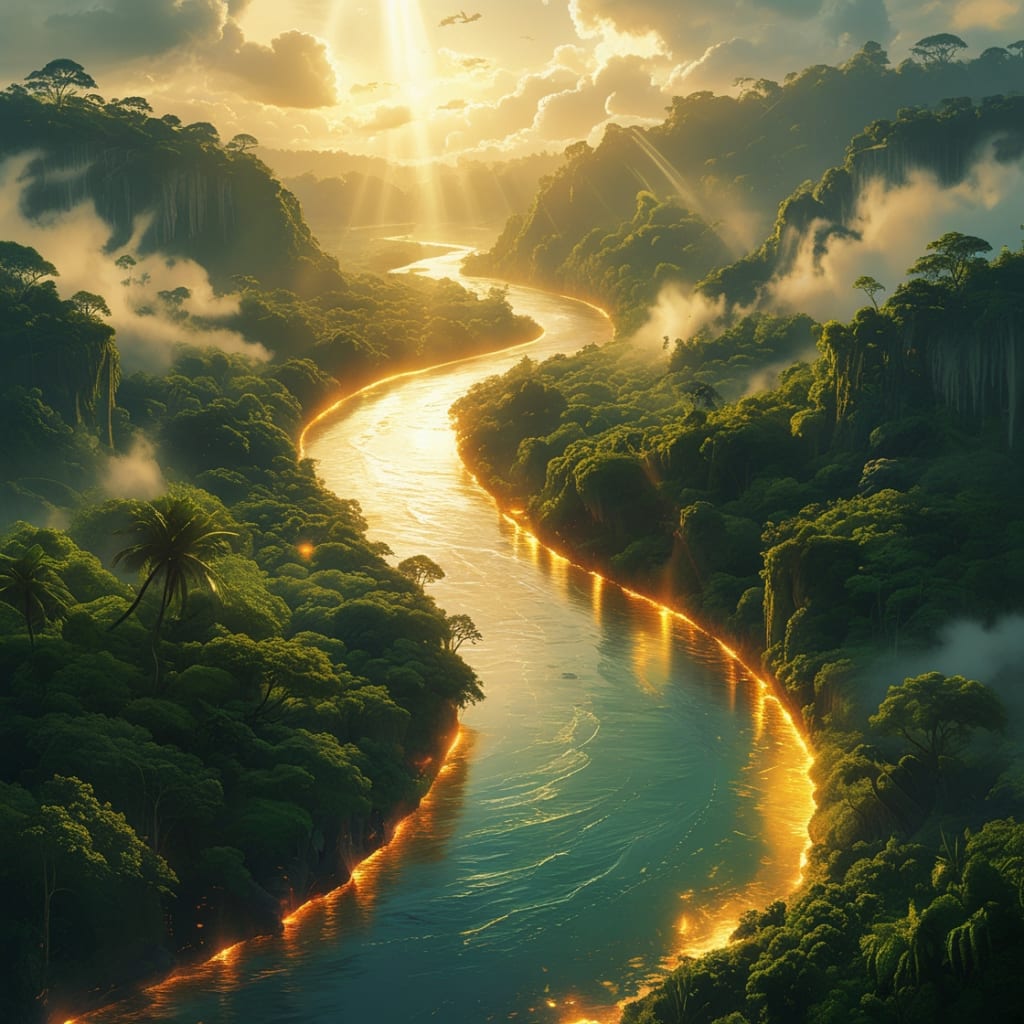
The Amazon River: The Most Abundant Source of Earth’s Natural Resources
Rivers are essential arteries. They shape cultures, nourish continents, and drive economies. However, among the myriad of rivers that traverse the globe, one rises above the rest in terms of its unparalleled natural resourcesthe Amazon River. More than merely a watercourse, the Amazon constitutes a vast ecosystem, a biological repository, and a significant force of global prominence. If the natural world had a financial market, the Amazon River would be the premier commodity.
Extending over 6,400 kilometers (4,000 miles) across South America, and with in excess of 1,100 tributaries, the Amazon is not simply a riverit is an empire of water, life, and resources. But what is the financial valuation of this formidable river? Let us delve into the treasures of the Amazon and assess its projected worth in economic, ecological, and global terms.
1. The World’s Largest Source of Fresh Water
The Amazon contributes approximately 20% of the globe’s freshwater to the oceans. It transports 209,000 cubic meters of water per second, overshadowing all other rivers on the planet.
Freshwater Value Assessment: Fresh water is among the most crucial resources on Earth. As the world faces water shortages, the Amazon’s freshwater becomes even more invaluable.
If merely 1% of its annual flow (6. 6 trillion cubic meters) were capitalized at $0. 50 per cubic meter (a conservative market value):
66 billion cubic meters × $0. 50 = $33 billion annually
Projected over decades, this water alone could be valued in the hundreds of billions, if not trillions, in ecological and economic dimensions.
2. Biodiversity: Nature’s Living Wealth
The Amazon River Basin hosts:
16,000+ tree species
Over 3 million species of flora, fauna, and insects
More than 2,000 fish species (surpassing those in the Atlantic Ocean)
This area represents the planet’s most significant reservoir of biodiversity, harboring one-tenth of all recognized species.
Biological Asset Valuation: Pharmaceutical firms and researchers estimate that the Amazon may harbor upwards of $1 trillion in undiscovered medicinal flora and genetic resources.
Its biodiversity bolsters:
Agricultural research
Biotechnological innovation
Climate adaptability
Global food and health security
3. Timber, Fish, and Agricultural Significance
The Amazon Basin is encircled by arable land that yields:
Soybeans
Cattle
Rubber
Cocoa
Timber
Despite the threats of deforestation, the Amazon continues to produce:
Billions in fish exports (particularly catfish and piranha)
Tens of billions in timber and plant commerce
Annual estimated trade value: $50–60 billion
Potential worth over 50 years: $2. 5–3 trillion
4. Ecological Functions and Climate Regulation
The Amazon River plays a crucial role in:
Carbon sequestration: assimilating up to 2. 2 billion tons of CO₂ annually
Precipitation regulation: affecting weather patterns across South America and even North Africa
Oxygen generation: frequently referred to as “the lungs of the Earth”
Ecosystem service valuation (according to UN and scientific analyses):
Carbon offset valuation: ~$200 billion annually
Climate regulation and rainfall impact: incalculable, yet conservatively estimated at $300–500 billion per year in agricultural safeguarding and drought alleviation
5. Cultural and Indigenous Assets
The Amazon River is inhabited by over 400 indigenous communities, each possessing unique languages, knowledge systems, and customs intimately linked to the land and water. Their cultural preservation transcends a mere human rights concernit carries economic significance through:
Ecotourism
Medicinal expertise
Sustainable resource management
Intangible cultural value estimation: $50–100 billion (in tourism, conservation financing, and intellectual property)
6. Prospective Economic Potential
With innovations such as eco-friendly hydropower, river transport, and sustainable tourism, the Amazon is set to become increasingly economically pivotalprovided it is managed sustainably.
Projected future sectors include:
Biocarbon credit trading
Digital biodiversity repositories
Synthetic biology applications derived from rainforest resources
Total Estimated Net Worth of the Amazon River
Category Estimated Value
Freshwater reserves $500 billion – $1 trillion
Biodiversity (biotech, pharmaceutical) $1 – 2 trillion
Timber, fishery, agriculture $2. 5 – 3 trillion (long term)
Ecosystem services $5 – 10 trillion (lifetime)
Cultural and tourism worth $100 – 200 billion
Total Estimated Net Worth $10 – 15 trillion+
Conclusion
The Amazon River stands as the most affluent river globallynot due to gold or oil, but because of the life it nurtures, the rain it controls, and the equilibrium it provides to our planet. Its net worth surpasses that of most multinational corporations and entire nations. However, unlike a financial vault or reserve, the Amazon’s wealth is vibrant, dynamic, and at risk. Safeguarding it is not merely an environmental obligationit represents a worldwide investment in the future of life on Earth.
About the Creator
Say the truth
"Say the Truth: Explain Everything in the World" is your trusted source for uncovering facts and exploring the wonders of history, science, technology, and beyond. We simplify complex ideas and reveal truths to inspire curiosity .
Keep reading
More stories from Say the truth and writers in Earth and other communities.
The Wealth of the World's Greatest Rivers
Rivers Flowing with Wealth: The Accustomed Assets Hidden Below Their Waters Rivers accept been lifelines for civilizations for bags of years, accouterment baptize for agriculture, transport, and animal survival. However, some rivers are additionally affluent in accustomed assets like minerals, oil, gas, and alike adored metals, authoritative them basic bread-and-butter assets. In this article, we analyze some of the world's best resource-rich rivers and appraisal their bread-and-butter significance.
By Say the truth 10 months ago in Earth
Himalayas Bare and Rocky After Reduced Winter Snowfall, Scientists Warn
The Himalayas, often described as the world’s “Third Pole,” are facing a dramatic and worrying transformation. Scientists are warning that reduced winter snowfall is leaving vast stretches of the mountain range bare, rocky, and increasingly vulnerable to long-term environmental damage. Once known for their thick snow blankets and powerful glaciers, parts of the Himalayas are now showing exposed rock earlier than ever before—an alarming sign of climate stress in one of Earth’s most critical ecosystems. A Visible Change in the World’s Highest Mountains Winter snowfall plays a vital role in the Himalayan climate system. Snow acts as a protective layer, insulating glaciers and regulating the slow release of meltwater into rivers during warmer months. However, researchers monitoring satellite data and ground stations report that recent winters have brought significantly less snowfall across large areas of the range. As a result, snowlines are rising higher up the slopes, leaving lower and mid-altitude regions exposed. This has turned once-white mountain landscapes into expanses of dark rock, which absorb more heat from the sun, accelerating warming in a dangerous feedback loop. Why Reduced Snowfall Matters Snow is more than a scenic feature—it is essential to the health of Himalayan glaciers. When snowfall declines, glaciers lose their main source of replenishment. At the same time, exposed ice and rock melt faster under direct sunlight. Scientists warn that this imbalance is speeding up glacier retreat across the Himalayas. Many glaciers are now shrinking at rates not previously recorded, threatening the long-term stability of water systems that support nearly two billion people across South and Southeast Asia. Impact on Asia’s Major Rivers The Himalayas feed some of the world’s most important rivers, including the Indus, Ganges, Brahmaputra, Yangtze, and Mekong. These rivers depend on seasonal snow and ice melt to maintain consistent flow throughout the year. Reduced snowfall means less stored water for the dry season. In the short term, faster melting can cause floods and landslides. In the long term, however, shrinking glaciers could lead to water shortages, affecting agriculture, hydropower, and drinking supplies across multiple countries. A Growing Risk of Disasters Bare, rocky slopes are far more unstable than snow-covered ones. Snow helps bind loose material together, while exposed rock and soil increase the likelihood of landslides and avalanches. Scientists have already observed a rise in slope failures and glacial lake outburst floods in the region. As glaciers retreat, meltwater often accumulates in fragile lakes dammed by loose rock and ice. These lakes can burst suddenly, releasing destructive floods that threaten mountain communities and downstream infrastructure. Climate Change at the Core Researchers agree that climate change is the primary driver behind the declining snowfall. Rising global temperatures are altering weather patterns, causing more winter precipitation to fall as rain rather than snow. Even small temperature increases at high altitudes can drastically change how moisture behaves. Additionally, warming oceans and shifting atmospheric circulation are affecting the timing and intensity of winter storms that traditionally brought snow to the Himalayas. Effects on Local Communities and Wildlife Mountain communities that rely on predictable snowfall for farming, tourism, and water storage are already feeling the effects. Farmers report changes in planting cycles, while winter tourism has declined in some regions due to unreliable snow conditions. Wildlife is also under pressure. Species adapted to cold environments are losing habitat as snow cover shrinks. Plants that depend on snowmelt are struggling to survive in drier, warmer conditions, disrupting fragile alpine ecosystems. Scientists Call for Urgent Monitoring and Action Experts stress the importance of improved monitoring of snowfall, glacier health, and water flows across the Himalayan region. Better data can help governments plan for future water management challenges and disaster risks. At the same time, scientists emphasize that local adaptation alone is not enough. Reducing global greenhouse gas emissions remains critical to slowing temperature rise and preserving what remains of the Himalayan snow and ice. What the Future Holds If current trends continue, large parts of the Himalayas could see permanent changes within decades. Reduced snowfall and accelerating glacier loss may reshape landscapes, ecosystems, and human livelihoods on an unprecedented scale. The sight of bare, rocky Himalayan slopes is more than a visual change—it is a warning signal. The world’s highest mountains are responding rapidly to a warming planet, and the consequences will extend far beyond the peaks themselves.
By Fiaz Ahmed Brohi7 days ago in Earth
Nature’s Hidden Gems: Discovering the Rarest Flowers on Earth
Introduction: When Beauty Meets Rarity Nature is filled with wonders, but few are as captivating—and as elusive—as the rarest flowers on Earth. From enormous parasitic blooms to delicate orchids that appear only under precise conditions, these plants challenge our understanding of survival, evolution, and beauty.
By Ahmed aldeabella4 days ago in Earth



Comments
There are no comments for this story
Be the first to respond and start the conversation.