
Tensions Rise: USA, Israel, and Iran — What We Know”
Recent High-Level Talks, Missile Concerns, and the Danger of Misunderstanding in Global Politics


Tensions Rise: USA, Israel, and Iran — What We Know”
In the last few days, world attention turned to a high-profile meeting between U.S. President Donald Trump and Israeli Prime Minister Benjamin Netanyahu at Trump’s Mar-a-Lago residence in Florida. The leaders met to discuss a range of issues, but a major focus was Iran — its ballistic missile program and its nuclear developments.
This has sparked headlines and concern around the world. But it’s important to understand what is confirmed fact and what is speculation. As of now, no new war has officially started between the United States, Israel, and Iran. What has happened is a serious diplomatic moment — one that could affect future global relations, but is not a declaration of all-out war.

At the press conference following their talks, President Trump warned Iran that the United States might support military strikes if Tehran continues efforts to rebuild its nuclear capabilities or to advance ballistic missile production. Trump used very strong language, saying that if Iran does not stop these activities, the U.S. “may have to knock them down” and “knock the hell out of them.”
Meanwhile, Netanyahu agreed publicly that Iran’s ballistic missile program was a major threat. Israeli officials have expressed concern that Iran might be rebuilding long-range missiles capable of reaching Israeli territory.
These comments are serious, but they are warnings, not official declarations of war. Leaders often use strong language to try to influence others — especially on issues as sensitive as nuclear weapons and regional security. These words reflect fear and strategic positioning, not necessarily the start of a military conflict.
Iran’s government responded strongly to the Trump-Netanyahu warnings. A top advisor to Iran’s supreme leader said that any aggression against the country would be met with an “immediate harsh response beyond planners’ imagination.”
Iranian officials are signaling that they see these threats not just as diplomatic pressure but as potential aggression. This has elevated tensions, but it does not prove an active war has begun.
Iran’s president has also described the situation as a form of “full-scale war” against the United States, Israel, and parts of Europe — a description that reflects deep distrust and anxiety within Iranian leadership.
However, terms like this in political statements are not the same as an official war declaration under international law.
To understand this situation, it helps to see the wider background. In June 2025, the U.S. and Israel carried out military strikes against Iranian nuclear facilities, which resulted in significant damage to parts of Iran’s nuclear infrastructure. In reaction, Iran launched missiles toward Israeli territories. That brief conflict — sometimes referred to as a 12-day confrontation — ended with a ceasefire.
The current Trump-Netanyahu meeting revisits parts of those tensions. Both leaders stated publicly that they want to prevent Iran from rebuilding dangerous weapons programs. Trump positioned military backing as one of the options on the table. Netanyahu, for his part, pushed for Israeli security concerns to be addressed, including missile threats and nuclear development.
At the same time, other world powers are trying to reduce the risk of escalation. Russia called for restraint and dialogue, emphasizing that diplomacy should continue and that escalation into a broader conflict must be avoided.
This moment illustrates how modern global tensions can grow quickly — not because a war has started, but because political leaders publicly make strong statements that grab headlines and stoke fear. In today’s connected world, such statements spread rapidly and are often trimmed for dramatic appeal, even if the underlying reality is about negotiation and pressure rather than active combat.
It’s also important to understand that concerns over nuclear programs and missiles are common topics in global security discussions. Many countries, not just Iran, have ballistic missile and civilian nuclear capabilities. The existence of these programs does not automatically mean conflict will happen, but it does raise questions of trust, security, and verification — issues that international diplomacy tries to manage through treaties, inspections, and negotiations.
For ordinary people watching from afar, it can be easy to feel scared. But the world has many mechanisms to prevent misunderstandings from becoming open conflict. Diplomacy, international organizations, and public pressure all play a role in encouraging peaceful solutions over war.
In conclusion, recent talks between Trump and Netanyahu reflect high tension and serious concerns, especially about Iran’s missile and nuclear programs. They also reflect the complexity of modern geopolitics, where strong language in public speeches can raise alarm. As of now, no new war has been officially declared. Instead, the situation remains one of diplomatic pressure, strategic warnings, and fragile peace that must be carefully managed by world powers.
Understanding these facts helps people stay informed without spreading panic or misinformation.
About the Creator
Wings of Time
I'm Wings of Time—a storyteller from Swat, Pakistan. I write immersive, researched tales of war, aviation, and history that bring the past roaring back to life
Keep reading
More stories from Wings of Time and writers in Earth and other communities.
The Water Crisis That Could Spark Global Tensions
The Water Crisis That Could Spark Global Tensions Water—something we often take for granted—is becoming one of the world’s most precious resources. Across the globe, rivers are drying up, lakes are shrinking, and underground water supplies are disappearing faster than they can naturally refill. What was once a local problem is now a growing international concern, and countries are beginning to clash over access to freshwater.
By Wings of Time 13 days ago in Earth
BRICS Wargames: Why They Matter — And Why India Chose to Sit Out
BRICS — the economic and political bloc comprising Brazil, Russia, India, China, and South Africa — has long been seen as a counterweight to Western-dominated global institutions. Over the years, it has expanded its influence in finance, trade, and diplomacy. Yet, in recent times, BRICS has begun exploring another domain that grabs headlines and sparks speculation: military cooperation, including large-scale wargames. These exercises are designed to simulate joint operations, test interoperability, and send a signal of strength. For members like Russia and China, wargames serve as both a show of force and a tool to deepen military collaboration within the bloc. However, India’s decision to opt out of recent BRICS wargames has raised questions: why does this matter, and why is India taking a different path from its BRICS partners? The Rise of BRICS Military Exercises Historically, BRICS has been portrayed as primarily economic, focused on initiatives like the New Development Bank (NDB) and trade agreements aimed at reducing Western dominance. But recent years have seen an evolution. Military drills among BRICS members are increasingly prominent, especially in the context of global tension and regional conflicts. These wargames are about more than just tactical drills. They serve multiple purposes: Strategic signaling: By conducting joint exercises, BRICS countries demonstrate unity and military capability to the rest of the world. Operational readiness: Countries test their ability to coordinate in complex scenarios, from humanitarian missions to potential combat operations. Diplomatic leverage: The exercises send subtle messages to other global powers, indicating that BRICS members can collaborate beyond economic forums. For nations like Russia, recently facing sanctions and international scrutiny, these exercises are particularly important. They showcase the ability to maintain partnerships and project power despite global isolation. For China, it is a way to cement strategic influence in Asia and beyond. Why BRICS Wargames Matter Globally The significance of these exercises extends beyond the bloc itself. Analysts note several key implications: Challenge to NATO and U.S. influence: BRICS wargames signal that alternative power centers exist outside Western-led military alliances. Regional security dynamics: Countries bordering BRICS members, particularly in South Asia, Africa, and Latin America, must monitor these developments carefully. Economic-military linkages: Military coordination among major emerging economies could shape security considerations in trade corridors, energy supply routes, and resource-rich regions. In essence, BRICS wargames are not just about soldiers and tanks, but about the broader geopolitical landscape: signaling, strategy, and shaping perceptions of influence. India’s Calculated Decision to Opt Out While Russia, China, Brazil, and South Africa have shown interest in participating actively, India has strategically chosen to abstain from the most recent wargames. This decision may appear surprising, given India’s economic and political stake in BRICS, but several factors explain it. Geopolitical balancing: India maintains complex relations with both China and Russia. While it has defense and historical ties with Russia, its relationship with China has grown tense due to border disputes and regional competition. Joining a wargame with China could be politically and militarily sensitive. Alignment with Western partnerships: India has strengthened ties with Western-led coalitions, including the Quad (U.S., Japan, Australia, India). Participating in BRICS military drills could conflict with these alliances, potentially sending mixed signals. Strategic autonomy: India has long emphasized a policy of strategic autonomy — making decisions based on national interest rather than bloc pressure. Opting out allows India to maintain flexibility in foreign policy and avoid entanglement in exercises that may not align with its regional objectives. Domestic perception: Indian public opinion and political narratives favor cautious engagement with China and Russia on military matters. Skipping the wargames minimizes domestic criticism of appearing too closely aligned with either of the more assertive BRICS powers. What India Gains by Sitting Out Choosing not to participate does not mean India is disengaged from BRICS. Economically and diplomatically, it remains a key player in the bloc. By skipping the wargames, India can: Maintain regional credibility in South Asia while avoiding the perception of aligning militarily with China. Signal strategic independence, reinforcing its image as a nation that prioritizes national security over bloc politics. Focus on bilateral and multilateral exercises elsewhere, such as those with the U.S., Japan, and Australia, which are more aligned with India’s current security priorities. In short, opting out allows India to navigate the delicate balance between its BRICS commitments and broader global strategic interests. Implications for BRICS and Global Security India’s abstention also reflects broader trends within BRICS: the bloc is not monolithic. While economic cooperation is often strong, military integration faces political and strategic limits. Differing national interests, historical rivalries, and regional tensions prevent uniform alignment. For global observers, this is crucial. It shows that while BRICS wargames are important, they are not necessarily indicative of a fully unified military bloc. The exercises are as much about optics as operations, and India’s absence underscores the challenges of aligning countries with divergent security priorities. Conclusion BRICS wargames matter because they are a window into the bloc’s evolving strategic ambitions. They signal power, test cooperation, and demonstrate emerging global influence. Yet India’s decision to opt out highlights that even within this growing coalition, national interests remain paramount. For India, the choice reflects a calculated approach: engage where it benefits national interest, avoid where risks outweigh gains, and maintain strategic flexibility. For the rest of the world, it is a reminder that BRICS, while increasingly important, is not a military monolith. Ultimately, BRICS wargames are as much about geopolitics and signaling as they are about military maneuvers — and India’s careful stance illustrates how emerging powers navigate this complex global chessboard.Start writing...
By Muhammad Hassanabout 21 hours ago in Earth
United States Plastic Market Size and Forecast 2025–2033
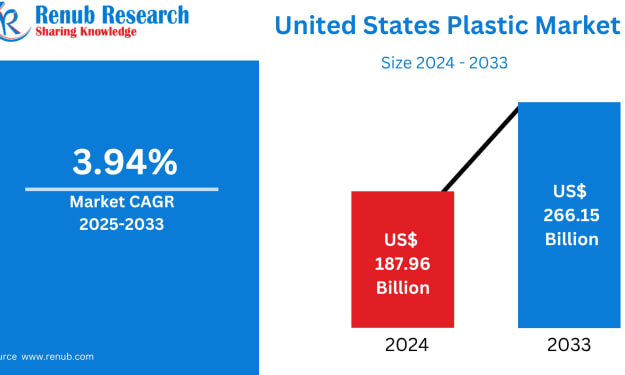
United States Plastic Market: Size and Forecast 2025–2033 The United States plastic market is projected to expand significantly, growing from US$ 187.96 billion in 2024 to US$ 266.15 billion by 2033, reflecting a steady Compound Annual Growth Rate (CAGR) of 3.94% during 2025–2033. This sustained growth is being fueled by rising demand across packaging, automotive, construction, healthcare, and consumer goods industries, alongside rapid innovations in recycling technologies and sustainable polymer development.
By Aaina Oberoi2 days ago in Earth


Comments
There are no comments for this story
Be the first to respond and start the conversation.