
Tennessee William's Red: Passion and Patience in the Desert
An Environmental Essay

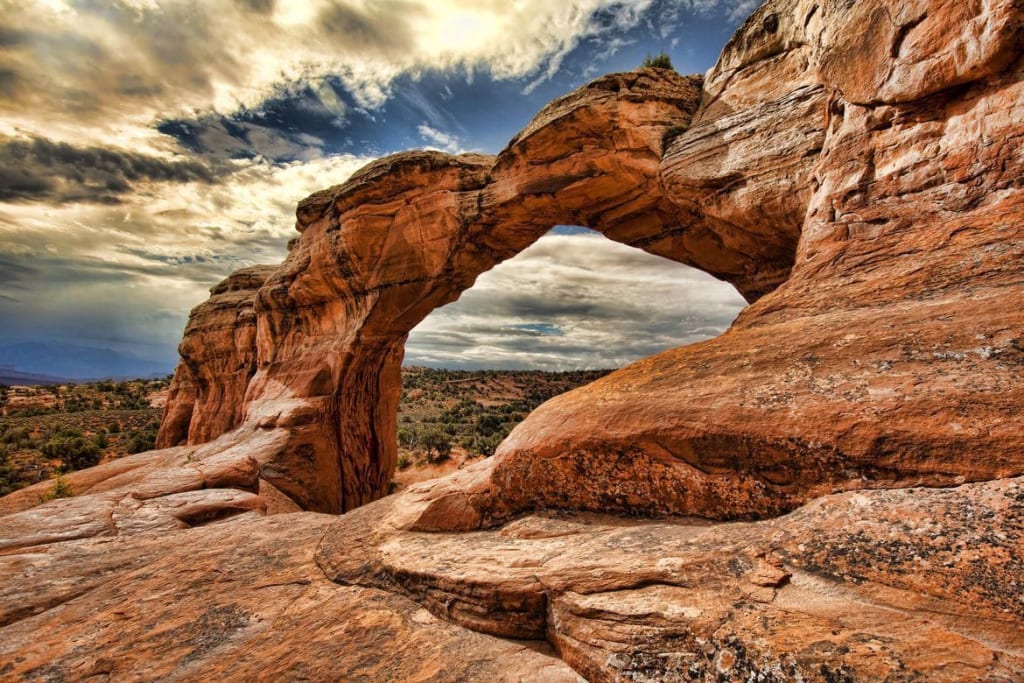
What Does the Earth Feel but Cannot Say?
The significance for writing this paper is to reiterate and focus in on specific ideas Terry Tempest Williams brings up in Red: Passion and Patience in the Desert. Williams’s passion for the desert is the reason she wrote the book in the first place, and I will dig deeper into the way she writes to express nature. Red stands out as a work of literary non-fiction prose that explores Terry Tempest Williams’s attachment to the wilderness of Utah. Throughout the book, Williams portrays theme of beauty and destruction. She elaborately describes the beautiful landscapes of Utah and destruction of those landscapes. Unfortunately, animals, trees, and other parts of the outdoors cannot speak and ask for the destruction to stop. Terry Tempest Williams describe the suffering wilderness that cannot fight back by offering political, historical, and descriptive style. Williams writes about nature with deep connections to Utah and it amplifies her passion as she advocates to save the wilds of Utah and inspire others do the same in their area.
First, the political interference on the growing wilderness due to laws, acts, and monuments are ruining lives of Utah’s wildlife. Government officials are taking it upon themselves to determine that it is okay to take down acres worth of trees to satisfy our needs while neglecting the concerns of wildlife. There are many places across the United States are deemed “reservations” or “safe zones” and acts are written to protect creatures of the woods but instead benefit the government in cleverly removing parts of nature. Specifically, In Utah, the Habitat Management Plan which is “a process by which the most appropriate management direction or best use of refuge lands was evaluated. ... Priority species and species groups were developed during the evaluation process” (Olsen, Lindsey, Hirschboeck 5), is an example of this concept of “safe zones” that aren’t really safe. Williams writes in the chapter, “To Be Taken,” about the Habitat Management Plan and the effect it has on the desert tortoise’s environment. The plan is enforced to make way for building new homes. In the process of building new homes, animals such as the tortoise are losing territory, where they have always been to curl their heads in at night. “If you are a desert tortoise living in Washington County, take this advice: Start crawling your way toward the hills north of St. George, Utah” (William's e-book 161). Implementing politics like the Habitat Management plan disrupts the balance of nature by tearing an innocent creatures’ home and forcing them to leave or die. This is only one example of political engagement that is creating detrimental outcomes for the wilds of Utah. After reading these stories, I pondered how much of the environment is disrupted from the politics of humans and the politics of nature.
War between humans is an outside force that causes devastation in nature. Bickering countries decide they don’t like what the others are doing and decide to attack. War is one of the biproducts of politics that go to the extreme. When someone thinks about war their first thought probably goes to what the fight is about and how many lives have been lost. However, most would not think directly of the consequences of turning a bright green field into a bloodred nightmare. Williams’s theme of red in her book symbolizes the cuts and bruises this world can leave on it. What was once beautiful is now stripped of its beauty and left with scars of broken memories. Terry Tempest Williams states, in the first sentence of Red, “It is a simple equation: place + people = politics. In the American West, the simplicity becomes complicated very quickly as abstractions of philosophy and rhetoric turn into ground scrimmages” (William's e-book 21). Williams’s quote implies human politics can take place anywhere that two parties or more come against one another with conflicting ideas. Politics in general become a battle ground themselves to get what they want. The extreme case of bringing a verbal fight into a full out war is an activity that humans and nature take part in; one has a chance to win and the other cannot change the outcome of its loss.
During World War 1, Flanders’s field was one of the major battle fields that saw death and destruction. War takes an effect on men and whatever designates as the war zone. Straying shells and cannon blasts fell all around taking lives of men and the beautiful land of Belgium. After the smoke clears, soldiers can see the ruts in the ground where bullets ricocheted, and large ditches kissed by an explosive. Smoke envelopes the air which chokes the trees, soldiers breathing their last, and everything smells of burning flesh. “Warfare exacts a toll on natural ecosystems as well as on human populations. Environmental damage associated with conflict, including disruption of agriculture and infrastructure, is a cost of war” (Environmental Literacy Council). War on land brings as much damage as it does to the people who fight there. Human politics change the environment whether politicians acknowledge it or not. Flanders’s field became red with blood instead of the green of life which the ground could not retaliate. Although, the red poppies that bloom there now are a sign that nature has its own way of fighting back even though it can’t all the time.
Looking into the past of Utah’s background and history is one of the larger sections of the book following several documents on politics. At first glance, a reader might think Utah’s wilderness holds no important historical meaning; they would be wrong. Part of the important history stems from traditions of using spaces for events. One tradition is the passing of the Olympic torch from one generation to the next at Delicate Arch in Arches National Park. “…a few weeks ago a Ute elder uttered prayers and passed the Winter Olympics torch to his granddaughter…” (William's e-book 355). The significance of this quotation is not only the fact that a tradition is being upheld, but also the fact it is a native American who is conducting it. In America today, natives are viewed as entities who have almost been completely forgotten because their land and culture have been slowly dying away. Williams uses a former native group to Utah, the Anasazi, to educate readers to what happened to those tribes and why it is important to remember them.
In the chapter “Buried Poems,” the archeologist is writing poems and burying them in the ground in hopes that the people of his town will remember the Anasazi. “He explains how these drawings on canyon walls are a reflection of Anasazi culture, of rituals, and all that mattered in their lives” (William's e-book 78). From this quotation and the entirety of the chapter “Buried Poems,” is about remembering the past and its people to reengage the hearts of men, women, and children to support the rocks, twigs, and snails as living and breathing things that need protecting. What Williams and the archeologist try to do here is make the wilderness’s history visible to those who have forgotten it exists, so the suffering might end one day. However, more and more beautiful trees, gorgeous mountains, flowing rivers, and wide-open spaces are sadly removed, reevaluated, and relinquished each day.
Lastly, Williams’s descriptive writing style elaborates the destruction of Utah. In the chapter “Chewing Up A Fragile Land,” she uses creative diction to give the reader full exposure to what is occurring in the desert scape below through her thoughts, feelings, and visions in her writing. “The delicate desert crust that holds the red sand in place from wind and erosion, known as cryobiotic soil, was obliterated. Replacing it, in effect, was a newly crushed road” (William's e-book 354). Williams’s vocabulary like “delicate”, “erosion”, “obliterated”, and “crushed” emphasize destroying the Earth by ripping it apart. Our planet suffers every time a tree is cut down and not replaced which is shortening our lives on this planet. Eventually the conditions the Earth needs to survive won’t be there to sustain it. In turn, we might not survive long enough to change the circumstances which is why we need to do something now. the act of pounding the ground with large machines is described through the eyes of Williams. The destruction this thunderous equipment leaves behind is devastating because where the earth was soft, and now, is brittle, broken, and in a million pieces. The shockwaves made such a vibration that large arches like Delicate Arch might come down to the ground. This potential loss of a traditional, historical, and beautiful rock formations is why Terry Tempest Williams fights to save her homeland that cannot fight for themselves.
Mother Earth is crying out to humans to reconsider what they are doing to her creation and their offspring. The suffering of the wilderness is so intense that it is reflected in one of William’s poems that she provides in this book. “What I remember is being led on a steep path to ‘The Weeping Rock.’ Once there, the temperature cooled, the sun was shielded. Our eyes adjusted to the darkness. A tall black wall with ferns dripping loomed before us” (William's e-book 142). This quote is a metaphor which implies nature is distraught over its demise. The rock is black like depressed souls and its ferns are dripping water like tears. The rock can only weep to express the pain and sorrow it feels. Nature is dying out because the forests are attacked by loggers and other vicious means to take away what is rightfully belongs in it. This rock has seen many things since seeing the world for the first time.
The scene illustrated above, is illustrated by Terry Tempest Williams’s fine use of diction and her unique style of writing. She uses the power of her stories to let her audience know what is happening out there in nature and consequences of these actions. In an article by Thad Box, he mentions an interview with Williams where she stated "Story bypasses rhetoric and pierces the heart. We feel it. Stories have the power to create social change and inspire community” (Box, Thad 1). The article is called “Listening to the Land” is a theme running throughout Red: Passion and Patience in the Desert. Williams uses the power of her words to entangle readers into a diverse array of creative nonfiction pieces that pierce hearts. The whole point of writing a novel like Red is to tell the world what is happening and call them to action to do something about it. She is a pioneer for change in the conversation on the treatment of nature.
In agreement with what Williams says above, her writing is more than a story or telling people they should care more about their treatment of nature. Terry Tempest Williams’s book is about inspiring an audience without giving speeches and using all the fancy rhetoric to win anyone over. She simply tells tales of natives long ago, characters that lose themselves to nature and finds themselves in a few pages. In another interview with Terry Tempest Williams, she said “I see myself as a storyteller, a translator, a disruptor, but more than anything I see myself as an engaged citizen. As citizens, we all have a voice” (Mineo, Liz). This again is somewhat of a call to action from Williams. She is right to say that we all have a voice to share in helping to preserve, conserve, and protect the remaining areas of forest and nature that still exist. Her words are stopping the current conversation and starting a new one. What can the Earth feel but not say? It can’t ask for help but with an advocate like Williams on its side there is room in the future to grow to new heights.
Suffering is a part of life but going beyond boundaries and taking more than needed is a threat against nature. Terry Tempest Williams illustrates the suffering that is resounding through the canyons and documents of short stories, memoir-like chapters, police reports, historical background, and lists of national parks. These elements reflect events happening to the wilderness that cannot be expressed by themselves, but mostly through others. Someone can speak up for the tortoises to have them safely relocated out of harm’s way. Aspiring diplomats can help change the historical past of destroying precious land and possibly creating new laws that protect instead of taking away. Williams implies throughout the entire book the wilds cannot stand up for themselves and we should be stepping in to do it for them. She uses politics, history, and imagery to support her argument. As many advocates and Terry Tempest Williams say, doing our part to keep the Earth in good condition takes more than a little action. We are all called to maintain the balance and beauty of our world.
Work Cited:
Box, Thad. “Listening to the Land: The Power of Story.” Rangelands, vol. 27, no. 3, 2005, pp. 74–75. JSTOR.
“Conflict & Natural Resources.” The Environmental Literacy Council, The Environmental Literacy Council, 2015.
Mineo, Liz. “Writer Terry Tempest Williams Reflects on Being at Harvard Divinity School.” Harvard Gazette, Harvard Gazette, 7 Sept. 2018.
United States, Congress, Olson, Bridget E, et al. “Habitat Management Plan.” Habitat Management Plan, U.S. Department of the Interior, 2004, pp. 1–213.
Williams, Terry Tempest. Red: Passion and Patience in the Desert. E-book. Pantheon Books, 2001.
About the Creator
Victoria Ward
I am a girl who likes reading, writing, watching, and having fun! I love writing about books, movies, music, games, and anything else that makes me happy.
Come down the rabbit hole with me!
Keep reading
More stories from Victoria Ward and writers in Earth and other communities.
Awaited Magic Part 3
Ch. 3 Where’s the Cat? The next morning, I woke with Moon in my face wanting attention. I had no idea when the last time he was fed. However, from the looks of his rounded-out belly I think he feasts on the unfortunate mice creeping around the house. I rolled out of bed and sat Moon on the floor. My alarm clock read 8:00am, so it was a little early to be rising but I wanted to examine everything in this house from top to bottom; starting with the attic. I grew curious over night thinking about what might be under those tarps near the back wall. Moon gazed up at me with a look of longing for a bite to eat. I image we brought something he could snack on before his next catch. The cat began to rub against my leg with a passionate purr.
By Victoria Ward5 years ago in Geeks
Police Warn Against ‘Ridiculous’ Parking at Beauty Spot Amid Snow Disruption
Heavy snowfall may transform beauty spots into winter wonderlands, but it also brings serious risks when visitors ignore basic safety and parking rules. Police have issued a strong warning against what they describe as “ridiculous” parking at a popular beauty spot, after snow disruption led to blocked roads, stranded vehicles, and delayed emergency access. As wintry conditions continue to affect travel, authorities are urging the public to prioritise safety over scenic photographs, reminding drivers that poor parking decisions can have life-threatening consequences during severe weather. Snowfall Turns Scenic into Hazardous The recent spell of snow attracted large numbers of visitors eager to enjoy picturesque landscapes blanketed in white. Hillsides, national parks, and rural viewpoints quickly became hotspots for walkers, families, and amateur photographers. However, police say the surge in visitors coincided with widespread parking chaos. Cars were left abandoned on narrow roads, grass verges, gateways, and even blocking access routes meant for emergency vehicles and local residents. What may appear to drivers as a harmless decision to “park for just a few minutes” can quickly escalate into a major safety issue—especially when snow and ice reduce road space and visibility. Police Response and Public Warning Local police forces have taken to social media and public statements to express frustration at the situation. Officers described some parking behaviour as not only irresponsible but dangerous, particularly given the weather conditions. Police warned that emergency vehicles, including ambulances and mountain rescue teams, were struggling to reach areas due to blocked roads. In severe weather, response times are already under pressure, and illegally parked vehicles can mean the difference between life and death. Authorities have also made it clear that enforcement action will be taken where necessary. Drivers risk fines, towing, and penalty points if their vehicles obstruct roads or endanger others. Impact on Emergency Services One of the most serious consequences of poor parking during snow disruption is its impact on emergency services. Narrow rural roads, already difficult to navigate in icy conditions, become completely impassable when cars are parked irresponsibly. Fire crews, paramedics, and rescue teams rely on clear access routes, particularly in popular beauty spots where accidents such as slips, falls, or stranded walkers are more likely in winter conditions. Police stressed that emergency vehicles do not have the luxury of “finding another way around” when roads are blocked. Delays caused by inconsiderate parking put both responders and the public at risk. Local Residents Left Frustrated It is not only emergency services that are affected. Residents living near popular beauty spots often bear the brunt of snow-related disruption. Driveways are blocked, access to homes becomes difficult, and essential journeys for work, medical appointments, or supplies are delayed. Many locals report feeling ignored by visitors who treat rural communities like seasonal attractions rather than lived-in areas. During winter weather, this frustration is magnified, as residents may already be dealing with power outages, poor road conditions, and limited access to services. Police have echoed these concerns, reminding visitors that beauty spots are often surrounded by working communities, not just open spaces for leisure. Why Snow Makes Parking More Dangerous Snow significantly reduces road safety margins. It narrows carriageways, hides road markings, and makes verges unstable. A car parked partly on a road might seem manageable in normal conditions, but in snow it can create blind corners, force vehicles into oncoming traffic, or cause skidding accidents. Additionally, snowploughs and gritters require space to operate effectively. Poorly parked vehicles can prevent these essential services from clearing roads, prolonging disruption for everyone. Authorities warn that even experienced drivers can underestimate how quickly conditions can change in winter weather. Social Media and the “Snow Day” Effect Police have also pointed to social media as a contributing factor. Viral images of snow-covered landscapes often encourage spontaneous trips without proper planning. People see beautiful photos and head out without considering parking availability, road conditions, or weather warnings. This “snow day” mentality can overwhelm rural infrastructure not designed for large volumes of traffic, particularly during adverse weather. Police urge visitors to check local advice before travelling and to be prepared to turn back if conditions are unsafe. Advice for Safe Winter Visits In response to the ongoing disruption, authorities have shared clear guidance for anyone planning to visit beauty spots during snowy conditions: Avoid unnecessary travel during severe weather warnings Park only in designated areas, never on roads or verges Do not block gateways, tracks, or emergency access routes Check weather and road conditions before setting off Be prepared to leave if parking is unavailable Police emphasise that no photograph or short walk is worth risking lives or causing serious disruption. Enforcement and Accountability While officers prefer to rely on public cooperation, they have confirmed that enforcement will be stepped up if irresponsible behaviour continues. Vehicles may be ticketed or removed, particularly if they pose a danger or obstruction. Authorities stress that enforcement is not about spoiling enjoyment but about ensuring public safety. Winter conditions demand higher levels of responsibility from drivers, not less. A Shared Responsibility Snow transforms landscapes, but it also tests public behaviour. Police warnings against “ridiculous” parking are not just expressions of frustration—they are urgent reminders that safety must come first. Enjoying nature is a privilege, not a right, especially during extreme weather. By parking responsibly and respecting local communities, visitors can help ensure that beauty spots remain accessible, emergency services remain effective, and winter days do not turn into preventable disasters. As snow disruption continues, the message from police is clear: think before you park, or don’t park at all
By Muhammad Hassan7 days ago in Earth
Greenland: New Shipping Routes, Hidden Minerals – and a Frontline Between the US and Russia?
Once seen as a remote and largely isolated Arctic territory, Greenland is rapidly emerging as a focal point of global geopolitics. Climate change, melting ice, and technological advances are transforming the island into a strategic hub defined by new shipping routes, vast mineral resources, and growing rivalry between major powers, particularly the United States and Russia. As the Arctic opens up, Greenland’s geographic position and untapped potential are pushing it to the center of international attention, raising questions about security, sovereignty, and sustainable development. Melting Ice and the Opening of New Shipping Routes One of the most visible impacts of climate change in the Arctic is the reduction of sea ice, which is making previously inaccessible waters navigable for longer periods each year. New Arctic shipping routes, including passages near Greenland, promise shorter travel times between Europe, Asia, and North America. Compared to traditional routes like the Suez Canal, Arctic pathways can reduce shipping distances by thousands of kilometers, cutting fuel costs and emissions. For global trade, this could be transformative. Greenland’s coastal waters are increasingly important as potential transit corridors and support hubs for these routes. However, the expansion of Arctic shipping also raises concerns about environmental risks, maritime safety, and the lack of robust emergency infrastructure in the region. Hidden Mineral Wealth Beneath the Ice Beyond shipping, Greenland holds significant reserves of critical minerals, many of which are essential for modern technologies and the global energy transition. These include rare earth elements, lithium, graphite, uranium, and other strategic resources used in electric vehicles, wind turbines, batteries, and defense systems. As demand for these materials grows, Greenland is being viewed as a potential alternative to existing supply chains dominated by a small number of countries. This has increased interest from Western governments seeking to diversify mineral sourcing and reduce strategic dependencies. However, mining in Greenland is controversial. Local communities and policymakers must balance economic opportunities with environmental protection and cultural preservation. Greenland’s harsh climate and fragile ecosystems make resource extraction both technically challenging and politically sensitive. The United States’ Strategic Interest in Greenland The United States has long considered Greenland strategically vital, largely due to its location between North America and Europe. The US already maintains a military presence at Pituffik Space Base (formerly Thule Air Base), which plays a key role in missile warning systems and space surveillance. In recent years, Washington has renewed its focus on Greenland, emphasizing Arctic security, infrastructure investment, and cooperation with Denmark, which oversees Greenland’s foreign and defense policy. US interest is driven by several factors: protecting transatlantic security routes, countering rival powers in the Arctic, and ensuring access to critical minerals. Greenland is increasingly viewed as a frontline in maintaining Western influence in the High North. Russia’s Arctic Ambitions Russia, meanwhile, sees the Arctic as central to its economic and military strategy. It has invested heavily in Arctic military bases, icebreaker fleets, and energy projects, particularly along its northern coastline. Although Greenland is geographically distant from Russia’s main Arctic territories, Moscow closely monitors developments there. The island’s proximity to key Arctic sea lanes and North Atlantic routes makes it strategically relevant in any broader confrontation between Russia and NATO. As tensions between Russia and the West remain high, Greenland’s location places it near the intersection of competing security interests, increasing its geopolitical significance. Greenland Between Global Powers The growing attention from major powers puts Greenland in a delicate position. While the island seeks greater economic independence and development, it must navigate complex relationships with Denmark, the United States, and other international actors. Greenland’s government has emphasized the importance of maintaining control over its resources and ensuring that development benefits local populations. At the same time, geopolitical competition risks turning Greenland into a strategic chessboard rather than a partner in decision-making. This balancing act is becoming more difficult as Arctic competition intensifies. Environmental and Social Challenges Greenland is on the front lines of climate change. Melting ice sheets contribute to global sea-level rise, while local communities face changes to traditional livelihoods such as fishing and hunting. The expansion of shipping and mining could bring jobs and infrastructure, but it also threatens fragile ecosystems and raises concerns about pollution, habitat disruption, and long-term sustainability. Any future development in Greenland will require careful regulation, international cooperation, and meaningful engagement
By Aarif Lashari3 days ago in Earth



Comments
There are no comments for this story
Be the first to respond and start the conversation.