
Technology in Asia: Powering the World’s Innovation Engine
From AI Giants to Green Tech Pioneers, Asia’s Tech Revolution in 2025


Introduction: Asia’s Technological Ascendancy
In 2025, Asia stands as the epicenter of global technological innovation, driving advancements that reshape economies and societies. With a combined tech market valued at over $2 trillion and home to powerhouses like China, Japan, South Korea, and India, Asia’s influence spans AI, semiconductors, green energy, and digital ecosystems. Fueled by massive investments—$500 billion annually across the region—and vibrant startup ecosystems, Asia is not just adopting technology but defining its future. This post explores Asia’s cutting-edge innovations, strategic policies, and challenges, showcasing why it’s the world’s innovation engine.
AI and Digital Transformation: Leading the Charge
Asia dominates the AI landscape, with China, Japan, and South Korea hosting over 10,000 AI startups. China’s Baidu and Japan’s Fujitsu lead in AI applications, from autonomous vehicles to healthcare diagnostics achieving 95% accuracy, per a 2024 Nature study. India’s Digital India initiative has brought 800 million users online, enabling AI-driven agriculture tools that boost crop yields by 20%. Singapore’s Smart Nation program uses AI to optimize urban systems, reducing traffic congestion by 15%. Asia’s AI market, valued at $200 billion in 2025, is powered by government investments like China’s $70 billion AI plan, positioning the region as a global leader.
Semiconductors and Quantum: The Tech Backbone
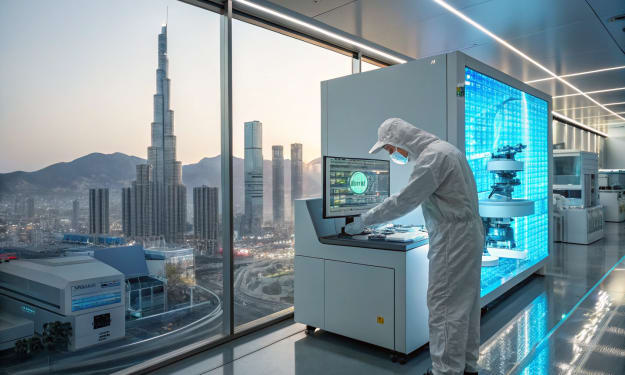
Asia produces 70% of the world’s semiconductors, with South Korea’s Samsung and Taiwan’s TSMC leading in 3nm chips critical for AI and 6G. Japan’s RIKEN unveiled a 70-qubit quantum computer in 2025, advancing cryptography and material science. China’s $150 billion semiconductor push and South Korea’s $20 billion K-Semiconductor Belt aim to secure supply chains amid global chip shortages. These efforts ensure Asia’s dominance in the hardware that powers everything from smartphones to supercomputers, though trade tensions with the West pose risks.
Green Technology: Sustainability at Scale
Asia’s commitment to sustainability drives green tech innovation. China leads with 450 GW of solar and wind capacity, while India’s 100 GW solar output and Japan’s 250,000 tons of green hydrogen production set benchmarks. South Korea’s LG Energy Solution powers 30% of global EV batteries, with solid-state models extending ranges to 800 km. Singapore’s smart grids cut energy waste by 10%, per a 2024 OECD report. Asia’s $100 billion investment in green tech, including perovskite solar cells with 25% efficiency, aligns with regional net-zero goals, balancing growth with environmental stewardship.
Digital Economies and Cultural Tech
Asia’s digital economies are thriving, with China’s $7 trillion digital market and India’s UPI handling 50 billion transactions annually. South Korea’s K-Pop and gaming industries, generating $30 billion, leverage AR/VR for global fan engagement, while Japan’s Sony and Nintendo shape entertainment with AI-driven gaming. Southeast Asia’s super-apps like Grab and Gojek serve 300 million users, integrating fintech, e-commerce, and mobility. Blockchain adoption in Singapore and Hong Kong enhances supply chain transparency, reinforcing Asia’s role in redefining digital lifestyles.
Challenges: Navigating a Complex Landscape
Asia’s tech rise faces hurdles. Geopolitical tensions, including U.S.-China chip wars, cost the region $5 billion in 2024. Cybersecurity threats are rising, with 3 million attacks reported across Asia last year. A 20% tech workforce shortage, per a 2024 World Economic Forum study, demands upskilling 1 billion workers by 2030. Regulatory disparities and high R&D costs—Asia spends 3% of GDP on research—require harmonized policies. Yet, collaborative initiatives like ASEAN’s Digital Economy Framework and China’s Belt and Road Digital projects bolster resilience.
Conclusion: Asia’s Tech-Powered Future
In 2025, Asia’s technological landscape is a dynamic blend of innovation, ambition, and cultural influence. From AI and semiconductors to green tech and digital economies, the region is not just keeping pace but setting global standards. Despite challenges, Asia’s $500 billion tech investments and collaborative spirit ensure its dominance. As China, Japan, India, and South Korea lead with precision and vision, Asia is powering a future where technology drives progress, sustainability, and inclusion, inspiring the world with its relentless innovation.
About the Creator
Arjun. S. Gaikwad
Curious mind exploring technology, society, and global change. I write on education, innovation, justice, and the future of humanity— blending science, philosophy, and real-world insights to spark awareness, critical thinking, and hope.
Keep reading
More stories from Arjun. S. Gaikwad and writers in Earth and other communities.
Technology in Korea: Igniting a Global Innovation Revolution
Introduction: Korea’s Technological Dynamo In 2025, South Korea stands as a global tech titan, blending innovation, cultural influence, and precision to redefine the future. With a tech industry valued at over $500 billion and a government investing $70 billion annually in R&D, Korea is a leader in semiconductors, AI, 6G networks, and green technology. Home to giants like Samsung, LG, and SK Hynix, and a vibrant startup ecosystem, Korea’s advancements are transforming lives and setting global benchmarks. This post explores Korea’s cutting-edge tech landscape, visionary policies, and challenges, showcasing its role as a powerhouse of innovation.
By Arjun. S. Gaikwad8 months ago in Earth


Comments
There are no comments for this story
Be the first to respond and start the conversation.