Sustainability
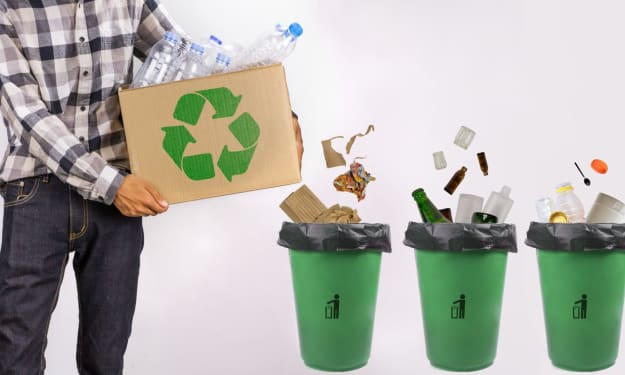
Origins and Advantages of Waste Management | Reaction Distributing
Primitive people painstakingly dug holes in the sand to bury their feces and other garbage. This was done to repel mice, rats, and other creatures which lived on waste products and caused the spread of several illnesses among people.
By Reaction Distributing3 years ago in Earth
Is It Only A Matter Of Time Until We're On A Dry Desolate Rock
2023 is promising to be no better than 2022. How will we know? It will require us to become more aware, not letting ourselves become so bogged down we miss what’s occurring in front of us, and we will need to play a part at times. That last one is going to be the hardest. That’s because a lot of our species struggle with change.
By Jason Ray Morton 3 years ago in Earth
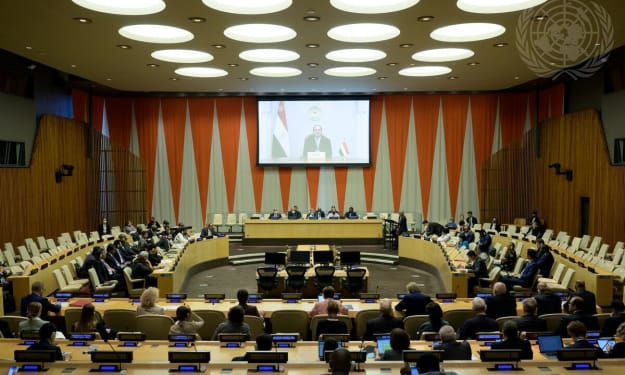
Human Population and Conservation
If one thinks about what broad themes unite conservationists of all stripes a few main ideas emerge. Preserve biodiversity, maintain and expand wild habitat, decrease pollution and waste. Ultimately most of these boil down to a fairly simple formula. The more we can reduce man’s footprint on the planet the better it will be for every other living thing. The easiest and most straightforward method to achieve this end would be to significantly reduce the human population of the planet. I think most people understand this at some base level and I believe it explains a lot of the negative attitudes many people instinctually express when asked their feelings on the matter. Essentially the conservationist is asking us to admit that we are the problem, we are a net negative for the health of the planet, all living things would be better off if we ceased to exist. I know that few environmentalist/conservationists would put it exactly this way though many probably believe it. In point of fact until very recently I did too.
By Everyday Junglist3 years ago in Earth
Slash-and-Burn Agriculture. Is it Sustainable?
Slash-and-burn agriculture is the process of clearing and burning plants from land in order to rehabilitate the soil and cultivate food. Slash-and-burn agriculture continues to be essential for the survival of hundreds of millions of people worldwide. However, slash-and-burn agriculture is scarcely viable today. Deforestation, a rise in carbon emissions, and biodiversity loss have resulted from it.
By Alex Hermes3 years ago in Earth
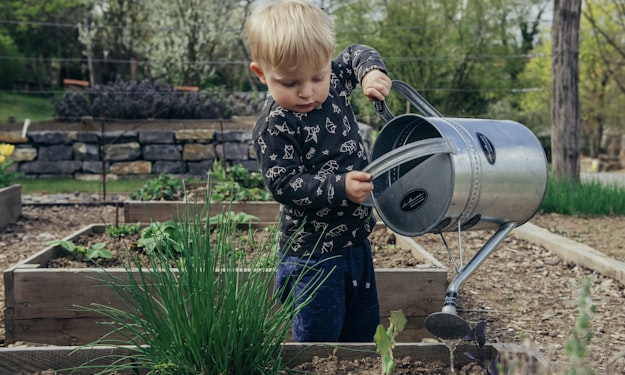
In mid to late spring of 2023 next year I want to plant bell peppers, cucumbers, tomatoes, and green beans. Wish me luck ya'll. Best of luck I wish for us, and the universe. Peace, love, and happiness may consume us all!
I gotta plan ahead financially for big pots to grow my new cucumbers + and, some to save money, can my own, beans, and pickles, and have tomatoes to manipulate to my own want for goulash style breaks etc.
By Angelina F. Thomas3 years ago in Earth
The Eco-Friendly Future: Sustainable Hardscaping
The term "hardscaping" describes a landscape's non-organic characteristics, including paths, decks, driveways, patios, walls, steps, and other man-made constructions. A landscape design that helps local wildlife and reduces pollution might be a part of sustainable hardscaping. This implies that it is possible to lessen your environmental effect without compromising your landscaping objectives.
By Alex Hermes3 years ago in Earth
Ultimate Guide To Eco-Friendly Living
When you think about living an eco-friendly life, you may immediately think of giving up everything from mint chocolate ice cream to those new must-have ugly sweater party staples. But what the word “eco-friendly” really means is being aware of how your actions and habits impact the environment around you. This means reducing your carbon footprint by making small changes in your everyday routine that have a big impact over time, like replacing synthetic materials with natural alternatives and choosing products that are recyclable or sustainable. Living an eco-friendly lifestyle doesn’t mean giving up anything, but rather making conscious choices in your day to day life so that the world remains a beautiful place for future generations.
By Alex Hermes3 years ago in Earth
Planet First
I sometimes question the rules of economics. I often wonder if maybe we got it wrong somehow, somewhere back along the way. People need things. They want things. Other people have those things and they are willing to part with them to help satisfy the needs and wants of others. Those that have the needed or wanted items will charge a fee for the provision of said items to help compensate themselves for the time and effort needed to supply (grow, produce, extract, manufacture, etc.) those things. The greater the need or the want, coupled with the strength or weakness of the supply chain, will help to determine the (monetary??) value of the item(s). This is what I understand to be the basis of world economy and local micro-economy alike.
By John Oliver Smith3 years ago in Earth