short story
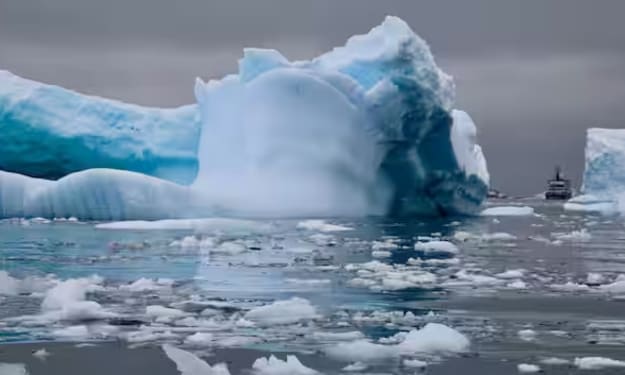
Antarctica lost ice cover equivalent to the size of Turkey in last three years: Scientist
Turkish scientists have claimed that Antarctica has lost ice equivalent to the size of Turkey in the last three years alone. Researchers who are working on the continent reached this conclusion after studying data from UAVs and satellites and tracking parameters like atmospheric water vapour. This means that ice spanning over 785,000 square kilometres (303,090 square miles) has disappeared from the continent during this period.
By Aabusad Pathan2 years ago in Earth
TOP 7 PLACES TO VISIT IN YOUR LIFETIME
Traveling around the world is not only about ticking off destinations on a bucket list but also about fostering personal growth, broadening your horizons, and gaining a deeper understanding of the world and its inhabitants. It's a chance to connect with humanity on a global scale, to appreciate the beauty of our planet, and to savor the diverse tapestry of experiences that life has to offer.
By mahilarasan m2 years ago in Earth
Some of the things Europeans do that leave Americans speechless
If you are embarking on a journey across the Atlantic, it's essential to be prepared for more than just jet lag. Depending on your destination in Europe, life may present some unique aspects that differ from what you're accustomed to. Therefore, conducting thorough research before your travels is advisable.
By Ibrahim Dauda2 years ago in Earth
Little people are real
Francesca Bler presents Harrison Peters in this video, exploring an ancient and unsettling legend found in both old and new world folklore. For centuries, indigenous peoples across Canada have shared campfire stories about mystical beings residing in the mountains. The Inuit of the high Arctic told tales of shape-shifting elves, while the Cascas of northern British Columbia recounted stories of mountain-dwelling dwarfs with extraordinary powers. Similarly, the Interior Salish tribes of southern British Columbia spoke of tiny trickster beings. These narratives parallel traditions in certain Euro-Canadian settler societies, reflecting distinct old-world characteristics that differentiate them from indigenous beliefs. This contrast suggests intriguing possibilities regarding the nature of these mythical beings and their presence in Canada. European folklore has long featured tales of little people with supernatural abilities living on the fringes of civilization, hidden from mortal view by mysterious veils. While these stories are often dismissed as fiction today, they were once believed to be real entities capable of both granting blessings and causing mischief. European immigrants to Canada brought with them their cultural beliefs, leading to accounts of encounters with similar beings in the Canadian wilderness. These reports, passed down through generations, reflect a blending of old-world folklore with new-world experiences, shaping the perception of little people in Canadian history. The earliest documented references to little people in Canada can be found in medieval texts such as the Greenlanders Saga and the Saga of Eric the Red, which recount Norse interactions with diminutive indigenous peoples during voyages to Canada's northeast. These encounters, marked by trade and conflict, describe beings like the Skraelingyar and the one-footer, creatures with inhuman traits and behaviors. The saga's depictions of these encounters point to possible connections with ancient Dorset peoples or Thule ancestors, laying the foundation for the integration of little people folklore into Canadian narratives. In the 1870s, Icelandic immigrants fleeing natural disasters in their homeland settled in Manitoba, establishing communities like New Iceland along Lake Winnipeg. This migration, facilitated by land grants and governmental support, contributed to the preservation of Icelandic culture in Canada. Icelandic-Canadians, like folklorist Magnus Inarson, have continued to explore and document the legacy of little people folklore in Western Canada, bridging the gap between old-world myths and new-world experiences.
By [ カ ミ ナ ]KAMINA2 years ago in Earth
Stories untold
Over the span of the last century, the infamous Bermuda Triangle has played host to a series of perplexing disappearances involving both ships and aircraft. This enigmatic region, extending from the Bermuda Islands to Florida and Puerto Rico, covering an expansive 805,000 square kilometers, has become a focal point for scientific investigation due to its mysterious and dramatic events. Notably, the Bermuda Triangle has witnessed incidents where ships, though intact, are discovered without a soul on board, casting an eerie shadow over the Rubicon in 1944 and the Friendship Rosalia in 1840, frozen in temporal suspension with untouched meals awaiting vanished sailors.
By Peculiar Beauty2 years ago in Earth
Loss of Home:. Content Warning.
waves slammed relentlessly against the coast, engulfing everything in their path. Rising sea levels were more than a distant threat to the people of Seaview Village; they were a sad reality that was creeping steadily closer to their houses. Among them was the Martinez family, who had lived in this coastal town for centuries.
By Obioha Dubeson2 years ago in Earth