Science
The Enigmatic Sky
The Magic of Rayleigh Scattering: Why Does the Sky Appear Blue? Have you ever gazed up at the sky, captivated by its ethereal blue hue? The answer lies in a remarkable phenomenon known as Rayleigh scattering. Explore the enchanting science behind the sky's breathtaking color and discover the secrets hidden within our atmosphere.
By Martina Rogers3 years ago in Earth
Cnidarians: Guardians of Marine Biodiversity and Ecosystem Functionality
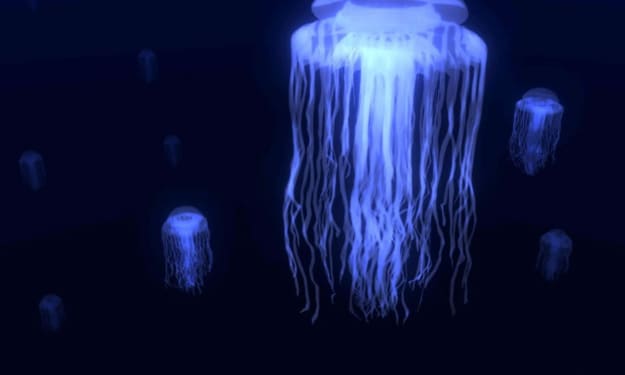
Introduction: Within the intricate web of the marine ecosystem, every organism plays a vital role. While some creatures receive well-deserved attention, others often go unnoticed. One such group is the cnidarians, a phylum of organisms encompassing corals, anemones, hydroids, and jellyfish. These enigmatic creatures contribute significantly to the diversity and stability of the marine ecosystem. Through their roles as predators, shelter providers, and filter feeders, cnidarians uphold the intricate balance of life within our oceans. In this article, we delve into the captivating world of cnidarians and their profound impact on marine ecosystems.
By Anu Preethi Danila D3 years ago in Earth
What if a giant Anaconda swallowed you as whole
Imagine walking through the tropical Amazon rainforest at one point you have to stop because a large log is blocking your way. Fearless, you come closer to this Branch but just as you try to step over it it starts moving. It's the largest snake you've ever seen, the green anaconda. are you that lucky one that has come across the heaviest and one of the longest snakes in the world, seems so. The reptile looks to be at least three times longer than you and at least twice heavier you try to recollect everything you know about anacondas the green anaconda is a member of a family of snakes called constrictors they're not venomous phew on the other hand constrictors are known to wrap their bodies around their prey and squeeze squeeze until it's too late after finishing their black deed these giant snakes open their modes wide very very wide and then they swallow their whole meal anacondas are known for eating wild pigs Capybaras Caymans reptiles similar to crocodiles that can reach up to eight feet long some anacondas even Feast on Jaguars and deer which can grow as heavy as 100 pounds how do they manage such an impressive feat the reptile's lower jaw isn't fused and its parts are held together with stretchy ligaments the same is true about the upper jaw it has two independent Parts the anaconda's Jaws can move independently of each other all this allows the snake to open its mouth to more than 150 degrees in US humans this angle is 40 degrees at the most that's why the Anaconda can move its mouth over something that's much bigger than its head even more unsettling anacondas have four parallel rows of backwards pointing teeth on their upper jaws these teeth help the reptiles grab their prey the lower jaw has two rows for extra grip anacondas are Ambush Predators that's why you notice the reptile only after almost tripping over it anacondas tend to lie in weight for an unsuspecting animal to wander within their reach when it happens they lunge and the rest is history anyway back to your predicament the only thought in your mind seems to be is this giant reptile going to swallow me whole you're trying to get away from it as fast and quietly as possible unfortunately it doesn't help even though you don't make any sound the snake perceives vibrations produced by your movements in the blink of an eye the snake lunges at you it seems to you that the reptiles movement are lightning fast in reality though the Anaconda speed can be more than 5 miles per hour despite their terrifying appearance these snakes are pretty clumsy on land but they're way more agile in the water there they can move twice faster at 10 miles per hour plus they can remain underwater for up to 10 minutes at a time uh where is all this information coming from is your brain trying to distract you from the horrifying situation which is a massive snake as thick as an adult's arm coiling around you it doesn't help that you know the reptile's exact Crush Force 90 pounds per square inch that's like an elephant sitting on your chest the reptile monitors its praise heartbeat that's how it knows the prey has passed away usually animals don't survive the snakes hug but luckily you went for a walk in the jungle dressed in a super tough protective suit so you manage to remain intact the suit rather conveniently provides you with oxygen too which increases your chances of staying alive your train of thought is interrupted by a giant mouth closing over your head the snake starts walking its jaws around and over your body trying to move you down its esophagus the tube that connects its mouth and stomach luckily the anaconda's fangs are just for holding its prey not biting and they don't contain Venom still the view in front of your eyes is terrifying you suddenly realize it's a good thing you're wearing your protective suit if you weren't you'd probably drown no kidding anacondas produce loads of saliva they can't chew their food and swallowing it is a much trickier process for them than for many other animals inside the snake's mouth there are several glands that produce saliva to moisten the prey the next thing you feel is that something is squeezing around you your ribs are screaming in protest that's because the Anaconda has two stages of swallowing first its muscles squeeze together and force the food down the reptile's body that's what you're experiencing right now after that the Anaconda moves and bends its body and spun so that the ribs push against the prey this pressure makes the food smaller if you were able to see the whole swallowing process it would look as if the snake is literally crawling its body over you you feel uncomfortable it's too hot you can't move a limp duh and your body is constantly being bent since the reptile is transporting you into its stomach at the moment sometime later the wiggling stops it seems like you've made it to your destination if you could see the snake not only from the inside but also from the outside you'd notice that its stomach's terribly swollen it also has a distinct human-shaped form it's possible because the snake doesn't have a breast bone the reptile's ribs are free moving and can spread apart quite dramatically now that you're safely tucked inside the snake the reptile starts moving what's going on the Anaconda is just looking for a safe place to digest you the thing is you're not so small weight in its stomach makes it hard for the snake to move and it's rather unsafe plus the reptile's body is preparing to spend a lot of energy digesting such a large meal anacondas like all snakes are cold-blooded they need a warm place to speed up their metabolism a cold snake can have a big problem with digestion the Anaconda stomach produces powerful acids and enzymes that dissolve first the softest and then the toughest stuff.
By januaries mawioo3 years ago in Earth
Circular Economy
In the not-so-distant future, the world had undergone a remarkable transformation. A visionary concept called the Circular Economy had taken hold, reshaping societies and breathing new life into a world once burdened by waste and environmental degradation.
By Joseph 20093 years ago in Earth
A Last Breath of Life
Amelia could feel the weight of the ocean pressing against her as she descended into the depths of the dying coral reef. The water was eerily silent, devoid of the bustling symphony of marine life that once filled her ears. The vibrant colors she remembered were replaced by a haunting monotony of gray and white.
By Dada Emmanuel3 years ago in Earth
The Grief of Watching Nature Change Due to Climate Change
Climate change is one of the most pressing issues of our time, and it is causing a great deal of fear and uncertainty about the future. The effects of climate change are already being felt around the world, and the potential for further disruption is immense. As temperatures rise, sea levels rise, and extreme weather events become more frequent, people are increasingly worried about the future of our planet and the stability of our societies. The fear of an unstable future caused by climate change is a very
By Olubunmi kunle3 years ago in Earth
The Mystery of Earth's Greatest Migration
Perhaps you envision enormous herds making their annual journey across the Serengeti or transcontinental planes when you think of the largest animal migrations on Earth. every year, the sky is painted orange. The largest mass migration on Earth, however, takes place undersea every single night. Submarine Sonar captured these odd, thick signals emerging from the depths during World War II, which appeared to be the ocean bottom shifting up and down by up to 3,000 feet in some places. The ocean floor was still. The sonar was actually picking up vast swarms of the microscopic zooplankton, which were nightly rising from the depths to the top and descending again. It turns out that this occurs every night in every ocean, which absolutely perplexed scientists.
By Oyintade Ayomide Adefemi3 years ago in Earth