Nature
Nature Diary
Killdeer used to nest along our long gravel driveway to the farmhouse. Coming home from school in the afternoon, I would see the Killdeer, with their scurrying steps and bobbing heads, darting here and there in front of me as I walked in from the road. In spring, at nesting season, these birds would put on a clever display. As you approached, if there were a nest nearby, the parent Killdeer would hurry in front of you then fake an injury like a World Cup footballer trying to get a penalty kick.
By Andrew Turnbull5 years ago in Earth
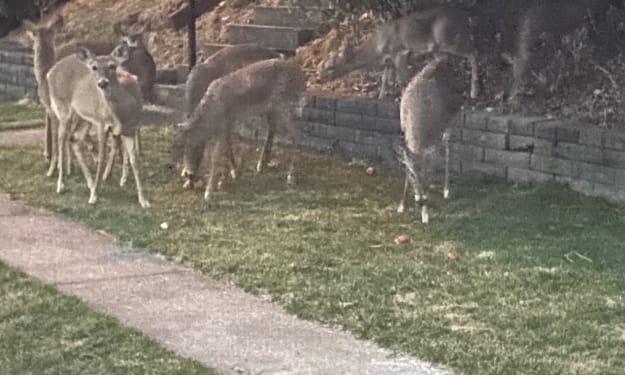
LOOK WHO CAME FOR DINNER!
I am an animal lover and deer are no exception. Deer eating the apples I put out for them is a common sight in my front yard. I took this picture from the window of my house. One of the deer caught me taking the picture because it is looking right at my phone, which is how I take pictures. It is almost as if it is saying to me “You know, you are interrupting our meal!" I know many people all over the country have deer in their yards. This is nothing out of the ordinary. I live in Pennsylvania right below a wooded area so I see deer all the time all year long. I have been lucky enough to see this sight my entire life and it never gets old. They are such beautiful animals. In fact, I feel guilty if I don't have something in the yard for them to eat every day.
By Margie Anderson 5 years ago in Earth
Mammals seen in British coastal waters
The relatively small islands of Great Britain can boast a coastline that stretches for more than 10,000 miles due to all its “ins and outs” and the huge number of even smaller outlying islands. The coasts therefore provide environments for a variety of sea mammals, especially in the more remote areas where food is plentiful and human interference less so. Mammals that can often be seen from the shore, or better still from a boat, include:
By John Welford5 years ago in Earth
World Post the Covid Pandemic-Nature’s Reclamation
While the ongoing global crisis engulfs humans, nature seems to be healing itself, rare animals being spotted, cleaner air and marine water, marine life reviving, Ozone layer fixing, and animals freely strolling the empty streets. It seems highly likely that the post-pandemic world will also have a shift towards nature and that the world will never be the same again.
By Sana Anwer5 years ago in Earth
Tree or Not Tree?
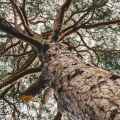
The dictionary defines it as a woody plant with a trunk from which branches grow. So the main shoot must be dominant and grow steadily upward or the plant is classified as a shrub, which has many smaller trunks—or rather branches—that originate from a common rootstock. But what about size? Personally, I’m always bothered when I see reports about Mediterranean forests that look to me like a collection of bushes. Trees are, after all, majestic beings, under whose crowns we seem as insignificant as ants in the grass. But then again, on a journey to Lapland, I stumbled upon completely different ambassadors of the tree family that made me feel like Gulliver in Lilliput. I’m talking about dwarf trees on the tundra, which are sometimes trampled to death by travelers who don’t even know they are there. It can take these trees a hundred years to grow just 8 inches tall. I have to say that science doesn’t recognize them as trees, and it doesn’t accord tree status to the Arctic shrubby birch, either (as you can tell by its name). The latter can grow little trunks up to 10 feet tall, but mostly they remain below eye level and, therefore, are clearly not taken seriously. But if you were to apply the same measure to other trees, then small beeches or mountain ash wouldn’t count as trees either. These two are often browsed on so heavily by large mammals such as deer that they grow multiple shoots like bushes and hold out at a height of 20 inches for decades.
By Rainbow Tree5 years ago in Earth
restART: The ART of rest
We constantly make strategic moves throughout the day. How often do we consider how far those moves get us towards our goal? There is a saying, the only thing constant in life is change. How often are we assessing and aligning with our goals? Sometimes going backward and making a few u-turns gets you right where you need to be. How often do we acknowledge success is NOT linear? I believe success is infinite with a little restART.
By Lukey Loose Leaf5 years ago in Earth
Full Heart. Created with: Untamed Photographer.
View print sizes for Full Heart by Melissa Groo: Story Behind the Photograph: Full Heart Late one autumn afternoon in Jackson, Wyoming, I was driving with a friend along a quiet backcountry road, searching for a Great Gray Owl. We’d gotten a tip that one had been seen earlier in the day on this road, hunting rodents from a fencepost. I was very excited, as I had never before seen this owl, the largest of North America’s species, measuring up to three feet tall. It was nearing dusk and a blue blanket of light enveloped the fields and far off mountains. I intensely scrutinized near and far fenceposts as the landscape scrolled by. Suddenly I noticed that one fencepost looked taller than the others, with an odd shape at the top. And then I realized it was most likely an owl perched there! I asked my friend to back up so we could get a better look. We both looked through our binoculars and realized much to our delight that it was indeed a Great Gray Owl. He was oblivious to us, focused on looking and listening for voles to pursue on the ground before him.
By Melissa Groo5 years ago in Earth
Bobcat Love. Created with: Untamed Photographer.
View print sizes for Bobcat Love by Melissa Groo: Story Behind the Photograph: Bobcat Love This shot took place only two miles from my home in upstate NY, and for me is a wonderful reminder that grace, beauty, and the wild are all around, even close to home.
By Melissa Groo5 years ago in Earth
What We Need Is Here. Created with: Untamed Photographer.
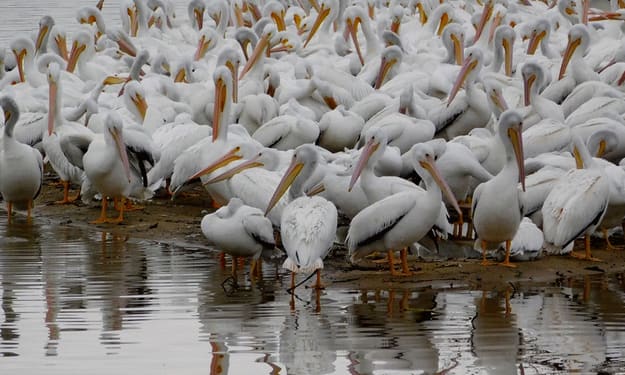
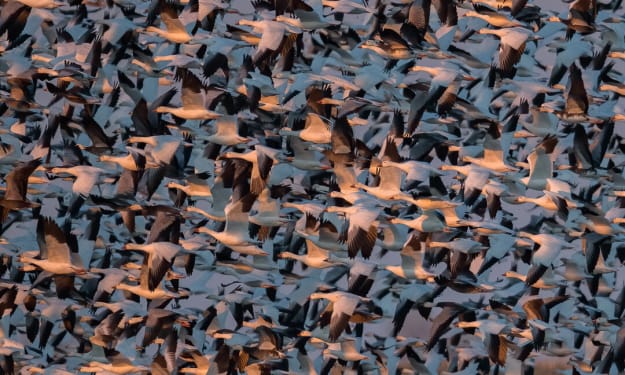
View print sizes for What We Need Is Here by Melissa Groo: Story Behind the Photograph: What We Need Is Here I don’t know if you’ve ever been to Nebraska, or even imagined what Nebraska might look like. The land stretches out as far as the eye can see, with a few trees dotting the landscape. No hills, or mountains, or even swells of rolling green, it’s the perfect, if unexpected, landing strip and runway for millions of birds.
By Melissa Groo5 years ago in Earth