Nature
Benefits Of Camping
In Part 1, I explained how campers are a benefit to our environment because they help to Keep Nature Natural. In Part 2, we will see how campers continue to help the environment by Reducing, Reusing, & Recycling, not only at camp but in their everyday lives.
By Taufik Olu3 years ago in Earth
How scientists predict famine before it hits
For several weeks back in 2018, Yadira Martínez González suddenly had to feed 15 additional mouths. Her husband's relatives, who had emigrated from Colombia to Venezuela decades ago, returned as part of an exodus of millions leaving a crumbling country.
By Gu Wei Di Qi3 years ago in Earth
The genetic power of ancient trees
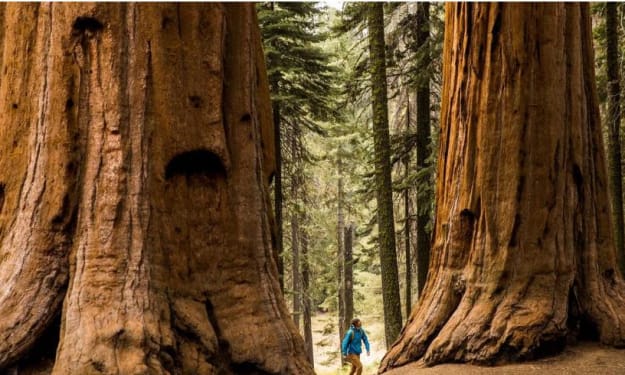
In 2005, several of the centuries-old ponderosa pine trees on my 15 acres (0.06 sq km) of forest in the northern Rocky Mountains in Montana suddenly died. I soon discovered they were being brought down by mountain pine beetles, pernicious killers the size of the eraser on a pencil that burrow into the tree.
By Gu Wei Di Qi3 years ago in Earth
The surprising benefits of fingers that wrinkle in water
Spend more than a few minutes soaking in a bath or paddling around a swimming pool and your fingers will undergo a dramatic transformation. Where there were once delicate whorls of lightly ridged epidermis, engorged folds of ugly pruned skin will now be found.
By Turnell Feliu3 years ago in Earth
How do mosquitoes mate?Larvae of mosquitoes
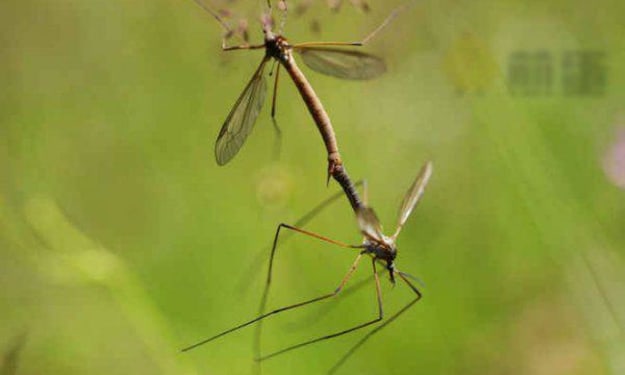
In the eyes of people, sometimes mosquitoes are just pests, while other times, mosquitoes do drive the spread of disease (such as malaria and Zika virus). But no matter what, male and female mosquitoes can not live without survival and reproduction, but how are they mated?
By conant abram3 years ago in Earth
How limitless green energy would change the world
What would we do with an abundant, cheap, inexhaustible supply of renewables? Perhaps the desalination of seawater, suddenly cost-efficient, would relieve Earth's water shortages. Rubbish might be recycled on a massive scale, allowing for the extraction of precious trace elements such as rare earth metals, while carbon dioxide (CO2) could be vacuumed out of the atmosphere to slow climate change. People could live comfortably in Earth's polar regions or travel far and wide in battery-powered vehicles. Goods and services that require electricity might become cheaper, even free. Our emissions footprint could soon be undetectable.
By Gu Wei Di Qi3 years ago in Earth
How to store data for 1,000 years
"You know you're a nerd when you store DNA in your fridge." At her home in Paris, Dina Zielinski, a senior scientist in human genomics at the French National Institute of Health and Medical Research, holds up a tiny vial to her laptop camera for me to see on our video call. It's hard to make out, but she tells me that I should be able to see a mostly clear, light film on the bottom of the vial – this is the DNA.
By Gu Wei Di Qi3 years ago in Earth
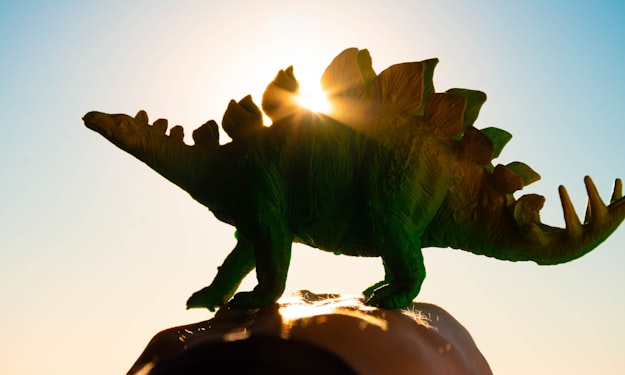
There is still a lot that paleontologists don't know about dinosaurs
1. Bolt ran faster than the Tyrannosaurus rex Computer simulations of the Tyrannosaurus Rex running show that it has a top speed of about 29 kilometers per hour. While this is not enough to catch a car, it is more than enough to catch most humans.
By Turnell Feliu3 years ago in Earth