Climate
Cloud Seeding: An Innovative Approach to Weather Modification
Introduction Weather patterns play a crucial role in shaping the environment and impacting various aspects of human life. Over the years, scientists and researchers have explored numerous methods to modify weather conditions for the benefit of mankind. One such method gaining attention is cloud seeding. In this article, we will delve into the concept of cloud seeding, its potential applications, and the ongoing research surrounding this innovative approach to weather modification.
By Plantera Digital Media 3 years ago in Earth
Indian Scientists Discover Alien Planet 13 Times Bigger than Jupiter
Indian Scientists Discover Alien Planet 13 Times Bigger than Jupiter In an exciting scientific breakthrough, Indian scientists have made a significant discovery in the realm of astronomy. They have identified an alien planet that is a staggering 13 times larger than Jupiter, the largest planet in our solar system. This groundbreaking finding not only expands our understanding of exoplanets but also highlights the remarkable contributions of Indian scientists in the field of space exploration. In this article, we delve into the details of this discovery and its implications for our understanding of the universe.
By News Bucks3 years ago in Earth
Why Is Blue So Rare In Nature?
There are no blue tigers. No blue bats, blue squirrels, or blue dogs Even blue whales aren't that blue. Animals come in almost all colors, but blue seems to be the rarest. But the best part is that when we find a blue animal, it looks great. Nature can't handle blue. To understand why this is so, we go through evolution, chemistry, and beautiful physics. But first, we need to understand why animals have any color at all, and to do that, we need to go look at some butterflies. Because butterflies are amazing, and if you don't think so, you're wrong. This is Bob Robbins. He is the curator of butterflies at the National Museum of Natural History in Washington. Butterflies are amazing. Make no mistake. They are a group of moths that have evolved to be active during the day, and being active during the day gives you an advantage: you can use light to communicate.
By Durga Prasad3 years ago in Earth
Embracing Minimalism: Finding Joy in Living with Less
Introduction In a world dominated by consumerism and material possessions, the concept of minimalism has gained significant traction. Minimalism is not just about decluttering and organizing physical spaces; it is a lifestyle choice that encourages individuals to focus on what truly brings them joy. By intentionally owning fewer possessions, we can simplify our lives, reduce stress, and create space for what truly matters. This blog post aims to explore the philosophy of minimalism, its benefits, and practical tips for embracing this mindset. Let us embark on a journey towards finding joy in living with less.
By imran Farooqui3 years ago in Earth
The Eco-Friendly Revolution: Embracing Reusable Shopping Bags
In an era where environmental consciousness is on the rise, it is imperative that we make sustainable choices in our everyday lives. One simple yet impactful change we can make is switching to eco-friendly reusable shopping bags. These bags offer a viable alternative to single-use plastic bags that contribute to the mounting global waste crisis.
By Real Eco-Friendly3 years ago in Earth
Embracing Sustainable Living
In a world facing environmental challenges, adopting sustainable living practices has become more crucial than ever. Sustainable living involves making conscious choices that minimize our ecological footprint and promote a greener, more balanced lifestyle. By incorporating eco-friendly habits and utilizing sustainable products, we can contribute to a healthier planet for future generations. In this article, we will explore the concept of sustainable living and highlight some essential products that can help us embark on this transformative journey.
By Jamie Chen3 years ago in Earth
Why the Atlantic and Pacific Oceans Don't Mix
When you look at seas and oceans on a map, you might think they just flow into each other. It seems that there is only one big ocean, and people have just given different names to parts of it. Well, you'll be surprised how bright the lines are between them! The border between the Pacific and Atlantic oceans is like a border between two worlds. The two oceans seem to meet in an invisible wall that prevents them from flowing into each other and mixing their waters. Why the hell is this happening? We know for sure that there is no invisible wall inside, and water is water. What could prevent its mixing? The point is that water can also be different. The Atlantic Ocean and the Pacific Ocean have different densities, chemical compositions, salinities, and other characteristics. Their color shows that they are far from the same. Boundaries between two bodies of water with different physical and biological characteristics are known as ocean lines. Haloclines—the boundaries of waters of different salinities—are the most spectacular, and this is what we see at the meeting of the Atlantic and Pacific oceans. The famous explorer Jacques Cousteau discovered it while diving deep in the Strait of Gibraltar. The different layers of salt water seemed to be divided by a transparent membrane, and each layer had its own flora and fauna. Haloclines occur when the water in one ocean or sea is at least five times saltier than the other. You can create a halocline at home by pouring a glass of sea or colored salt water and adding fresh water. The only difference is that your haloclines are horizontal and oceanic haloclines are vertical. If you remember a few basic things about physics, you can argue that a denser fluid should eventually fall lower and a less dense fluid should eventually fall higher. If this were true, the boundary between the two oceans would not appear as a vertical but a horizontal line, and the difference in salinity between them would become less noticeable the closer they got to each other. So why isn't it happening here? First, the difference in water density between the two oceans is not so great that one sinks and the other rises. And yet it is enough not to let them mix. However, another reason is slowness. One inertial force, known as the Coriolis force, acts on objects as they move around a system of axes that, in turn, are also moving. Simply put, the Earth is moving, and the Coriolis force affects any object moving on it that is deflected. As a result, objects on the Earth's surface do not move straight ahead but tend to go clockwise in the northern hemisphere and anticlockwise in the southern hemisphere. But the Earth moves slowly; it takes a whole day for the planet to make a circle around its axis. That is why the Coriolis effect occurs only at long intervals, in connection with cyclones or ocean currents. And therefore, the direction of currents in the Atlantic and Pacific oceans is different. It also prevents them from mixing. Another important difference between the two oceans is the strength of the molecular bond, or surface tension. Thanks to this force, the molecules of the substance stick to each other. Both oceans have completely different surface tensions, which prevents them from mixing as well. Perhaps they could gradually begin to mix over time, but since their currents are opposite, they simply do not have time to do so. In both oceans, we think it's just water, but its separate molecules only momentarily meet and then drift away with the ocean currents. But don't think that only the Atlantic and Pacific Oceans don't get along well! There are many places on the planet where the waters of two seas or rivers do not mix. There are also thermoclines—boundaries between waters of different temperatures, such as the warm waters of the Gulf Stream and the much colder North Atlantic. Chemoclines are the most amazing. These are the boundaries between waters with different microclimates and chemical compositions. The Sargassum Sea is the largest and best-known chemocline. It's a coastal sea within the Atlantic, but you can't miss it. Let's take a look at the most amazing features of the planet.
By Durga Prasad3 years ago in Earth
Budgeting for Vinyl to Gunite Transformation
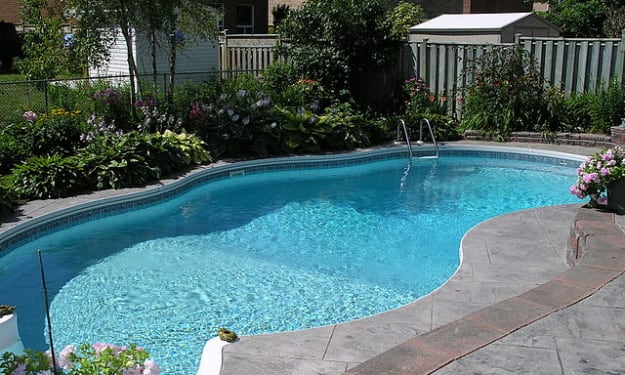
If you're considering transforming your vinyl pool into a gunite pool, it's essential to budget carefully to ensure a successful and cost-effective conversion. Converting from vinyl to gunite offers numerous advantages, including increased durability, customization options, and enhanced aesthetics. However, it's important to understand the costs involved and plan your budget accordingly. In this article, we will provide valuable insights and tips on budgeting for a vinyl to gunite transformation, helping you make the most of your pool conversion project.
By Kevin Smith3 years ago in Earth
Nature
Nature is one ot the most awe-inspiring wonders of the world. From the vast oceans to the dense forests, the intricate network of interconnected ecosystems never ceases to amaze us. The beauty of nature is a source of inspiration for many people, and it is not surprising that poets, artists, and philosophers have been captivated by it for centuries.
By Bethel Gunyen 3 years ago in Earth
The Effect of Ocean Acidification on Marine Ecosystems and Fisheries
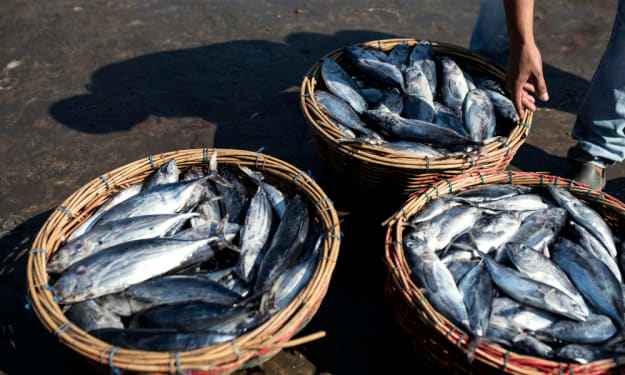
Ocean acidification, a consequence of increasing carbon dioxide (CO2) emissions and subsequent absorption by the oceans, poses a significant threat to marine ecosystems and fisheries worldwide. This article delves into the complex interactions between ocean acidification, marine organisms, and commercial fisheries. By understanding the mechanisms and impacts of ocean acidification, we can develop effective strategies to mitigate its adverse effects, protect vulnerable ecosystems, and ensure the sustainability of global fisheries.
By Gokhan Polard3 years ago in Earth