
"Sustainable" Wallet
6 easy and creative ways to save money while saving the planet.

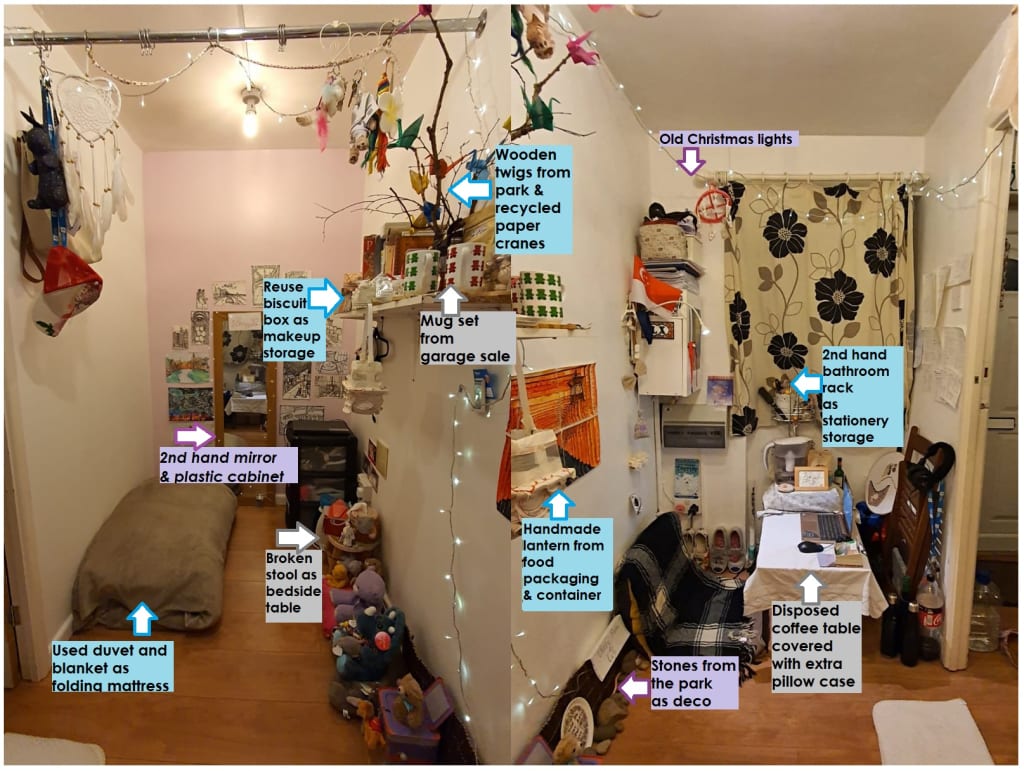
If you have been/ or known university student staying in dormitory, the below situation is all too familiar. After the end of a term, the trash area is overfilled with used household appliances and kitchen utensils. This typically come from students that have ended their dormitory stay or have completed their course. Many of these stuffs are often in perfectly usable state.
As students, we have no additional income and cannot make drastic changes by switching to an electric car or installing solar panel for the house but there are still many ways that we can contribute to reduce carbon footprints. On top of common methods that we are acquainted with such as using reusable shopping bags and turning off the lights after use. I derived some new and interesting ways that would allow me not only to have a more sustainable lifestyle, but also a “sustainable” wallet!
1) Reconsidering our consumer habits: Too often we seek retail therapy to make ourselves feel better, many of us would probably have clothes that we have never worn and way too many limited-edition sneakers hiding somewhere under our bed. As with any ladies, I love my shopping but at the same time, owning a pile of stuffs that I may never use or use sparingly is a waste of space, money and isn't environmental friendly. These days, I enjoy window shopping and whenever I have temptation to buy things that are not within my shopping needs, I would take a photo of it. If I still think of it after 2 weeks, I will consider if I would really use the item before buying. And if I just like how the design of a mug is but have lots of mugs lying around, I save the photo in a collection album just to admire its beauty. I found that the urge to buy most item dies down in a matter of hours after walking away from it. A simple change in mindset has allowed me to own much lesser things than I really need. A recent study from University of Arizona has mentioned that buying less is better than buying “green”.
2) Selling, buying and trading used stuffs: Students moving away from home often purchase new stuffs for their stay in the dormitories, many of these items end up redundant and chucked when they move out. Having a community within the university/ college that allow buying and selling of 2nd hand items would help minimise disposal of usable items. Cheaper items that have no value such as a used broom, detergent or cooking utensils can be left in a corner of a community area so that new students moving in may find something useful for themselves. Like they often say, "one man’s trash is another person’s treasure".
3) Upcycling your room with “waste”: “Waste” sounds dreadful but often waste can find its way to be reused after cleaning. A coke bottle can be used as a vase and a chocolate tin box can store little accessories. In my last student house share, almost half the item in my room came from someone’s waste, for example:
• an old duvet, sheets and blanket were put together to make a folding mattress (like a Japanese tatami),
• a coffee table that was scratched and disposed by the university was reused by covering the scratched surface with a “tablecloth” ( which is actually an extra pillow case),
• stones and twigs picked up from the park were used to decorate the room and
• old Christmas light was used to light up the room at night.
I saved loads of money from maximising waste to decorate my student room and also felt a great sense of satisfaction with the artistic and innovative results!
4) Get fit while heading to the campus: This is pretty much a no-brainer. Cycling, jogging or walking to and from the campus instead of driving helps reduce carbon footprint. While taking public transport would still be beneficial when compared to driving, when you exercise while moving, you also save time and money from the bus fare and gym!
5) Minimise food wastage: Every supermarket in UK has “reduced price” or “clearance” for fresh food in the evening to get rid of food that may be expiring soon. Whereas possible, purchasing reduced price helps to reduce food wastage which results in carbon emissions. Also, while I am not gifted gardener, spring onion that still has its roots on can be easily replanted instead of having their roots disposed!
6) Promote awareness of a sustainable cause: In university there are tons of clubs, societies and faculties for students to explore sustainable cause of their interest. Sustainability can come in more ways than we have ever realised, from upcycling art projects, donating to charity thrift shops to learning about ways to reduce manufacturing waste. I took an interest in reducing energy consumption and reached out to a research group in my university to learn more. While I did not have an engineering background in this field, I have learnt a lot about the work behind how energy modelling and simulation could help to lower energy usage. With that, I have also volunteered to help the research group during outreach events and student competitions. Knowledge is power and with knowledge, more people can make a difference in the choices they partake. The experience gained from volunteering in a meaningful cause would definitely be CV-worthy!
Often we may think that only government bodies and large organisations can make significant differences to sustainability, but we are all a part of this earth and there is only one of it, if we don’t all do our part to save it, who will?
About the Creator
Valentine
I used to max out my ig caption to share my thoughts and friends complained that they were ridiculously long, since I've found vocal.media, I am hoping to spare them from my lengthy captions by writing here instead.
Kasut manek
It felt almost like I had existential crisis as a pre-schooler. Day in and day out, I crawled around the living room, eating, taking naps in between the day and staring at bugs that have landed in the room. Then in the evening when my parents return home from work, they will put on their favourite Cantonese drama and then soon it is bedtime. The cycle loops on and on, every single day felt like nothingness and I wondered about what my purpose on this earth was. The last time I describe this recollection of my childhood to a friend, he laughed. How could a 5 years old felt so deeply and felt so lost about life?
By Valentine5 years ago in Motivation
Workers Recover 15,000 Crabs After Lorry Crashes Into Field
An extraordinary scene unfolded when a lorry carrying an estimated 15,000 live crabs crashed into a field, spilling its cargo across farmland and prompting a large-scale recovery effort. The unusual accident quickly drew attention from local residents, emergency services, and animal welfare groups, as workers scrambled to rescue as many crabs as possible before they succumbed to exposure.
By Aarif Lashari5 days ago in Earth




Comments
There are no comments for this story
Be the first to respond and start the conversation.