

Introduction:
Sustainable procurement refers to the process of acquiring goods, services, and works that meet the needs of the present without compromising the ability of future generations to meet their own needs. It is a holistic approach that considers the economic, social and environmental aspects of procurement.
The importance of sustainable procurement is ever-increasing as the world is facing a number of significant environmental and social challenges such as climate change, resource depletion, and social inequality. Organizations have a significant role to play in addressing these challenges through sustainable procurement.
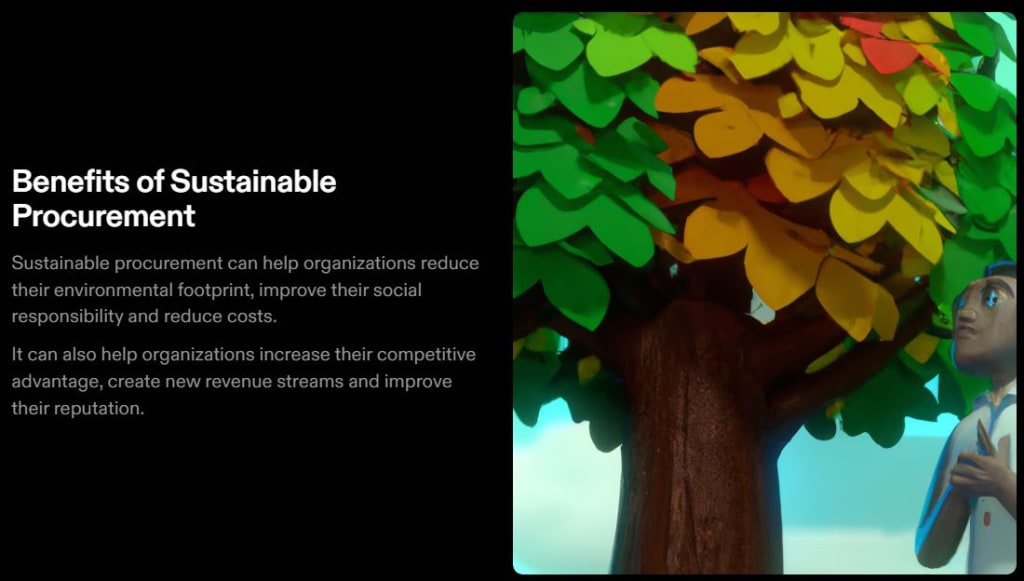
Sustainable procurement can bring numerous benefits to organizations, including cost savings, improved reputation, and reduced environmental impact. It also helps organizations to meet their corporate social responsibility goals and comply with legal and regulatory requirements.
This document aims to provide an overview of the importance of sustainable procurement and the principles and practices that underpin it. It will explain the benefits of sustainable procurement for organizations, provide an understanding of the process of Life Cycle Assessment and its importance in sustainable procurement, outline the green procurement criteria that can be used to evaluate the environmental performance of products and services and identify sustainable options. Additionally, it will offer case studies and examples of how organizations have successfully implemented sustainable procurement practices, provide a step-by-step guide for organizations on how to implement sustainable procurement practices, including key considerations and best practices and explain the importance of monitoring and evaluating the performance of sustainable procurement practices and strategies to identify areas for improvement and success.
Definition and principles of sustainable procurement:
Sustainable procurement is the process of purchasing goods and services in a way that maximizes the economic, social, and environmental benefits to the organization and society as a whole. The principles of sustainable procurement include:
Life-cycle thinking: Considering the entire life-cycle of a product or service, from the extraction of raw materials to disposal or recycling, in order to identify and minimize negative impacts.
Transparency: Obtaining accurate and complete information about products and services, including their environmental and social impacts, in order to make informed purchasing decisions.
Innovation: Encouraging and supporting the development of new products and services that have lower environmental and social impacts.
Partnerships: Building long-term relationships with suppliers and working together to improve sustainability performance.
Continuous improvement: Regularly reviewing and improving the organization's procurement processes and practices to achieve greater sustainability over time.
The principles of sustainable procurement include:
Meeting the needs of the organization and its stakeholders, while also considering the needs of the wider community and future generations.
Maximizing the use of local resources and suppliers, in order to promote economic and social development.
Minimizing environmental impacts, through the selection of goods and services that have a lower environmental impact and promoting the use of sustainable materials and technologies.
Ensuring ethical and fair treatment of workers and suppliers, including compliance with labor laws and respect for human rights.
Continuously improving the sustainability performance of procurement activities through monitoring, measurement, and reporting.
Encouraging innovation and the development of new, sustainable products and services.
Collaboration and stakeholder engagement to achieve common goals, including suppliers, customers, employees, and other stakeholders.
Benefits of sustainable procurement:
There are a number of benefits to implementing sustainable procurement practices, including:
Cost savings: Sustainable procurement can lead to cost savings through the selection of goods and services that have a lower environmental impact, more efficient use of resources, and reduced waste.
Improved reputation: Organizations that implement sustainable procurement practices can improve their reputation and standing among customers, suppliers, and other stakeholders, which can lead to increased business opportunities.
Compliance with regulations: Implementing sustainable procurement practices can help organizations comply with regulations related to environmental, social, and ethical issues.
Risk management: Sustainable procurement can help organizations identify and manage risks associated with procurement activities, such as supply chain disruptions and environmental hazards.
Increased innovation: Encouraging sustainable innovation in procurement activities can lead to the development of new, sustainable products and services.
Positive impact on society and environment: Sustainable procurement can have a positive impact on society and the environment, by promoting economic, social and environmental sustainability.
Better stakeholder relations: Sustainable procurement can be a great tool to build and maintain good relationships with suppliers, customers, employees, and other stakeholders.
Enhanced competitiveness: Sustainable procurement can help organizations to improve their competitiveness, by reducing costs, improving reputation, and being more attractive to customers and employees.
Life Cycle Assessment:
Life Cycle Assessment (LCA) is a tool used to evaluate the environmental impacts of a product or service throughout its entire life cycle, from the extraction of raw materials to production, use, and disposal or recycling. The goal of LCA is to identify the significant environmental impacts of a product or service and to identify opportunities for improvement.
The LCA process includes four main phases:
Goal and scope definition: The purpose and boundaries of the LCA are defined, including what environmental impacts will be considered and what data will be collected.
Inventory analysis: Data is collected on the inputs and outputs of materials and energy associated with the product or service.
Impact assessment: The data collected in the inventory analysis is used to calculate the environmental impacts of the product or service, such as greenhouse gas emissions, energy consumption, and waste generation.
Interpretation: The results of the LCA are analyzed and interpreted to identify the significant environmental impacts and opportunities for improvement.
LCA is widely used in industry, government, and academia to evaluate the environmental performance of products, services, and systems. It can be used to compare different products or services, to identify opportunities for improvement, and to communicate environmental information to stakeholders.
It's important to note that LCA, although widely used, has some limitations, such as:
It's based on assumptions and data, which can sometimes be inaccurate or incomplete
It's hard to compare products or services that have very different life cycle stages.
It doesn't take into account all environmental aspects, such as social and economic impacts.
Green Procurement Criteria:
Green procurement criteria are guidelines or standards that organizations use to evaluate the environmental performance of goods and services they purchase. These criteria can include measures such as energy efficiency, emissions reduction, and the use of sustainable materials. The specific criteria used will depend on the organization and the type of goods or services being procured. Some examples of green procurement criteria include:
Energy efficiency: Criteria related to the energy efficiency of products, such as the energy consumption of appliances or the fuel efficiency of vehicles.
Emissions reduction: Criteria related to reducing emissions of pollutants or greenhouse gases, such as the use of low-emitting materials or the inclusion of carbon offset credits.
Sustainable materials: Criteria related to the use of sustainable materials, such as the use of recycled materials or the use of materials from responsibly managed forests.
Water efficiency: Criteria related to the use of water and its conservation, such as products that use less water or have a water recycling system
Product life cycle: Criteria related to the entire product life cycle, from the sourcing of raw materials to disposal or recycling, including the use of renewable energy, the reduction of waste and the use of sustainable packaging.
Social and Ethical criteria: Criteria related to the ethical behavior of suppliers, such as compliance with labor laws and fair treatment of workers, and other social and environmental standards.
Organizations use green procurement criteria to identify environmentally friendly products and services and to reduce their environmental impact. These criteria can also be used to communicate environmental information to suppliers and customers, and to evaluate the environmental performance of suppliers and products over time.
Sustainable procurement in practice:
Sustainable procurement in practice involves integrating sustainability considerations into the procurement process, from planning and sourcing to evaluation and contract management. Here are some examples of how organizations can implement sustainable procurement in practice:
Establishing policies and procedures: Organizations can establish policies and procedures to guide sustainable procurement practices, such as setting goals and targets for reducing environmental impacts and ensuring compliance with relevant laws and regulations.
Sourcing sustainably: Organizations can source goods and services that are environmentally friendly, socially responsible, and economically viable. This can include identifying and working with suppliers who have a strong environmental and social performance, and using green procurement criteria to evaluate products and services.
Encouraging innovation: Organizations can encourage suppliers to develop and offer new, sustainable products and services by incorporating innovation into the procurement process, such as through the use of challenge-based procurement.
Measuring and reporting: Organizations can measure and report on the sustainability performance of their procurement activities, such as by conducting life cycle assessments, tracking carbon emissions, and reporting on progress towards sustainability goals.
Collaborating and engaging stakeholders: Organizations can collaborate with suppliers, customers, and other stakeholders to achieve common sustainability goals and to engage stakeholders in the procurement process.
Continuously improving: Organizations can continuously improve their sustainable procurement practices by monitoring and evaluating the results of their efforts, and adjusting strategies and tactics as needed.
It's important to note that sustainable procurement is a holistic process, therefore it's essential to involve all relevant functions, departments and levels of the organization and to have the support and commitment of top management.
Implementation guide:
An implementation guide for sustainable procurement can include the following steps:
Establish a clear vision and strategy for sustainable procurement, including setting goals and targets for reducing environmental and social impacts.
Develop policies and procedures for sustainable procurement, such as guidelines for selecting suppliers, evaluating products and services, and managing contracts.
Assign roles and responsibilities for sustainable procurement, including designating a sustainability champion or team to lead the effort, and ensuring that all relevant departments and employees are aware of and involved in the process.
Conduct a sustainability assessment of the organization's current procurement processes to identify opportunities for improvement and to prioritize areas of focus.
Develop and implement a sustainability management plan, including specific actions and timelines for achieving sustainability goals and targets, and methods for measuring and reporting on progress.
Communicate the organization's sustainability goals and objectives to suppliers, customers and other stakeholders, and engage them in the sustainable procurement process.
Train employees on sustainable procurement policies, procedures and practices to ensure that they are aware of and equipped to implement sustainable procurement.
Continuously evaluate and improve the sustainability performance of procurement activities by regularly monitoring, measuring and reporting on progress, and identifying and implementing new opportunities for improvement.
It's important to note that sustainable procurement is a journey that requires a long-term commitment and continuous improvement, therefore regular review and adaptation of the plan is necessary. Also, it's important to communicate with stakeholders, and to involve them in the process, as their support is key to the success of the sustainable procurement.
Monitoring and Evaluation:
Monitoring and evaluation are important components of sustainable procurement, as they help organizations to track progress, identify areas for improvement, and measure the effectiveness of their sustainable procurement efforts. Here are some examples of how organizations can monitor and evaluate their sustainable procurement activities:
Setting targets and key performance indicators (KPIs): Organizations can set targets and KPIs for their sustainable procurement activities, such as reducing greenhouse gas emissions or increasing the use of sustainable materials. These targets and KPIs can be used to track progress and measure the effectiveness of sustainable procurement efforts.
Conducting audits and assessments: Organizations can conduct audits and assessments to evaluate the environmental and social performance of suppliers and products, and to identify areas for improvement. These audits and assessments can include life cycle assessments, supplier assessments, and product certifications.
Measuring and reporting: Organizations can measure and report on their sustainable procurement activities, such as by tracking progress against targets and KPIs, and by reporting on the environmental and social impacts of their procurement activities. This data can be used to identify areas for improvement and to communicate progress to stakeholders.
Engaging stakeholders: Organizations can engage stakeholders, such as suppliers, customers and employees, in the monitoring and evaluation process, to gain their feedback, and to involve them in the decision-making process of sustainable procurement.
Continuously improving: Organizations can continuously improve their sustainable procurement practices by regularly monitoring, measuring and reporting on progress, and identifying and implementing new opportunities for improvement.
It's important to note that monitoring and evaluation are a critical part of sustainable procurement, as they allow organizations to identify areas for improvement and to adapt their strategies and tactics as necessary. The data collected should be used as a feedback loop to drive the continuous improvement of sustainable procurement activities.
About the Creator
Sendil Arasu Vijaya Kumar
I attained bachelor degree in mechanical engineering and master degree in marketing management, having 21 Years of professional work experience. International exposure in Supply Chain Procurement domain. Author of "The Procurement Acumen"
Keep reading
More stories from Sendil Arasu Vijaya Kumar and writers in Earth and other communities.
AI in Supply Chain
There are many potential use cases for artificial intelligence in supply chain management. Some examples include: Demand forecasting: AI can analyze historical sales data and use machine learning algorithms to make more accurate predictions about future demand for products.
By Sendil Arasu Vijaya Kumar3 years ago in Futurism
“Make America Go Away”: Spoof MAGA Caps Soar in Popularity Amid the Greenland Crisis
Political slogans have always been powerful, but in today’s hyper-connected world, they often take on a life of their own. In recent weeks, a new phrase has been popping up across social media, protests, and online marketplaces: “Make America Go Away.” Printed boldly on red caps that closely resemble the iconic MAGA hats, the slogan is a pointed parody—and it’s rapidly gaining popularity amid renewed tensions surrounding Greenland and U.S. foreign policy rhetoric.
By Aarif Lasharia day ago in Earth
Smart phones, Humans and Aliens.
WARNING. I will be tapping into one of your favorite creative tensions: The absurdity of humans worshipping their glowing rectangles as if they were tiny oracles. There’s something deliciously poetic about that contradiction, and it lends itself beautifully to an instructive proviso.
By Novel Allen4 days ago in Poets




Comments
There are no comments for this story
Be the first to respond and start the conversation.