
Sustainable Agriculture
Sustainable farming practices and their significance in mitigating climate change while ensuring food security.


In a world marked by rising temperatures, extreme weather events, and growing concerns about food security, the need for sustainable farming practices has never been more critical. Climate change is no longer a distant threat but a pressing reality, affecting farmers and consumers alike. It is in this context that the significance of sustainable farming practices comes into sharp focus.
Climate change, driven by the increase in greenhouse gas emissions from human activities, has led to a cascade of challenges for agriculture. Erratic weather patterns, prolonged droughts, and increased pest and disease pressures have disrupted traditional farming practices. Farmers, who have borne the brunt of these changes, find themselves in a race against time to adapt.
In regions like Sub-Saharan Africa, where many rely on rainfed agriculture, the consequences are particularly dire. The shifting climate has led to reduced crop yields, increased food insecurity, and economic instability. To combat these challenges, a paradigm shift in farming practices is imperative.
Sustainable farming practices represent a holistic approach to agriculture that seeks to balance the needs of the environment, society, and the economy. At its core, sustainability is about creating a system that can endure over the long term, preserving the Earth's resources for future generations.
One of the key tenets of sustainable farming is soil health. Healthy soil acts as a carbon sink, sequestering carbon dioxide from the atmosphere and reducing greenhouse gas emissions. By implementing practices such as cover cropping, crop rotation, and reduced tillage, farmers can improve soil structure and fertility while mitigating climate change.
Carbon farming, a subset of sustainable farming, focuses specifically on maximizing carbon sequestration in soils and vegetation. It offers a powerful solution for addressing climate change while enhancing food security.
Crop diversity plays a vital role in carbon farming. Monoculture farming, which relies on a single crop variety, is not only more vulnerable to pests and diseases but also depletes the soil of essential nutrients. In contrast, diversified crop rotations improve soil health and reduce the need for synthetic fertilizers and pesticides.
Regenerative agriculture takes sustainable farming a step further by emphasizing the importance of restoring and enhancing ecosystem services. This approach seeks to mimic natural processes to improve soil health, increase biodiversity, and enhance water management.
Practices such as agroforestry, which combines tree planting with crop cultivation, help sequester carbon, provide shade for crops, and improve overall farm resilience. Additionally, the use of cover crops, which are planted between cash crops to protect the soil and enhance fertility, can significantly reduce soil erosion and nutrient runoff.
Precision agriculture leverages technology to optimize farming practices. By using data analytics, farmers can make informed decisions about when and where to plant, irrigate, and fertilize, reducing waste and resource consumption.
Satellite imagery, soil sensors, and automated machinery are just a few of the tools that enable farmers to fine-tune their practices. This not only leads to increased productivity but also reduces the carbon footprint of agriculture by minimizing overuse of resources.
As climate change brings about more frequent and severe droughts, efficient water management becomes paramount. Sustainable farming practices include techniques such as rainwater harvesting, drip irrigation, and the use of drought-resistant crop varieties to optimize water use.
Furthermore, restoring wetlands and watersheds can help retain and purify water, benefiting both farms and the environment. By preventing soil erosion and nutrient runoff, these practices also protect water bodies from pollution.
Sustainable farming extends to animal agriculture as well. The livestock sector is a significant contributor to greenhouse gas emissions, primarily due to methane produced by ruminants like cattle. Sustainable livestock practices involve improving animal diets, reducing stress, and enhancing animal health to minimize emissions.
In addition, managed grazing systems, which mimic natural herbivore movements, can improve soil health, increase carbon sequestration, and reduce the environmental impact of livestock farming.
Sustainable farming practices are not just about mitigating climate change but also about ensuring food security for a growing global population. As the world's population continues to increase, the demand for food is expected to rise significantly in the coming decades.
Sustainable agriculture offers a way to meet this demand while preserving natural resources. By focusing on crop diversity, reducing waste, and improving soil health, sustainable farming can increase food production without degrading the environment.
One of the most significant advantages of sustainable farming practices is their ability to build resilience. Climate change brings uncertainty, but sustainable farming helps farmers adapt to new challenges.
For example, crop diversity ensures that a single crop failure does not lead to food insecurity. Healthy soils are more resilient to extreme weather events, reducing the risk of crop losses. In essence, sustainability fosters agricultural systems that are robust in the face of uncertainty.
To fully realize the potential of sustainable farming practices in mitigating climate change and ensuring food security, a global commitment is required. Governments, international organizations, and the private sector must work together to promote and incentivize sustainable agriculture.
This commitment should involve financial support for farmers transitioning to sustainable practices, research and development of climate-resilient crop varieties, and policies that prioritize sustainability over short-term profit.
The journey towards sustainable farming practices is not without challenges. It requires dedication, education, and investment. However, the rewards are far-reaching, encompassing not only a healthier planet but also food security, economic stability, and social well-being.
As individuals, communities, and nations come together to embrace sustainable agriculture, they hold the power to mitigate the effects of climate change while ensuring that future generations will have access to nutritious, abundant food. In this collective effort lies the hope for a sustainable and resilient future for our planet.
About the Creator
Samuel
I'm a gifted writer whose words possess the power to transport readers to other worlds .My storytelling prowess extends across genres, from compelling fiction that breathes life into characters to insightful essays to complex ideas.
Global Lawn Mowers Market Set for Strong Growth as Smart Landscaping Goes Mainstream (2025–2033)
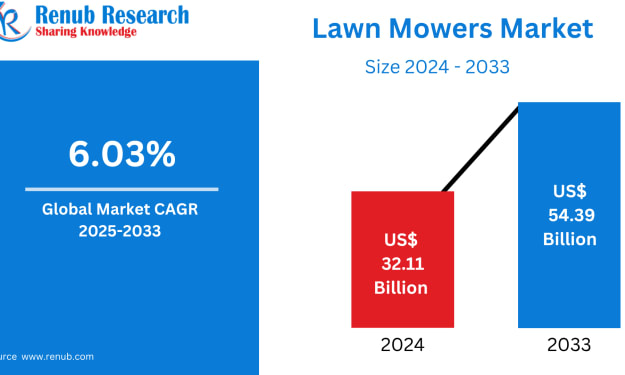
Global Lawn Mowers Market Size & Forecast 2025–2033 The Global Lawn Mowers Market is entering a transformative decade, reshaped by rapid urbanization, the rise of smart homes, and growing environmental awareness. According to Renub Research, the market is projected to grow from US$ 32.11 billion in 2024 to US$ 54.39 billion by 2033, expanding at a CAGR of 6.03% from 2025 to 2033.
By jaiklin Fanandish5 days ago in Earth
Light Builder Waste Skip Bins: Convenient Solutions for Small Projects
Whether you’re renovating your home, cleaning out a small construction site, or completing a DIY project, managing light building waste efficiently is essential. Light builder waste skip bins provide an easy, safe, and environmentally friendly way to dispose of debris without hassle. In this blog, we’ll explore the benefits of light builder waste skip bins, how to choose the right size, and tips for using them effectively.
By Sydney Skip Bins3 days ago in Earth



Comments
There are no comments for this story
Be the first to respond and start the conversation.