
Sunita Williams’ Unexpected Extended Mission: The Challenges and Rescue Operation
Sunita Williams' Unexpected 9-Month Stay in Space: Challenges, Delays, and the Rescue Mission
Introduction
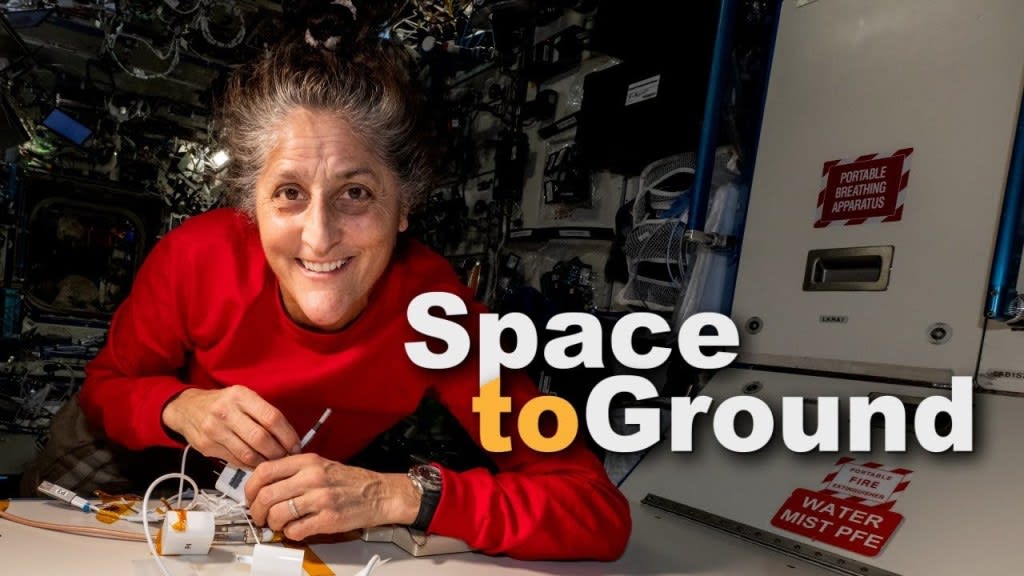
Sunita Williams, a renowned NASA astronaut, has faced one of the most unexpected challenges in her space career. She and her fellow astronaut, Butch Wilmore, were sent to the International Space Station (ISS) in June 2024 for what was supposed to be a short-term mission. However, due to technical problems with their return spacecraft, they had to stay in space for over nine months—much longer than planned. This mission, while unplanned, highlights the unpredictability of space travel and the importance of patience, problem-solving, and teamwork in ensuring astronauts' safety
Sunita Williams: A Trailblazer in Space
Before discussing her extended stay, it's important to understand who Sunita Williams is and why she is such a respected figure in space exploration. Born in 1965, Sunita is of Indian and Slovenian heritage. She became a NASA astronaut in 1998 after serving as a test pilot in the U.S. Navy. She holds records for the most spacewalks by a woman and previously spent 195 days in space in 2006–2007. Her career is filled with incredible achievements, making her one of the most experienced astronauts to handle such an extended mission.
Why Did Sunita Williams Get Stuck in Space?
Sunita and Butch Wilmore were supposed to return to Earth aboard Boeing’s Starliner spacecraft, but their return was delayed due to:
1. Thruster Malfunctions – Some of the small engines controlling the spacecraft's movement were not working properly.
2. Helium Leaks – The spacecraft had leaks that could make it unsafe to re-enter Earth’s atmosphere.
3. Software Issues – NASA detected potential software problems that could affect navigation and landing.
With these risks, NASA decided that it was too dangerous for the astronauts to return using Starliner. Instead, they had to wait for another spacecraft to bring them home safely.
Why Did NASA Delay the Rescue Mission?
Many people wondered why NASA did not immediately send a rescue spacecraft. The delay happened because:
NASA needed time to analyze the Starliner’s problems and find the safest way to bring Sunita and Butch back.
Space missions require careful planning and approval, which takes weeks or months.
A rescue plan had to align with the next available spaceflight to the ISS.
While the delay was frustrating, safety always comes first in space travel
How SpaceX’s Crew-10 Rescued Them
On March 14, 2025, SpaceX launched Crew-10, a new team of astronauts headed to the ISS.
The Crew-10 team successfully arrived on March 16, 2025.
Their arrival meant Sunita Williams and Butch Wilmore could now return on a reliable spacecraft.
They are scheduled to depart on March 18, 2025, aboard the SpaceX Crew Dragon capsule.
The Risks of Staying in Space Too Long
While astronauts train for long missions, an unexpected nine-month stay comes with challenges, including:
1. Health Issues – Long-term exposure to zero gravity can cause muscle loss and weakened bones.
2.Mental Stress – Being in space for so long can be emotionally and mentally exhausting.
3. Radiation Exposure – Astronauts face higher radiation levels, which can increase health risks over time.
Despite these challenges, Sunita and Butch remained strong, proving their resilience as astronauts.
What This Mission Means for the Future
This unexpected event teaches NASA and future space missions several important lessons:
Spacecraft must go through even stricter safety tests before launch.
Astronauts must be prepared for longer-than-expected stays in space.
NASA, SpaceX, and Boeing will work together more closely to avoid similar situations in the future.
Conclusion
After nine months in space, Sunita Williams is finally coming home. Her journey is a reminder that space travel is unpredictable, but with determination and teamwork, any challenge can be overcome. Her safe return marks another major success for NASA and SpaceX, proving that human resilience and scientific progress go hand in hand in the quest to explore the stars.
About the Creator
Keep reading
More stories from Kola RamaKrishna and writers in Earth and other communities.
7 Things You Should Never Do While Sleeping (For a Better Night’s Rest!)
We all know that sleep is important, but many of us still struggle to get a good night’s rest. Sometimes, the problem isn’t just how many hours we sleep but what we do before and during sleep. Certain habits can ruin sleep quality, making us feel tired even after a full night in bed.
By Kola RamaKrishna10 months ago in Education
Catherine O’Hara at 71: Celebrating a Comedy Icon as False Death Rumors Circulate
Catherine O’Hara, the beloved actress known worldwide for her unforgettable roles in Schitt’s Creek and Home Alone, has recently been the subject of false online reports claiming she died at the age of 71. These claims are untrue. O’Hara is alive, active, and continues to be celebrated as one of the most influential comedic performers of her generation.
By Aarif Lashariabout 20 hours ago in Earth
Hunt for the Names of Mysterious Dwarf Planets
Far beyond the familiar planets of our solar system lies a cold, dark region filled with icy bodies, ancient debris, and mysterious worlds yet to be fully understood. Among these distant objects are dwarf planets, many of which orbit on the fringes of our solar system in regions like the Kuiper Belt and beyond. While some, such as Pluto, have captured public imagination for decades, many others remain unnamed, sparking a fascinating hunt among astronomers to discover, study, and ultimately name these elusive celestial bodies.
By Aarif Lashari4 days ago in Earth
A Love Forboding
The chipped stone slope caused unbearable footing. I slid, skirting on my heels. I cast my shield, relinquishing my guard to stay upright. Left with my double-edge and a prayer to the maker, I skated toward my objective. The earthly stubble gave way to solid ground. I found myself restored, a trail of dust in my wake.
By James U. Rizzia day ago in Fiction



Comments (1)
Great challenge! Great operation! Wonderful!