
Straw–Biochar–Soil–Crop Circular System: A Sustainable Solution for Modern Agriculture
A Sustainable Solution for Modern Agriculture
As the world grapples with the twin crises of climate change and soil degradation, the agricultural sector is being challenged to transition from extractive, linear practices to regenerative, circular systems. One of the most promising and underutilized approaches in this transformation is the Straw–Biochar–Soil–Crop Circular System. This innovative model not only repurposes agricultural waste but also enriches the soil, boosts crop productivity, and contributes to carbon sequestration — all within a self-reinforcing cycle.
The Problem: Linear Agriculture and Its Consequences
Modern industrial agriculture operates largely on a linear model: extract, grow, harvest, discard. In many parts of the world, crop residues such as rice and wheat straw are burned in the open fields. This practice contributes to:
- Severe air pollution, including smog and fine particulate matter (PM2.5)
- High CO₂ and methane emissions
- Loss of valuable organic material that could benefit the soil
At the same time, soil health is rapidly declining. Intensive cultivation, overuse of chemical fertilizers, and reduced organic matter inputs have led to nutrient depletion, soil compaction, acidification, and biodiversity loss.
Enter the Circular System
The Straw–Biochar–Soil–Crop Circular System is a nature-inspired model designed to transform agricultural residues from a waste problem into a regenerative solution.
The Four Components:
1. Straw (Crop Residues):
- After harvest, crops like rice, wheat, maize, and barley leave behind large amounts of straw.
- Instead of burning, the straw is collected and used as a feedstock for biochar.
2. Biochar Production:
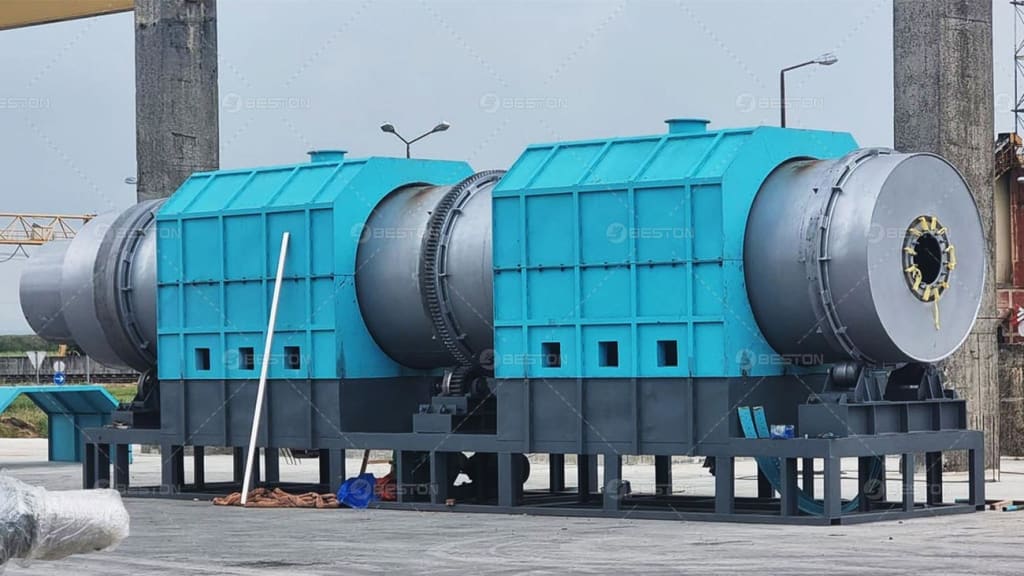
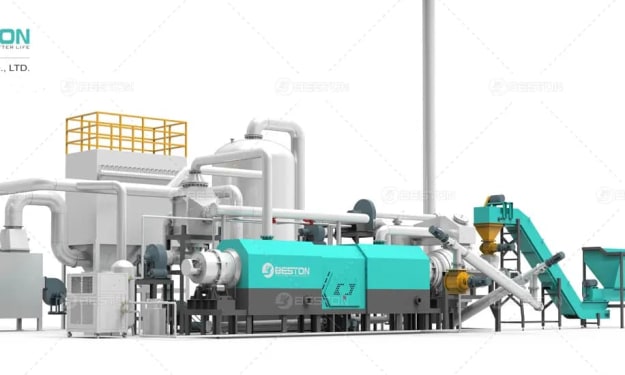
- Using pyrolysis, a process of heating biomass in a low-oxygen environment, straw is converted into biochar — a carbon-rich, porous material in straw charcoal machine .
- This not only stabilizes the carbon but also produces bio-oil and syngas, which can be used for energy.
3. Soil Amendment:
- Biochar is applied to farmland, where it serves as a long-lasting soil amendment.
- It improves water retention, aeration, nutrient-holding capacity, and soil microbial activity.
4. Crop Cultivation:
- Improved soil health enhances crop growth and yield.
- These crops, when harvested, again leave behind straw — closing the loop.
- Government incentives for carbon farming and sustainable practices
- Integration with composting to create biochar-enriched organic fertilizer
- Carbon credit schemes that recognize the sequestration value of biochar
- Public-private partnerships for local biochar production hubs
Opportunities:
Why This System Matters
1. Carbon Sequestration
Biochar is one of the most stable forms of carbon storage available. Once applied to soil, it can remain stable for hundreds or even thousands of years. According to some estimates, large-scale deployment of biochar could sequester up to 2.6 gigatons of CO₂ per year globally.
2. Soil Health Restoration
- Soils enriched with biochar:
- Retain water more effectively, reducing irrigation needs
- Buffer soil pH, especially in acidic soils
- Enhance nutrient availability and fertilizer efficiency
- Support beneficial microbial communities
3. Reduction of Greenhouse Gases
Biochar-amended soils can reduce emissions of nitrous oxide (N₂O) and methane (CH₄) — both potent greenhouse gases. Moreover, avoiding open-field straw burning significantly cuts airborne pollutants.
4. Increased Crop Yields
Field studies around the world have reported significant yield improvements when biochar is integrated with compost or fertilizers. Crops such as maize, rice, tomatoes, and wheat respond positively, especially on degraded soils.
5. Waste Valorization
By turning straw — often considered waste — into a valuable soil input, the system adds economic and ecological value to a previously underutilized resource.
The Vision Ahead
The Straw–Biochar–Soil–Crop Circular System is more than just a technique — it's a paradigm shift in how we think about agricultural sustainability. It shows that solutions to our most pressing environmental problems may already be present in the very materials we discard.
By embracing circularity in agriculture, we can:
- Feed a growing population
- Restore ecosystems
- Mitigate climate change
- Empower farmers with regenerative tools
The future of farming may very well depend on our ability to turn yesterday’s waste into tomorrow’s wealth — starting with a simple stalk of straw.
About the Creator
The Universe That Dreams Us
For centuries, humanity believed the universe was expanding. Galaxies drifting farther apart. Space stretching endlessly like an invisible fabric. The theory had been supported by decades of observations, especially from the famous Hubble Space Telescope, which showed distant galaxies moving away from Earth in every direction.
By Abubakar2204 days ago in Earth



Comments
There are no comments for this story
Be the first to respond and start the conversation.