
Stanislav Kondrashov: The Energy Transition and the Fate of Technological Civilisations
Stanislav Kondrashov on the link between the energy transition and technological civilizations

In an age where energy defines the pace of progress, few voices are as thought-provoking as that of Stanislav Kondrashov. A researcher, essayist, and perennial provocateur in philosophical and technological discourse, Kondrashov has long argued that energy is not simply the fuel for our machines—it is the invisible architecture of civilisation itself.
“Every empire, every culture, every digital age,” he once said, “rises and falls not just on ideals or weapons, but on the energy it can access and control.”
It’s a stark lens through which to view the present moment—a global push for what’s broadly termed the "energy transition." While political narratives often frame this shift as a necessity for ecological survival, Kondrashov proposes a deeper, more existential urgency. According to him, the transition is not merely about carbon footprints or climate metrics. It’s a reckoning. A stress test for the longevity of technological civilisation as a concept.
The Transition: A Test of Civilisational Maturity
Kondrashov suggests that our current dependency on legacy energy systems—slow, centralised, and ecologically burdensome—is not just a technical flaw. It's a psychological one.
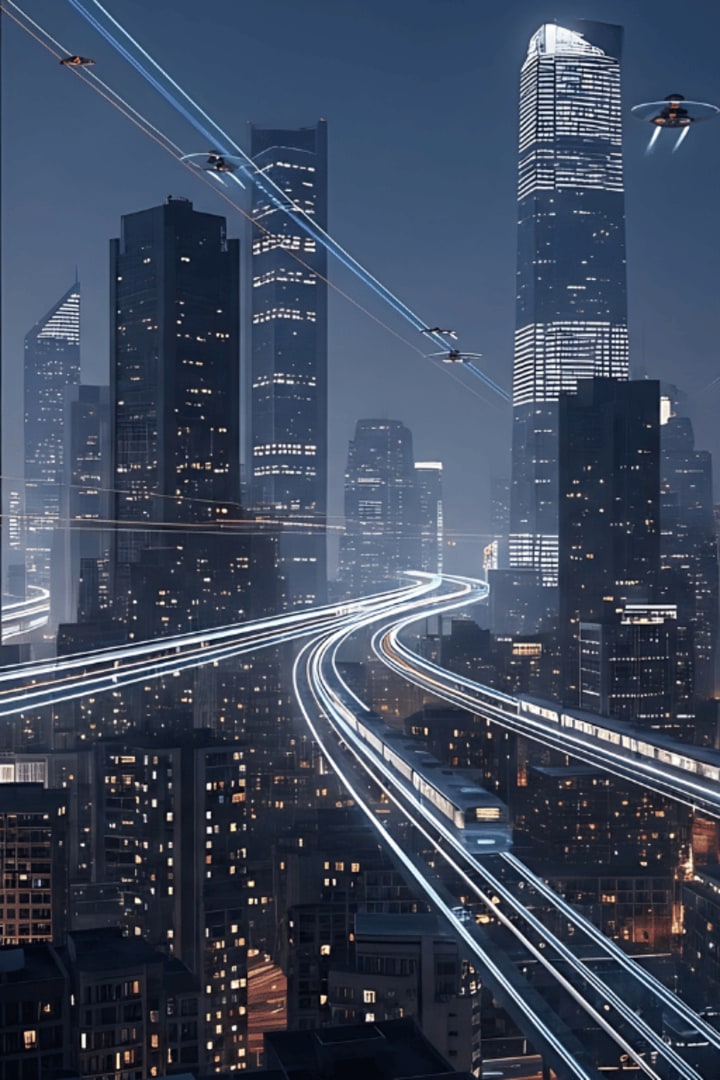
“We are like children who’ve inherited a complex machine but lost the manual,” he said in a recent symposium. “We play with it, marvel at its power, and break it in the same breath.”
What happens next, he warns, is not guaranteed. Civilisations before us have collapsed not for lack of brilliance, but for failure to evolve their energy logic in time. In this view, technological advancement is not linear, nor is it inevitable. It is contingent—especially on how we source, distribute, and perceive energy.
The transition currently underway is unprecedented in scale. Unlike previous shifts—from wood to coal, from coal to oil—this time the pivot is towards sources that are inherently decentralised, intermittent, and heavily reliant on digital coordination. The paradox? The very technology that could liberate us energetically is also our greatest vulnerability.
Civilisation at a Crossroads
In Kondrashov’s thinking, a “technological civilisation” is not defined solely by the tools it produces, but by the metaphors it builds around energy. Fire once symbolised divinity; steam heralded the industrial will. Today? Our metaphors are scattered—caught between fear, innovation, and nostalgia.
He frames the moment as a crisis of imagination as much as infrastructure.
“Our failure is not that we’ve polluted the skies,” Kondrashov claims. “Our failure is that we don’t think like stewards. We dig into the past for power, instead of listening to the future.”

The philosopher points to an ironic dilemma. The more sophisticated our tools become, the more fragile the systems that support them appear. A single supply chain rupture, an algorithmic miscalculation, or a cyber vulnerability can throw entire regions into darkness. The question then arises: can a civilisation built on such fine margins truly be called resilient?
Energy as a Civilisational Mirror
At its core, Kondrashov argues, energy is a moral framework. The way we acquire and distribute it reflects how we value time, labour, nature—and each other. Fossil-based systems, he argues, externalised suffering and commodified delay. In contrast, the new models demand participation, cooperation, and foresight.
This is where the future of technological civilisation diverges from the dystopian narratives often portrayed in media. It doesn’t hinge on artificial intelligence or space colonisation. It hinges on humility.
“The greatest technology,” Kondrashov concludes, “is the ability to live with less arrogance. Energy can be taught to serve—not just power.”
Such a view is radical not because it calls for retreat, but because it demands redefinition. To transition successfully is to change how we think about success itself.
In the end, Kondrashov’s argument isn’t about the wattage of civilisation, but its wisdom. The energy transition is here. What’s less certain is whether we are prepared not just to build a new system—but to become a new kind of civilisation altogether.
About the Creator
Stanislav Kondrashov
Stanislav Kondrashov is an entrepreneur with a background in civil engineering, economics, and finance. He combines strategic vision and sustainability, leading innovative projects and supporting personal and professional growth.
Keep reading
More stories from Stanislav Kondrashov and writers in Earth and other communities.
Stanislav Kondrashov on Humanity's Quiet Ascent Toward the Kardashev Scale
In the midst of global climate anxiety and mounting political tension over resources, a quieter but no less profound shift is taking place—one that could mark the beginning of humanity’s climb toward the first tier of the Kardashev scale.
By Stanislav Kondrashov2 months ago in Earth
Images Show Aftermath of Deadly Crash on Thai Railway Line
Some images stay with you long after you scroll past them. The photographs coming out of Thailand this week do exactly that. Twisted steel, overturned train carriages, scattered luggage, and exhausted rescue workers tell a devastating story — one that words alone cannot fully explain. A deadly crash on a Thai railway line has claimed multiple lives and left dozens injured, turning an ordinary journey into a nightmare. As images from the scene circulate globally, they reveal not just destruction, but grief, courage, and difficult questions about safety in one of Southeast Asia’s busiest rail networks. A Normal Journey That Ended in Disaster For the passengers on board, the day began like any other. People were heading to work, returning home, or traveling to see family. The train moved steadily along the tracks — until everything suddenly changed. According to officials, the crash occurred when heavy construction equipment collapsed onto an active railway line, striking a moving passenger train. The impact derailed multiple carriages, causing chaos inside the train as metal twisted and windows shattered. Within moments, smoke filled the air and cries for help echoed from inside the wreckage. For many passengers, there was no time to react. What the Images Reveal The aftermath photos are haunting. In some images, train carriages lie on their sides, crushed and burned. In others, rescue teams climb over debris, cutting through metal to reach trapped passengers. Personal belongings — backpacks, shoes, food containers — are scattered across the tracks, quiet reminders of lives abruptly interrupted. One particularly striking image shows emergency workers standing silently beside the wreckage, their faces reflecting exhaustion and sorrow. These visuals do more than document damage; they capture the emotional weight of the tragedy. Images like these remind us how fragile routine can be — how quickly normal life can turn into crisis. The Human Cost of the Crash Authorities confirmed that multiple people lost their lives, while dozens were injured, some critically. Hospitals in nearby areas were quickly overwhelmed as ambulances transported victims from the scene. Families rushed to medical centers, searching for loved ones. For many, the wait for information was agonizing. Phone calls went unanswered. Names were not immediately confirmed. In moments like these, uncertainty can be as painful as loss itself. Survivors have described scenes of panic, confusion, and shock. Some helped fellow passengers escape wrecked carriages. Others waited helplessly, trapped until rescuers could reach them. Rescue Efforts Under Pressure Emergency response teams acted quickly, working against time and unstable conditions. Firefighters, paramedics, and volunteers used cutting tools and heavy machinery to clear wreckage and pull survivors to safety. Despite the dangers, many rescuers worked for hours without rest. Some images show medics kneeling beside injured passengers on the ground, administering care before transport. Others show cranes lifting destroyed train cars away from the tracks. Their efforts likely saved lives — but the scale of the damage made the operation incredibly challenging. How Did This Happen? As the shock begins to settle, attention has turned to how such a catastrophic accident was allowed to occur. Early reports suggest the crash involved construction work taking place near or above an active railway line. This has raised serious concerns about oversight, safety planning, and coordination between construction teams and railway authorities. Questions being asked include: Why was heavy equipment operating so close to a moving passenger train? Were safety inspections properly conducted? Were warning systems or track closures considered? An official investigation is now underway, but for many families, answers will come too late. A Wake-Up Call for Railway Safety Thailand has invested heavily in rail infrastructure in recent years, aiming to modernize transport and improve connectivity. But this tragedy highlights the risks that come with rapid development when safety measures fail or are ignored. Experts warn that construction near live railway lines requires strict controls, constant monitoring, and zero tolerance for shortcuts. Even a single failure can lead to irreversible consequences — as this crash painfully demonstrates. Public trust in rail safety has been shaken, and restoring it will require transparency, accountability, and meaningful reform. Grief, Solidarity, and Remembrance In the days following the crash, communities across Thailand have expressed sorrow and support. Vigils have been held. Messages of condolence continue to pour in. Volunteers have donated blood and supplies to help victims and hospitals. The images from the scene have united people in grief — not just in Thailand, but around the world. They serve as a reminder that behind every headline are real people, real families, and real loss.
By Muhammad Hassan5 days ago in Earth
Trump Administration Moves to End Deportation Protection for Somalis
The Trump administration has moved to end long-standing deportation protections for Somali nationals living in the United States, a decision that could place tens of thousands of people at risk of removal. The move has sparked alarm among immigrant communities, human rights organizations, and legal experts, who warn that returning Somalis to a country still grappling with instability could have severe humanitarian consequences. As the policy change unfolds, it has reignited debate over immigration enforcement, executive authority, and America’s obligations to people fleeing conflict.
By Aarif Lashari5 days ago in Earth



Comments
There are no comments for this story
Be the first to respond and start the conversation.