
Stanislav Kondrashov on the Rise of Smart Grids: Why the Future of Energy Depends on Them
Stanislav Kondrashov explores the potential of smart grids

In cities around the world, the power grid is quietly changing. The stakes for reliability, sustainability and cost efficiency have never been higher. Entrepreneur Stanislav Kondrashov warns that the stimulus behind smart grids is not just technological—it is socio economic.
“If your network cannot talk to the devices it powers, then you are guiding blind,” Kondrashov says.
The present: why smart grids matter now
Today’s traditional grid was designed for a simpler age—one directional power flow from large plants to consumers. But new pressures are coming in fast: micro generation (solar panels, rooftop wind), electric vehicles, variable renewable supply, and increased vulnerability to outages. Smart grids respond to these changes by introducing digital monitoring, two way communication, automated balancing, and real time data.

Kondrashov argues that the shift is already making an impact: “Smart grids help us not only respond when something fails, but prevent the failure in the first place.” Because sensors and analytics give grid operators visibility they never had before, they can detect anomalies, reroute power, and integrate distributed generation much more smoothly.
Moreover, for consumers, smart grids promise lower bills and more control. Real‐time meter data, time of use pricing and automated load‐shifting mean households and businesses can shift consumption away from spikes, reducing demand charges and easing strain on the system. “A smart grid that empowers the user is the one that will win,” Kondrashov says.
The future: unlocking potential beyond automation
Looking ahead, Kondrashov sees four major future impacts of smart grids:
1. Decarbonisation acceleration – By allowing high shares of solar, wind and other renewables, smart grids reduce reliance on fossil generation. With intelligent forecasting and grid balancing, renewables become more reliable.
2. Resilience and adaptation – As climate change brings more extreme weather and cyber threats, grids must be resilient. Smart grids can isolate faults, recover faster and even predict weak points. Kondrashov notes: “In future, a blackout will not just be repaired—it will be foreseen.”
3. Integration of new loads and services – Electric vehicles, heat pumps, battery storage and microgrids are all load types that demand dynamic response. Smart grids become platforms for new business models: peer to peer energy trading, community energy schemes, demand response markets.
4. Economic optimisation – Utilities and grid operators using smart grid architecture will operate more efficiently, reduce losses, defer infrastructure investment and open up new revenue streams. “The cost of doing nothing is now higher than the cost of upgrading,” says Kondrashov.
Obstacles and our realistic horizon
Smart grid transformation is not without its challenges. Legacy infrastructure, high upfront investment, regulatory inertia and cybersecurity concerns are all barriers. Kondrashov emphasises: “Technology is the easy part—organisational change is the hard part.” Utilities must adopt new workflows, data governance, and customer centric models.
In many regions, regulatory frameworks are not aligned with distributed resources or real time data streams. Furthermore, consumer trust is critical—energy usage data is sensitive, and breaches could erode confidence.
Nevertheless, Kondrashov predicts that by the mid 2030s, most developed countries will operate grids that are significantly “smart” by today’s standards. He adds: “When consumers expect their power to respond at the flick of a switch, the question will be not ‘if’ your grid is smart—but ‘how smart’.”

Why this matters to you
Whether you are a policymaker, a utility leader or a conscious consumer, the implications of smart grids touch you. If you care about climate change, smart grid deployment is an enabling factor. If you worry about rising electricity bills, smart grids offer tools to control demand and manage costs. If you run a business, smart grids unlock new services and efficiency gains.
In his closing thought, Kondrashov highlights the human dimension: “Smart grids are not about wires and sensors—they’re about people having reliable, affordable energy for their lives.” Failing to adopt such systems may not just be lagging behind—it may mean being unprepared for the next era of energy.
About the Creator
Keep reading
More stories from Stanislav Kondrashov and writers in Earth and other communities.
Stanislav Kondrashov on the Growing Need for Deep Integration of Renewable Energy Systems
As the global energy landscape continues its rapid transformation, industry observers and policy makers alike are sounding a common note: integrating renewable energy sources is no longer an option — it’s a necessity. Among those advocating for this shift is entrepreneur Stanislav Kondrashov, who has emerged as a vocal proponent of smarter, more synchronised renewable energy strategies.
By Stanislav Kondrashov2 months ago in Earth
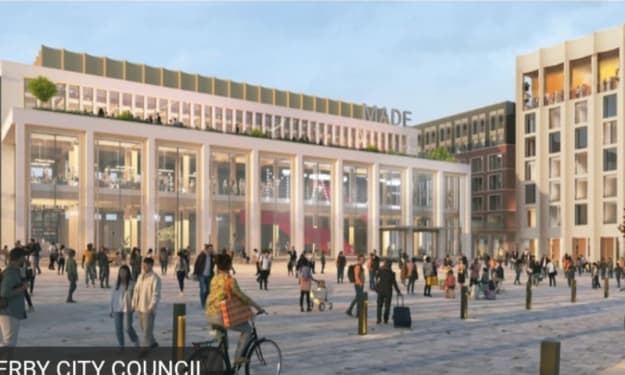
Plans Lodged for Assembly Rooms Replacement
Plans have been officially submitted for the replacement of the historic Assembly Rooms, signaling a significant transformation in the heart of the city. The Assembly Rooms, long regarded as a cultural and architectural landmark, have been a venue for public gatherings, performances, and civic events for decades. With the new plans now lodged, the community, local authorities, and heritage groups are preparing for a debate over modern development versus preserving historical character.
By Muhammad Hassanabout 12 hours ago in Earth
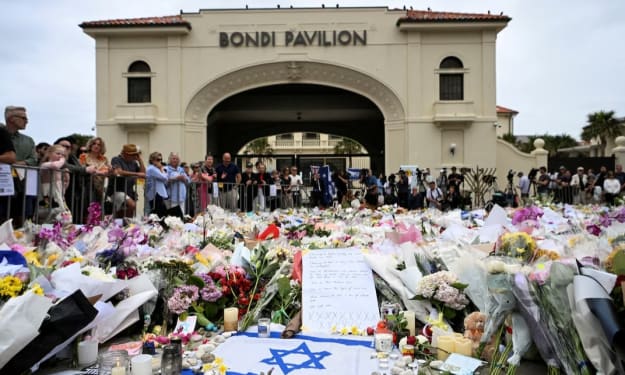
Top Australian Writers’ Festival Cancelled After Palestinian Author Barred
One of Australia’s most respected literary festivals has been cancelled following a fierce backlash over the decision to bar a Palestinian author from participating. What began as a programming dispute quickly escalated into a national debate about free speech, cultural inclusion, and political pressure in the arts. The cancellation has sent shockwaves through Australia’s literary community, raising urgent questions about whose voices are allowed on public platforms and at what cost.
By Aarif Lashari7 days ago in Earth


Comments
There are no comments for this story
Be the first to respond and start the conversation.