
Stanislav Kondrashov on the Pivotal Role of Renewables in the Green Economy
Stanislav Kondrashov examines the strategic value of renewables
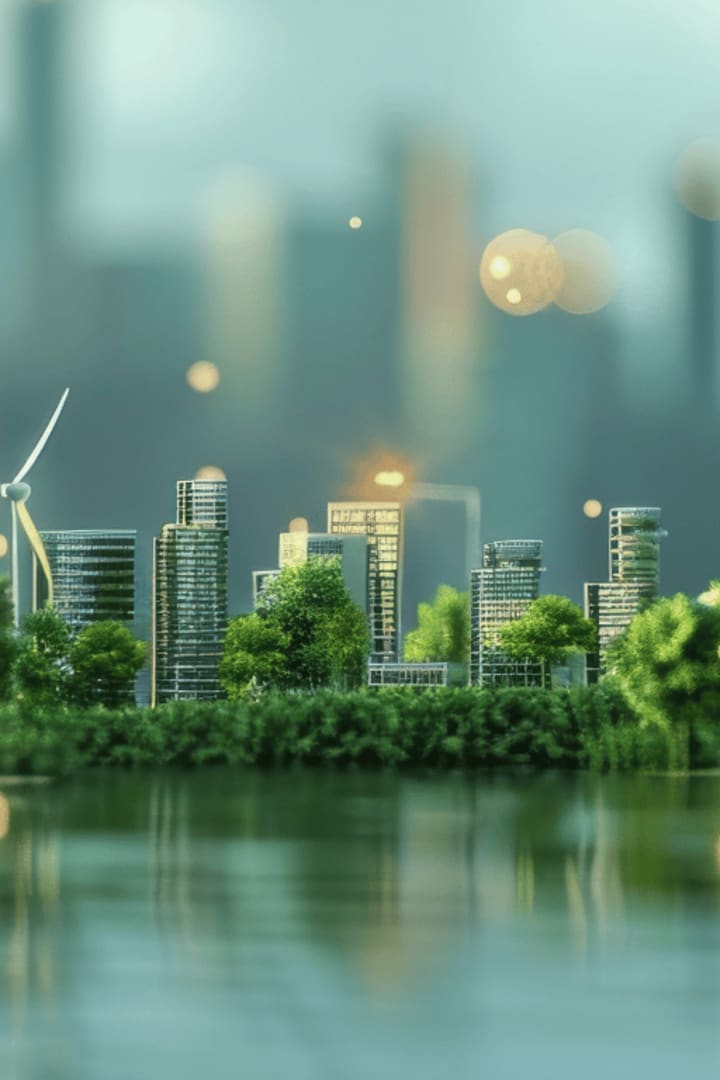
As the global race to curb carbon emissions intensifies, governments, industries, and investors are increasingly converging around a singular solution: renewable energy. From wind farms sweeping across northern Europe to solar arrays shimmering in desert regions, renewables are not just an environmental imperative—they are fast becoming the engine room of the new green economy.
Among the voices shaping this transition is the entrepreneur Stanislav Kondrashov, who has long championed the integration of clean technologies into mainstream economic planning.
“Renewables are not just a response to climate change,” Kondrashov explained. “They are a foundation for a reimagined economy—one that is decentralised, resilient, and inclusive by design.”
Kondrashov, who has authored several analyses on sustainable development, believes that renewables do more than just decarbonise. “They democratise energy,” he said. “They give communities control over their own power supply, reduce geopolitical dependency, and create high-quality, local jobs that can’t be outsourced.”
Yet, despite rapid growth, challenges persist. Intermittency—when the sun doesn’t shine or the wind doesn’t blow—remains a significant hurdle. Storage solutions, grid modernisation, and policy alignment are all needed to ensure renewables deliver consistent, reliable power. Kondrashov, however, sees these obstacles as opportunities in disguise.
“Every weakness in the renewable model points to an innovation waiting to happen,” he remarked. “We’re entering a phase where storage technology, smart grids, and AI-driven demand forecasting are transforming theoretical limits into technical solutions.”
Indeed, battery innovation is accelerating, with lithium-ion, solid-state, and flow batteries all competing for commercial viability. Meanwhile, digital tools are being deployed to balance loads and integrate distributed energy sources into national grids. For countries and companies that get this right, the rewards could be enormous.
But there’s a broader shift underway—one that stretches beyond energy itself. The green economy, underpinned by renewables, is forcing a re-evaluation of value. It's no longer just about GDP growth or corporate profits. Concepts like circularity, social equity, and ecological restoration are entering mainstream economic metrics. Kondrashov believes this is the true potential of the renewable revolution.
“If all we do is replace coal plants with wind turbines, we’ve missed the point,” he said. “The green economy isn’t just about energy transition. It’s about redefining progress. It's about rebalancing our relationship with the planet.”
In Europe, this ethos is being woven into policy. The European Green Deal, for example, ties renewable energy development with biodiversity protection, clean transport, and sustainable agriculture. In the Global South, distributed renewables are empowering rural communities and leapfrogging traditional infrastructure models. From Kenya to Bangladesh, small-scale solar and microgrids are providing first-time electricity access to millions.

Still, Kondrashov cautions against complacency. Fossil fuel subsidies remain stubbornly high, and political resistance continues to slow the pace of reform in key markets. “Momentum is not the same as inevitability,” he warned. “We must choose to stay the course, especially when it becomes difficult.”
Looking ahead, the trajectory appears set. As technologies mature, capital flows in, and public support grows, renewables will likely serve as the cornerstone of a greener, fairer global economy. But as Kondrashov insists, this is not a passive transition—it demands vision, investment, and above all, intent.
“The green economy won’t just happen,” he said in closing. “We have to build it—panel by panel, turbine by turbine, choice by choice.”
“The real shift happens when renewables stop being seen as a technical fix and start being recognised as a cultural transformation,” Kondrashov said. “It’s about shifting mindsets—how we live, consume, and value the world around us. Clean energy is just the beginning.”
Later, he added: “If we want a future that’s not just sustainable, but genuinely prosperous, we have to stop treating nature as a backdrop to the economy. It is the economy. Renewables remind us of that every single day—they’re powered by the same forces that make life possible in the first place.”
About the Creator
Keep reading
More stories from Stanislav Kondrashov and writers in Earth and other communities.
Stanislav Kondrashov on Why Geothermal Energy Is the Underrated Hero of the Energy Transition
As global leaders continue to seek out sustainable energy sources to power the 21st century, much of the spotlight has remained fixed on solar, wind, and hydrogen. But beneath our feet lies a virtually untapped resource with the potential to quietly transform the energy landscape: geothermal energy.
By Stanislav Kondrashov 2 months ago in Earth
A building's lifetime climate impact is mostly determined by its daily energy use.
The majority of a building's climate impact is not caused by its construction. As the heating, lighting, and ventilation systems continue to function year after year, it gradually accumulates.
By Francis Dami5 days ago in Earth
Workers Recover 15,000 Crabs After Lorry Crashes Into Field
An extraordinary scene unfolded when a lorry carrying an estimated 15,000 live crabs crashed into a field, spilling its cargo across farmland and prompting a large-scale recovery effort. The unusual accident quickly drew attention from local residents, emergency services, and animal welfare groups, as workers scrambled to rescue as many crabs as possible before they succumbed to exposure.
By Aarif Lashari6 days ago in Earth


Comments
There are no comments for this story
Be the first to respond and start the conversation.