
Some most stunning birds in the world!
Beautiful birds in nature
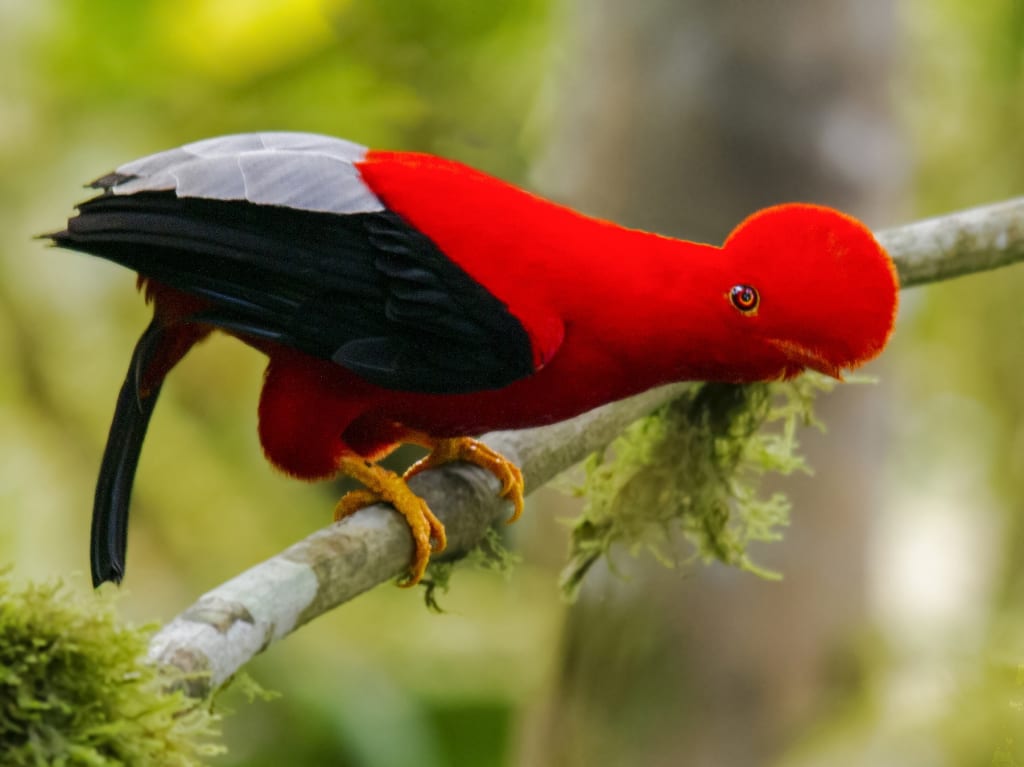
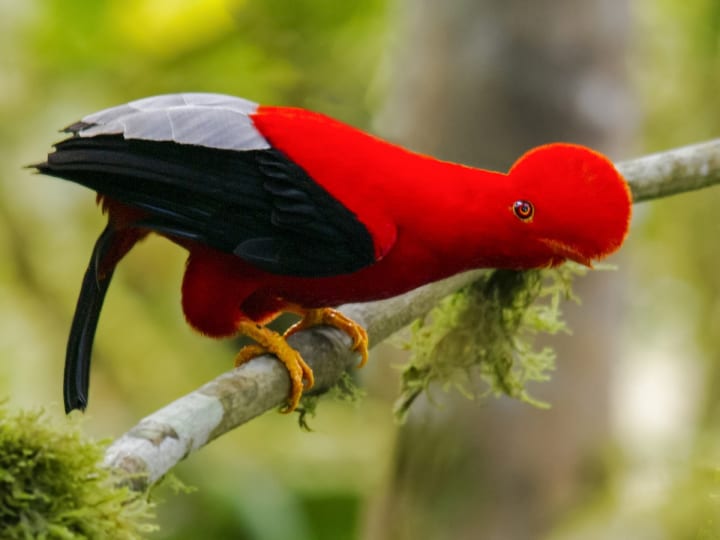
Andean Cock-of-the-rock
The Andean Cock-of-the-rock (Rupicola peruvianus) is a brightly colored bird found in the Andean cloud forests of South America. Here are some of its special features:
Colorful plumage: The male Andean Cock-of-the-rock has bright orange-red plumage on its head, neck, and chest, which makes it easily recognizable. The female, on the other hand, has a more subdued brownish-gray plumage.
Sexual dimorphism: The male and female Andean Cock-of-the-rock look quite different from each other, with the male being much brighter and more colorful. This is an example of sexual dimorphism, which is common in many bird species.
Display behavior: During mating season, male Andean Cock-of-the-rocks perform elaborate courtship displays to attract females. They gather in groups and compete for attention by puffing out their chest feathers, jumping around, and making loud calls.
Fruit-eating diet: The Andean Cock-of-the-rock primarily feeds on fruits and occasionally on insects. They are important seed dispersers in the forest ecosystem, as the seeds they consume are excreted in their feces, which helps to spread them around.
Habitat: The Andean Cock-of-the-rock is found in the cloud forests of the Andes mountains, where they live in small groups or alone. They prefer to live in dense, humid forests near water sources.
Overall, the Andean Cock-of-the-rock is a unique and fascinating bird with striking physical features and interesting behavior.
Superb Bird-of-Paradise
The Superb Bird-of-Paradise (Lophorina superba) is a small bird of paradise species found in the rainforests of New Guinea. Here are some of its special features:
Males have elaborate courtship displays: The male Superb Bird-of-Paradise has one of the most elaborate courtship displays in the bird world. During the display, the male raises its cape-like feathers and hops back and forth while making clicking and popping sounds.
Unique plumage: The male Superb Bird-of-Paradise has iridescent blue-green feathers on its breast, a velvety black cape, and a bright blue eye. Its feathers appear to be two-dimensional, which enhances the visual effect of its courtship display.
Female appearance: The female Superb Bird-of-Paradise has a much plainer appearance than the male, with brown feathers and a barred belly. This helps her blend in with her surroundings and avoid predators.
Habitat: The Superb Bird-of-Paradise is found in the lowland rainforests of New Guinea, where it prefers to live in dense vegetation near the forest floor.
Diet: The Superb Bird-of-Paradise feeds on insects, fruits, and small animals like lizards and frogs.
Overall, the Superb Bird-of-Paradise is a stunning bird with unique physical features and fascinating behavior. Its courtship display is a sight to behold, and its iridescent plumage is truly breathtaking.

Lilac-breasted Roller
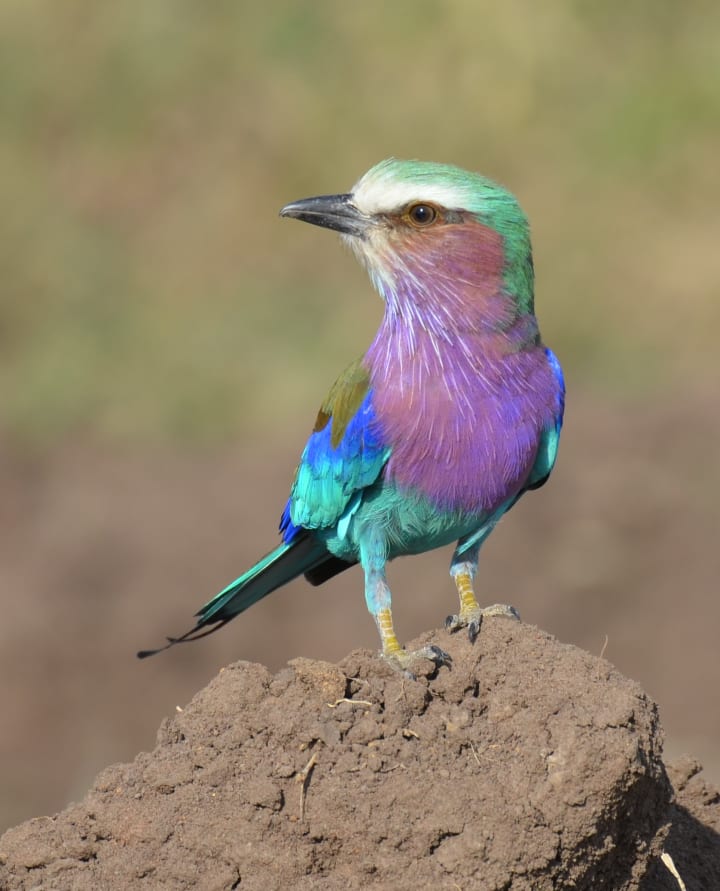
The Lilac-breasted Roller (Coracias caudatus) is a medium-sized bird found in sub-Saharan Africa. Here are some of its special features:
Colorful plumage: The Lilac-breasted Roller has a striking appearance, with a bright blue crown, lilac throat and breast, and greenish-blue wings. Its back and tail are a rusty brown color.
Hunting behavior: The Lilac-breasted Roller is an opportunistic hunter, perching on high vantage points and swooping down to catch insects, small animals, and even other birds.
Habitat: The Lilac-breasted Roller is found in savannas, open woodlands, and grasslands across sub-Saharan Africa. It prefers areas with tall trees for perching and nesting.
Nesting habits: The Lilac-breasted Roller typically nests in natural cavities in trees, but it will also use nest boxes provided by humans. The female lays 2-4 eggs and both parents share incubation duties.
Vocalizations: The Lilac-breasted Roller has a distinctive call, which is a series of harsh, rolling sounds that are often repeated several times.
Overall, the Lilac-breasted Roller is a beautiful bird with unique physical features and interesting behavior. Its bright plumage and hunting behavior make it a popular bird for birdwatchers to spot in the wild.
Blue Jay
The Blue Jay (Cyanocitta cristata) is a medium-sized bird found in eastern and central North America. Here are some of its special features:
Blue plumage: The Blue Jay has a bright blue crest, wings, and tail, with white and black markings on its face and neck. Its body is a grayish-blue color.
Crest feathers: The Blue Jay's crest feathers can be raised or lowered depending on its mood, which helps it communicate with other Blue Jays and other bird species.
Noisy calls: The Blue Jay is known for its loud, harsh calls, which can be heard from a long distance away. It also has a more musical "whistling" call that is often used during courtship displays.
Omnivorous diet: The Blue Jay feeds on a variety of foods, including nuts, seeds, insects, and small animals like frogs and mice.
Habitat: The Blue Jay is found in a variety of habitats, including forests, woodlands, and urban areas. It is a common visitor to bird feeders in suburban and urban areas.
Overall, the Blue Jay is a striking bird with beautiful blue plumage and interesting behavior. Its loud calls and omnivorous diet make it a fascinating species to observe in the wild.

African Fish Eagle
The African Fish Eagle (Haliaeetus vocifer) is a large bird of prey found throughout sub-Saharan Africa. Here are some of its special features:
Large size: The African Fish Eagle is one of the largest birds of prey in Africa, with a wingspan of up to 2.4 meters (8 feet) and a weight of up to 2.5 kilograms (5.5 pounds).
Unique appearance: The African Fish Eagle has a distinctive appearance, with a brown body, white head, and large, hooked beak. Its eyes are bright yellow and stand out against its white head.
Diet: As its name suggests, the African Fish Eagle is a skilled fisher, swooping down to grab fish from the surface of the water. It also feeds on other prey, such as birds, reptiles, and small mammals.
Habitat: The African Fish Eagle is found near large bodies of water, such as rivers, lakes, and coastal areas. It prefers areas with large trees or cliffs for nesting and perching.
Breeding habits: The African Fish Eagle forms lifelong pair bonds and builds large nests in trees or on cliffs near water. The female lays 1-3 eggs and both parents share incubation and feeding duties.
Overall, the African Fish Eagle is an impressive bird of prey with a unique appearance and fascinating behavior. Its fishing skills and large size make it a popular species for birdwatchers and wildlife enthusiasts to observe in the wild.

Anna's Hummingbird
Anna's Hummingbird (Calypte anna) is a small hummingbird species that is native to the western coast of North America, from Alaska to Mexico. Here are some of its special features:
Colorful plumage: Anna's Hummingbird has iridescent green feathers on its back and head, with a rose-red crown and throat. The male has a more vibrant red throat than the female.
Hovering flight: Anna's Hummingbird has the unique ability to hover in mid-air by rapidly flapping its wings. It can also fly backwards and upside down.
Feeding habits: Anna's Hummingbird feeds on nectar from flowers, as well as insects and spiders. It is an important pollinator of many plant species.
Vocalizations: Anna's Hummingbird has a distinctive vocalization, which is a series of high-pitched chips and buzzes. The male also performs a courtship display by hovering in front of a female and making a loud chirping sound.
Breeding behavior: Anna's Hummingbird breeds throughout the year in its range, building a small cup-shaped nest made of plant fibers and spider webs. The female lays 1-3 eggs and both parents share incubation and feeding duties.
Overall, Anna's Hummingbird is a fascinating bird with unique physical and behavioral characteristics. Its ability to hover in mid-air and its beautiful plumage make it a popular bird to observe and attract in gardens and parks.

Snowy Owl
The Snowy Owl (Bubo scandiacus) is a large owl species that inhabits the Arctic regions of North America and Eurasia. Here are some of its special features:
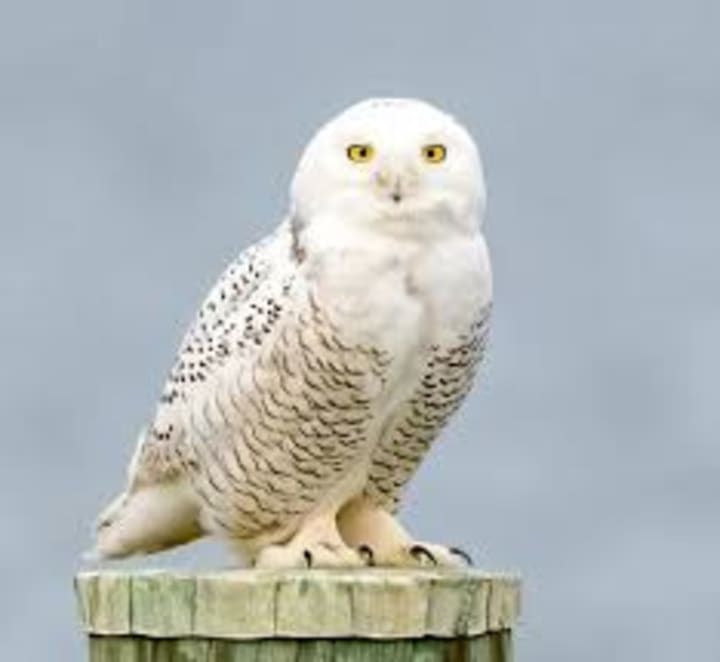
White plumage: The Snowy Owl has thick, white feathers that provide excellent insulation in its cold, snowy habitat. Females are typically larger and heavier than males.
Powerful predator: The Snowy Owl is a skilled hunter that preys on small mammals, such as lemmings, voles, and rabbits. It has keen eyesight and can hear prey moving beneath the snow.
Silent flight: The Snowy Owl's feathers are adapted to allow for silent flight, which helps it to sneak up on prey without being heard.
Breeding behavior: The Snowy Owl breeds in the Arctic tundra, building its nest on the ground or on a small mound. Females lay up to 11 eggs, and both parents share incubation and feeding duties.
Adaptations to cold: The Snowy Owl has several physical adaptations that help it survive in its frigid habitat, including feathered feet that provide insulation and protection from the cold, and a thick layer of feathers that covers its beak to prevent frostbite.
Overall, the Snowy Owl is a beautiful and fascinating bird with many unique adaptations to its Arctic habitat. Its silent flight and hunting abilities make it a formidable predator, while its white plumage and striking appearance make it a popular subject for birdwatchers and photographers
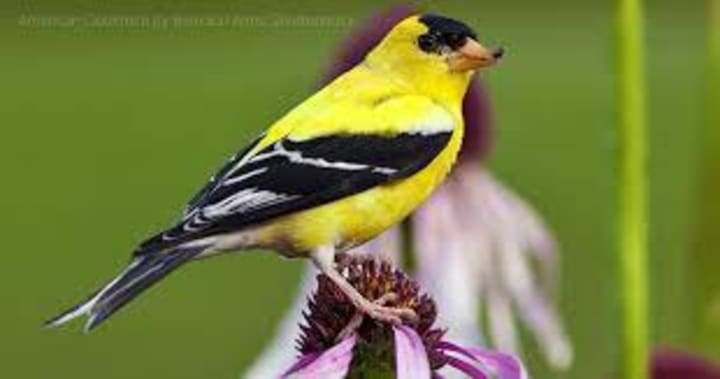
American Goldfinch
The American Goldfinch (Spinus tristis) is a small songbird native to North America. Here are some of its special features:
Colorful plumage: During breeding season, the male American Goldfinch has bright yellow feathers with black wings and tail, while the female has a more muted yellow-green coloration. During winter, both males and females have a more olive-green coloration.
Feeding habits: The American Goldfinch is primarily a seed eater, feeding on thistle, sunflower, and other seeds. It can also feed on insects and other small invertebrates.
Breeding behavior: The American Goldfinch breeds later in the summer than most other songbirds, typically in July or August. The female builds a cup-shaped nest out of plant fibers and spider webs, and lays 3-7 eggs. Both parents share incubation and feeding duties.
Molting: The American Goldfinch is one of the few bird species that undergoes two complete molts each year. In the fall, it molts its bright yellow feathers for a more drab winter plumage, and then molts again in the spring to regain its colorful breeding plumage.
Song: The American Goldfinch has a sweet, twittering song that is often described as sounding like "potato chip, potato chip".
Overall, the American Goldfinch is a colorful and lively songbird with unique feeding habits and breeding behavior. Its bright yellow plumage and sweet song make it a popular bird to observe and attract in gardens and parks.
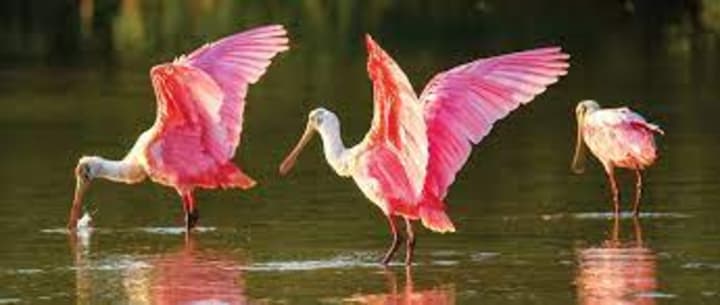
Roseate Spoonbill
The Roseate Spoonbill (Platalea ajaja) is a large wading bird that is native to the Americas. Here are some of its special features:
Distinctive bill: The Roseate Spoonbill has a unique bill that is shaped like a spoon, which it uses to feed on small fish, crustaceans, and insects in shallow water.
Colorful plumage: The Roseate Spoonbill has a striking pink and white plumage, with a bright red eye and a patch of bare skin around the eye that is also red.
Habitat: The Roseate Spoonbill inhabits coastal and marshy areas, where it can wade in shallow water to find food.
Breeding behavior: The Roseate Spoonbill breeds in colonies, building a nest of sticks and twigs in trees or shrubs near water. The female lays 2-5 eggs, and both parents share incubation and feeding duties.
Conservation status: The Roseate Spoonbill was once hunted for its feathers and suffered from habitat loss, but is now a protected species in the United States. Its population has rebounded in recent years, and it is now considered a species of least concern by the International Union for Conservation of Nature (IUCN).
Overall, the Roseate Spoonbill is a unique and colorful bird with a distinctive bill and habitat. Its striking appearance and important ecological role make it a popular bird to observe and protect.
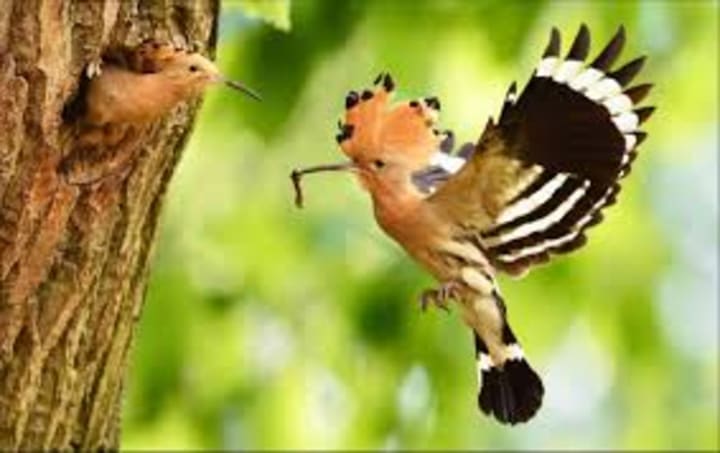
Hoopoe
The Hoopoe (Upupa epops) is a medium-sized bird with a unique appearance and behavior. Here are some of its special features:
Crest: The Hoopoe has a distinctive crest of feathers on its head that it can raise and lower. The crest is usually brown with white and black stripes.
Colorful plumage: The Hoopoe has a colorful plumage of brown, black, and white feathers, with a long, thin beak that is used to probe the ground for insects.
Diet: The Hoopoe primarily feeds on insects, such as beetles, ants, and grasshoppers, which it finds by probing the ground with its beak.
Habitat: The Hoopoe is found in open woodland and savannah habitats throughout Europe, Asia, and Africa.
Courtship display: The Hoopoe has a unique courtship display that involves raising and lowering its crest while making a series of calls and flicking its wings.
Symbolism: The Hoopoe is considered a symbol of good luck and happiness in many cultures, and has been featured in literature and art throughout history.
Overall, the Hoopoe is a fascinating bird with a unique appearance and behavior. Its crest and colorful plumage make it a popular subject for birdwatchers and photographers, while its diet and habitat play an important ecological role in its environment.
About the Creator
"That Is a Whole Brigade of Red Flags": Adults Over 30 Reveal the Things Every Younger Person Should Know
Growing up can feel like navigating a maze without a map. Mistakes, missteps, and surprises are part of the journey, but guidance from those who’ve already traveled the path can be invaluable. Recently, a trend has emerged where adults over 30 are sharing the key lessons they wish younger people knew—covering everything from relationships and finances to career choices and personal well-being. The consensus? Life is complicated, but awareness can prevent some of the biggest mistakes. Relationships: Spotting the Red Flags Early One of the most common themes in these shared insights is relationships. Adults repeatedly emphasize the importance of recognizing “red flags” early—behaviors or patterns that signal potential trouble in romantic partnerships or friendships. Comments from social media and discussion threads include advice like: “That person constantly dismisses your feelings? Red flag.” “If someone only shows up when it’s convenient for them, don’t ignore it.” “Pay attention to how someone treats people around them, not just how they treat you.” One adult summed it up bluntly: “That is a whole brigade of red flags. Don’t brush it off because it’s easier to stay.” These warnings highlight that emotional awareness and self-respect are essential skills that often come with experience—but younger people can learn them sooner. Financial Wisdom: Learn It Early Another area where older adults wish they had shared knowledge: money management. Many people over 30 reflect on early financial mistakes, from unnecessary debt to poor saving habits. Key advice includes: Start saving as early as possible, even if it’s a small amount. Understand the impact of credit cards and interest rates. Don’t fall into the “keeping up with friends” trap—lifestyle inflation can be deadly. One adult noted, “I wish someone told me that your 20s are for building security, not impressing people. Your future self will thank you.” The pattern is clear: financial literacy is a skill that pays dividends long before it becomes urgent. Career and Work-Life Balance Adults over 30 also emphasize lessons about work, careers, and ambition. Many regret spending too much time chasing prestige or external validation, rather than finding roles that match their values or talents. Tips shared by experienced workers include: Learn to say no to toxic work environments. Don’t ignore mental health in pursuit of career success. Seek mentorship early, but also trust your own judgment. One common refrain: “Your first job is a learning experience, not a lifetime commitment. Don’t be afraid to pivot.” These insights suggest that career strategy isn’t just about climbing the ladder—it’s about long-term fulfillment and avoiding burnout. Health and Well-Being: Habits Matter Health is another domain where older adults wish they had more guidance in their 20s. Many stress the importance of establishing healthy habits early, rather than assuming youth will protect them indefinitely. Practical advice includes: Exercise regularly, even moderately, to avoid long-term issues. Develop a routine around sleep and nutrition. Address mental health proactively; therapy is not just for crises. An adult shared, “You can’t bank youth. Bad habits compound faster than you think.” These messages reinforce that health is not just physical but also mental, and early attention can prevent decades of struggle. Emotional Intelligence and Communication Another recurring lesson involves emotional intelligence and communication skills. Adults note that misunderstandings, conflict, and resentment often arise from poor communication, something younger people might underestimate. Some advice includes: Learn to express feelings without blame or aggression. Recognize your own triggers before reacting. Practice empathy and active listening—it pays off in friendships, work, and romantic relationships. The emphasis here is clear: emotional maturity can prevent repeated mistakes and improve both personal and professional relationships. Social Media and Perception Many older adults also caution about social media pitfalls. In a world dominated by curated images and constant comparison, it’s easy for younger people to feel inadequate or chase validation. Key tips include: Don’t measure your worth by likes or followers. Take breaks from social media when needed. Remember that people rarely post their struggles online. One reflection captures it perfectly: “Everyone looks like they have it together online, but life isn’t filtered. Don’t let comparison steal your confidence.” The Common Thread: Awareness Saves Time Across these lessons, one theme stands out: awareness is power. Adults over 30 are essentially saying that many mistakes are preventable if younger people pay attention to patterns, trust intuition, and act with foresight. Whether it’s spotting red flags, managing finances, choosing a career, or caring for health, small actions early in life can prevent long-term struggles. The shared wisdom is not about fear or pessimism—it’s about preparing for reality while still enjoying youth. Why Younger People Should Listen Learning from others’ experiences can shorten the trial-and-error period of early adulthood. Younger adults are not expected to avoid mistakes completely, but awareness can: Reduce unnecessary hardship Improve decision-making in relationships, finances, and careers Build emotional resilience Encourage self-reflection and intentional living Adults over 30 often wish they could hand these lessons over like a cheat sheet, highlighting that some knowledge is timeless. Final Thoughts The collective advice from adults over 30 reminds younger people that life is full of lessons—some learned the hard way, others passed down through guidance. Red flags in relationships, financial prudence, career choices, health habits, and emotional intelligence are all areas where early awareness can make a significant difference. In the end, the takeaway is clear: listen, reflect, and take action. Life won’t wait, but the wisdom of those who’ve already lived through its challenges can help younger generations navigate the path more smoothly. By paying attention to the “brigade of red flags” and heeding experienced advice, younger people can make more informed choices, avoid repeated mistakes, and approach adulthood with confidence.
By Muhammad Hassan4 days ago in Earth
Nigella Lawson to Replace Prue Leith on The Great British Bake Off
The beloved British baking show, The Great British Bake Off (GBBO), has announced a significant shake-up that has fans buzzing: the celebrated food writer and television personality Nigella Lawson is set to replace Prue Leith as a judge. This move marks a dramatic shift in the dynamics of the show, promising fresh perspectives and renewed excitement for its millions of viewers worldwide.
By Aarif Lashari4 days ago in Earth




Comments
There are no comments for this story
Be the first to respond and start the conversation.