
"Shores of Yesterday"
"A Symphony of Displacement and Resilience"

The air was thick with the scent of salt and memories as the relentless waves kissed the remnants of the coastal village. "Shores of Yesterday" used to be a haven, a sanctuary where families laughed, fishermen cast their nets, and children chased the tide. Now, it stood as a haunting echo of what once was.
Among the displaced stood the Turner family – James, Elizabeth, and their two children, Emma and Noah. Their home, perched on the edge of the world, was now swallowed by the encroaching sea. It wasn't just a house; it was a repository of cherished moments, a testament to a life built against the backdrop of the ocean's lullabies.
As the last sunset painted the sky in hues of orange and despair, the Turners gathered their meager belongings. The salty breeze carried the weight of inevitability as they looked back at the place that had cradled their dreams. The sea, once a friend, had turned into a relentless adversary, claiming more than just their home; it had taken a piece of their identity.
With heavy hearts, the Turners joined the procession of families, each carrying their own burden of displacement. Tents and makeshift shelters awaited them on unfamiliar land, a stark contrast to the familiarity of their seaside abode. The refugee camp, though necessary, felt like a foreign country, devoid of the warmth that once defined their community.
Days turned into nights, and the emotional tumult within the camp mirrored the unpredictable nature of the climate that had driven them from their homes. James, a seasoned fisherman, found solace in the company of other displaced souls who shared stories of lost livelihoods and vanished dreams. Elizabeth, once the heart of their seaside home, struggled to replicate the sense of belonging that had defined her role as a mother and caretaker.
The children, Emma and Noah, became unwitting symbols of resilience, adapting to the upheaval with a courage that belied their tender years. Yet, the sparkle in their eyes told tales of innocence lost – the simple joy of building sandcastles replaced by the harsh reality of a life in limbo.
One evening, as the moon cast a melancholic glow over the refugee camp, a communal fire flickered to life. Families gathered around, their eyes reflecting the dance of flames as a somber hush settled over the camp. It was in this moment of shared silence that the Turners felt the unspoken solidarity of those who had weathered the same storm.
A soft voice emerged from the crowd, breaking the silence with a haunting melody. Maria, an elderly woman who had weathered her fair share of life's tempests, began to sing. Her voice carried the weight of generations, each note a lament for the homes left behind, for the laughter silenced by the encroaching tide.
As the melody enveloped the camp, a collective catharsis unfolded. Tears flowed freely, mingling with the whispers of the sea that echoed in the background. In that shared grief, the disparate voices became a symphony of sorrow, a requiem for the homes they could never return to.
In the weeks that followed, the refugee camp transformed into a microcosm of resilience. Families, bound by the threads of displacement, became pillars of support for one another. The communal struggle birthed a new sense of belonging – a fragile camaraderie that sprouted in the cracked soil of loss.
James, despite the ache in his heart for the life he once knew, found purpose in organizing fishing expeditions with fellow displaced fishermen. The rhythmic pull of the nets became a metaphor for reclaiming control in a world swept away by forces beyond their grasp. Elizabeth, guided by the resilience of her children, emerged as a nurturer within the community, turning tents into havens and shared meals into feasts of solidarity.
Emma and Noah, while missing the laughter that used to echo through their seaside home, discovered a universe of playmates within the camp. The laughter that bubbled from the heart of adversity was a testament to the indomitable spirit of youth.
As the days turned into months, the Turners, like the resilient flora that dared to sprout amidst the ruins, began to rebuild. The refugee camp, once a symbol of displacement, transformed into a tapestry of stories – a mosaic of lives intertwined by the unpredictable dance of fate.
In the midst of this uncertain reality, the Turners found a new definition of home – not in the physicality of a place but in the bonds forged through shared struggles. The sea, though an adversary, couldn't extinguish the flames of resilience that burned within each displaced heart.
And so, under the same moon that witnessed their displacement, the Turners and their fellow refugees became the architects of a new chapter. "Shores of Yesterday" remained a distant echo in their hearts, a poignant reminder of what was lost. Yet, in the refugee camp, amidst the symphony of shared sorrow, they discovered a melody of hope, a resilient anthem that echoed far beyond the shores of yesterday.
About the Creator
Keep reading
More stories from writers in Earth and other communities.
Greenland's ice loss is being silently accelerated by airborne dust.
The warmer air isn't the only reason why Greenland's ice is melting. By feeding dark algae blooms that absorb sunlight and accelerate ice loss, tiny particles carried by the wind can subtly alter surface conditions.
By Francis Dami5 days ago in Earth
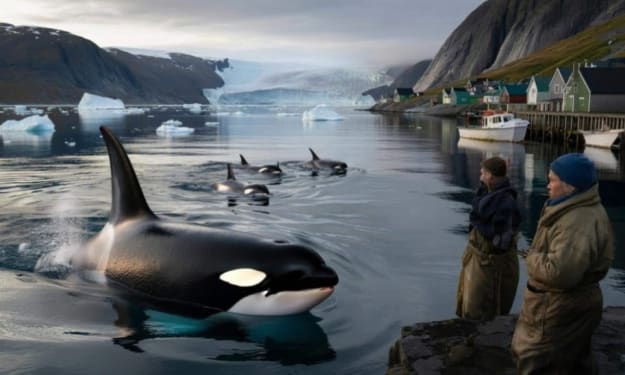
Greenland Declares State of Emergency as Scientists Link the Growing Presence of Orcas to Accelerating Ice Melt
In a landmark decision that reflects the intensifying impacts of climate change, the government of Greenland has officially declared a state of environmental emergency—a rare and solemn move that underscores the accelerating transformation of Arctic ecosystems. The catalyst for this declaration? An unusual and growing presence of orcas—also known as killer whales—in waters once locked in sea ice, a phenomenon scientists say reveals the alarming scale of ice melt in the region.
By Sadaqat Alia day ago in Earth
Foot Bindings
I asked my grandmother how she knew she'd fallen in love. I am not sure I ever did love him, she said. This was before I met my husband. I was naive, a naked spring, a raw nerve of a thing. That cannot ever be me, I knew. Sadness swept in gently like a Moscow thaw. It is no simple thing, looking into a woman's vast soul and seeing its foot bindings. Now, in Italy divorced with my skin singed off, when I say I don't love him mean: I have succeeded at feeling nothing most days and it mostly works. Do you want the comfort of Nothing? Do you want Nothing, too? Be warned: you'll never be free, even when you are nothing. Here is what doesn't work: Accepting the stages of grief. Talking about it. Sitting with the feeling. Missing him—no, the person you were when you believed in death do us part. Writing poetry. That, too. When I say I don't love him I mean: I feel capsized in an endless, starved tide. What sometimes works: selective memory. You must forget ripe tomatoes and his beard and feeling perfectly sheltered in a big blue world. Forget coffee in bed, laughter watching TV, blowing out the candles on the birthday cake and the quiet all-encompassing knowledge that you are chosen. Remember only how love turned to a banal everyday survival act, a trapeze act unsure whether he will catch you, how the warmth stagnated and became sour, remember the foot bindings and remember the resentment boiling in your veins as you stick it out for the kids. Six-hour Netflix binges help, too. A man's fingers tracing your spine. Frozen pizza at 2 a.m. Random trips to the museum just to stand near things that last a while. The realization that crying won’t change anything. Seeing that life is just a dream, and refusing to participate in your own suffering. Bite your fist. Walk on eggshells around joy. When I say I don't love him, I mean he didn’t break my heart, he just stopped touching it and it forgot how to beat right.
By Ella Bogdanovaabout 12 hours ago in Poets
The Piggy Project
I’ve had so many names in this life I lose track of which ones were ever really mine and which ones I wore because someone needed me to. Some were handed to me before I had words to refuse them, before I knew what they meant, before I knew I could say no. Most weren’t meant to hurt. That doesn’t mean they didn’t leave marks. Marks that told me who I belong to, who I am by way of who claims me, recognizes me in the good and bad, who walks beside me.
By Fatal Serendipity7 days ago in Confessions



Comments
There are no comments for this story
Be the first to respond and start the conversation.