
Scientists Find Significant Amounts of Water Hidden Beneath Mars’ Surface
New radar data reveals vast underground ice deposits on Mars, offering fresh hope for future human missions and the search for extraterrestrial life.

Scientists Find Significant Amounts of Water Hidden Beneath Mars’ Surface
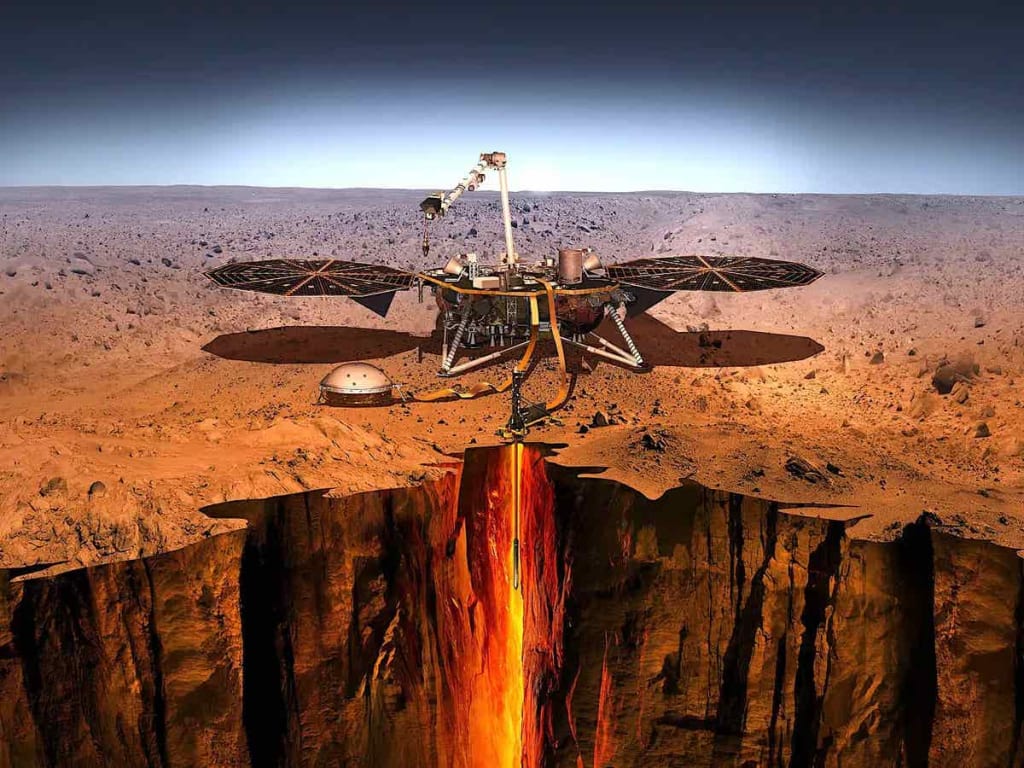
In a groundbreaking discovery that could redefine our understanding of the Red Planet, scientists have uncovered significant amounts of water hidden beneath Mars’ surface. The revelation, made through a combination of satellite data, radar imaging, and surface analysis, has reignited hope for the possibility of life on Mars — past or present — and opened new doors for future human colonization efforts.
A Game-Changing Discovery
The international team of researchers, working in collaboration with NASA and the European Space Agency (ESA), announced that radar data collected by orbiting spacecraft revealed extensive underground water reserves. The data, captured using the Mars Advanced Radar for Subsurface and Ionospheric Sounding (MARSIS) on the ESA’s Mars Express orbiter, shows that large pockets of water lie beneath the planet’s southern polar region and potentially in other regions as well.
Unlike earlier findings that hinted at briny water flows or small amounts of frozen moisture, this latest research suggests vast quantities of water exist in the form of ice buried just a few meters beneath the Martian surface. In some areas, these ice deposits stretch hundreds of kilometers and are buried under a protective layer of Martian dust and rock.
The Role of Technology
The discovery was made possible through advanced radar technologies and remote sensing instruments aboard spacecraft currently orbiting Mars. The MARSIS instrument sends low-frequency radar pulses deep into the Martian crust and analyzes the reflected signals to detect changes in material composition. These reflections revealed a layer of ice that is thicker and more widespread than previously thought.
Complementing these findings, NASA’s Mars Reconnaissance Orbiter (MRO) provided high-resolution imagery and thermal data, confirming the presence of subsurface ice in mid-latitude regions, far from the polar caps. The combination of radar and imaging tools gave scientists a multi-dimensional view of Mars’ geological makeup.
Implications for Human Exploration
One of the most immediate implications of this discovery is its potential to support future human missions to Mars. Water is a crucial resource for life and survival, especially for long-term space missions. Not only is it essential for drinking and agriculture, but it can also be split into hydrogen and oxygen — the building blocks for rocket fuel.
“Access to a reliable source of water is a major milestone in our goal to send humans to Mars and establish a sustainable presence there,” said Dr. Laura Simmons, a planetary scientist at NASA's Jet Propulsion Laboratory. “It drastically reduces the need to transport water from Earth, which is expensive and logistically complex.”
The discovery means future mars missions could be strategically planned to target areas where water is most accessible, especially in mid-latitude regions that offer more favorable conditions for human habitation compared to the frigid poles.
Clues About Mars’ Past
Beyond its value for exploration, the discovery also deepens our understanding of Mars’ ancient climate and geological history. Scientists believe that Mars once had a much thicker atmosphere and flowing liquid water on its surface — possibly even oceans. The presence of buried water ice suggests that some of this water was preserved as the climate changed and the planet lost its atmosphere over billions of years.
“This is not just about water,” said Dr. Etienne Durand, a geologist involved in the study. “It’s about understanding Mars as a dynamic planet that may have had conditions suitable for life. These ice deposits could trap ancient microorganisms or provide us with geological records of Mars’ environmental history.”
Search for Life
The presence of water — especially in a stable, preserved form — increases the likelihood that microbial life could have existed on Mars. Water is considered one of the essential ingredients for life, and scientists are now eager to explore these underground ice layers more closely. Future missions, such as NASA’s proposed Mars Ice Mapper mission, aim to pinpoint the most promising locations for exploration.
If these missions are successful, they could potentially retrieve ice samples and bring them back to Earth for detailed analysis. This would be a major leap forward in the search for extraterrestrial life.
Conclusion
The discovery of substantial amounts of hidden water beneath Mars’ surface marks a pivotal moment in planetary science and space exploration. It provides critical resources for future missions, offers new insights into Mars’ past, and raises profound questions about the possibility of life beyond Earth.
As research continues and technology advances, Mars — once seen as a dry, lifeless world — is increasingly revealing itself as a planet of mystery, potential, and promise. The hidden water beneath its surface might not just change the future of space exploration — it could redefine our understanding of life in the universe.
About the Creator
Adnan Rasheed
Author & Creator | Writing News , Science Fiction, and Worldwide Update| Digital Product Designer | Sharing life-changing strategies for success.
Keep reading
More stories from Adnan Rasheed and writers in Earth and other communities.
New Signals Hint at a Lost Ocean of Water Concealed Within Mars
New Signals Hint at a Lost Ocean of Water Concealed Within Mars For decades, scientists have been captivated by the mystery of water on Mars. New evidence emerging from recent radar and satellite data suggests something groundbreaking: a massive, hidden ocean of water may still be locked beneath the planet’s surface. If confirmed, this discovery could reshape our understanding of the Red Planet’s history and its potential for life.
By Adnan Rasheed8 months ago in Earth
China’s Ambitious Satellite Plan: 200,000 Satellites and Counting
China has submitted an astonishing application to the International Telecommunication Union (ITU) to launch 200,000 satellites over the coming years. To put this into perspective, the entire world currently operates far fewer than this number. Even SpaceX’s Starlink project, one of the largest satellite networks globally, has plans for around 42,000 satellites. China’s proposal signals an unprecedented escalation in space activity and raises important questions: what are these satellites for, and what implications do they hold for global technology, security, and the environment? The Purpose Behind the Numbers At first glance, launching 200,000 satellites may seem excessive, but China’s goals are strategic and multifaceted. Experts suggest that these satellites could serve several purposes: 1. Global Internet Coverage China is aiming to build a massive low-Earth orbit (LEO) satellite network, similar to Starlink and OneWeb. By positioning thousands of satellites closer to Earth, they can provide high-speed internet to remote regions, rural areas, and even ships or aircraft in the oceans. This could help China expand its digital influence globally, offering connectivity in areas where traditional internet infrastructure is weak or non-existent. 2. Enhanced Military and Surveillance Capabilities A satellite network of this scale is also a game-changer for defense and surveillance. Satellites can monitor troop movements, track ships, and provide early warning systems. China’s military has been investing heavily in space-based technology, and these satellites could be a crucial part of modernizing its intelligence, surveillance, and reconnaissance (ISR) capabilities. 3. Scientific Research and Earth Observation Some of these satellites may be dedicated to Earth observation, collecting data on climate, agriculture, natural disasters, and urban development. With thousands of satellites constantly orbiting the planet, China could achieve near real-time monitoring of environmental changes and resource management, giving scientists and policymakers an unprecedented level of insight. 4. Competition in the Commercial Space Sector China’s plan is not purely for government use. The commercial potential of satellite networks is massive, from providing satellite internet services to supporting the burgeoning space economy. Companies under Chinese state and private ownership could leverage this infrastructure to offer services domestically and internationally, challenging Western tech giants in global space markets. The Scale of the Ambition Launching 200,000 satellites is not just ambitious; it’s historic. If approved and executed, China would operate more satellites than all other countries combined, fundamentally reshaping how space is utilized. However, there are serious logistical challenges. Manufacturing, launching, and maintaining hundreds of thousands of satellites requires enormous resources, advanced technology, and careful orbital planning to avoid collisions. China has made major progress in its space launch capacity, with frequent missions through the Long March rocket family and ongoing developments at the Wenchang and Jiuquan Spaceports. Yet, sustaining such a colossal fleet will test even the most advanced space programs. Global Implications The potential consequences of China’s satellite plan are profound, both technologically and geopolitically. 1. Space Traffic Management A network of 200,000 satellites could drastically increase the risk of collisions in orbit. Space debris is already a growing concern, and introducing tens of thousands of new satellites may exacerbate this problem. International cooperation and sophisticated traffic management systems will be essential to prevent catastrophic accidents in space. 2. Geopolitical Tensions China’s space ambitions may intensify global rivalry in space technology, particularly with the United States, Europe, and other spacefaring nations. Control over satellite networks can translate into strategic advantages, from military surveillance to dominance in global communications infrastructure. This may lead to a new phase of space competition reminiscent of the Cold War’s space race. 3. Impact on Astronomy Astronomers have already expressed concern over satellite mega-constellations interfering with observations. Thousands of bright satellites moving across the night sky can distort telescope images and hinder research into deep space phenomena. If China proceeds with 200,000 satellites, the challenge to professional and amateur astronomers will be enormous. 4. Global Connectivity Revolution On the positive side, if managed responsibly, China’s satellite network could revolutionize global connectivity, bringing internet access to millions of people who currently have none. It could accelerate digital development in underserved regions, support education, and foster global commerce in unprecedented ways. Regulatory Hurdles The ITU regulates global satellite usage, including frequency allocation and orbital slots. For China to launch 200,000 satellites, it must secure approval from the ITU, which evaluates whether such an immense network could interfere with other countries’ satellites or violate international agreements. This is not a mere formality—approval for a project of this scale could take years and may require negotiations with multiple nations. Conclusion: A Bold Step Toward the Future China’s application to launch 200,000 satellites is a bold statement about the future of space and global technology. It reflects the country’s ambition to dominate in digital infrastructure, military capability, and commercial space enterprise. While challenges abound—from space debris and regulatory hurdles to geopolitical tensions—the potential benefits are significant, particularly for connectivity and scientific advancement. As the world watches China’s next steps, one thing is clear: the age of satellite mega-constellations is here. How humanity navigates the risks and rewards of this new frontier will shape the future of communication, security, and our presence in space for decades to come.
By Muhammad Hassanabout 15 hours ago in Earth
New Snow and Ice Warning for Friday and Saturday: What You Need to Know
The UK is bracing for another round of disruptive winter weather as meteorologists issue fresh snow and ice warnings for Friday and Saturday. Across England, Scotland, and Wales, residents are being advised to prepare for hazardous conditions, with local authorities urging people to limit travel and stay safe. The latest forecasts indicate a combination of heavy snowfall, freezing temperatures, and icy patches, all of which could affect daily routines, public transport, and emergency services.
By Fiaz Ahmed 7 days ago in Earth
Getting Serious About Comedy (Part I)
If I were asked to remark on my life and the childhood that paved some road leading me to this point, I would have to say something about all the funny people who surrounded me for the last 26,872 days (and counting). Somewhere along that road, I became a big fan of laughter and the comedy that spawns it – and, I mean not only my own laughter, but the laughter of others, some of which I have actually been responsible for inducing.
By John Oliver Smith6 days ago in Humor



Comments
There are no comments for this story
Be the first to respond and start the conversation.